
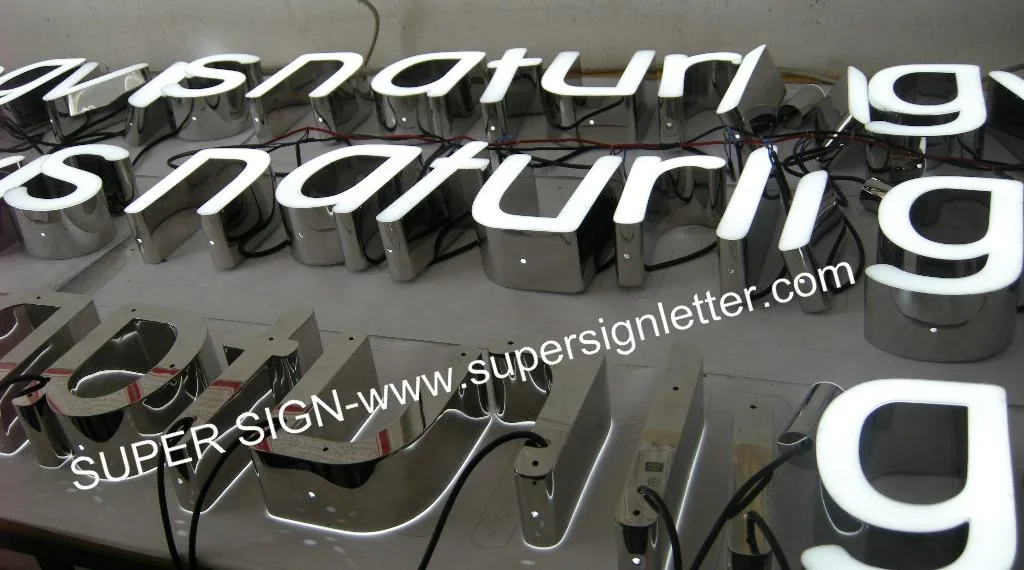
Frontlit, backlit and halo letters compared
Three ways to light the same wordmark, and what each one looks like at noon and at midnight.
The grade decision is really a site decision. Here is how to make it without guessing.
Our fabricated stainless builds are specified as genuine 304 or 316 stainless steel. Both resist ordinary weather. The difference shows up where chloride is in the air: coastal sites, roadside signs that get salted in winter, swimming pool halls, and heavily polluted urban locations.
Inland, indoors, and on most urban façades away from the coast, 304 does the job and costs less. It brushes, polishes and plates identically to 316, so the finished look is the same.
A letter described only as 'stainless steel' is a letter whose grade nobody has committed to. The failure mode is not dramatic — it is a faint brown weep from the fixing points after the first winter, and it is almost impossible to fix in place. Ask for the grade in writing on the quotation.
Tell us the site as well as the artwork. If the sign is going up within sight of the sea, say so, and the quotation will come back in 316.
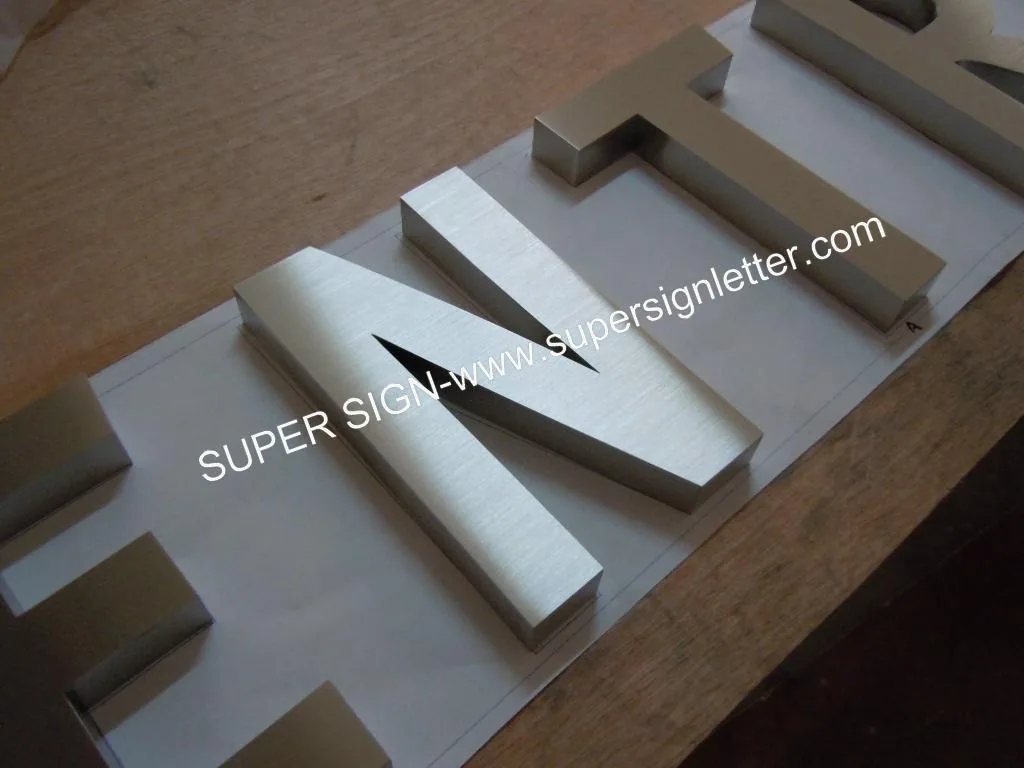
Pictured: Brushed Stainless Steel Letters 07
Send the artwork and the site details. We will come back with the grade, the thickness or depth, the finish and the fixing method — with the reasons.
Three ways to light the same wordmark, and what each one looks like at noon and at midnight.
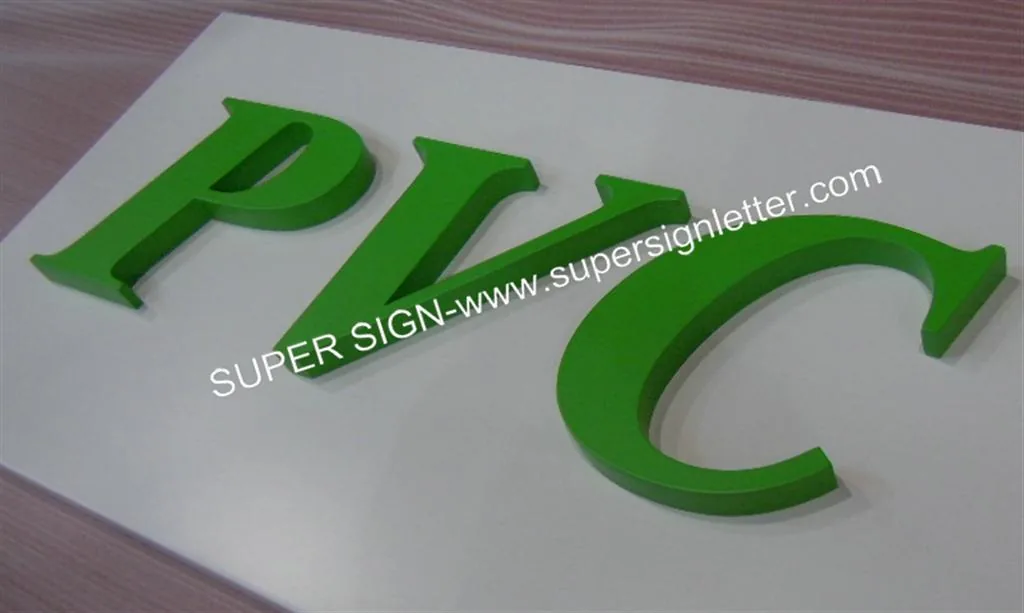
Plate thickness on a flat-cut letter, return depth on a built-up one — and why both are visible from the street.
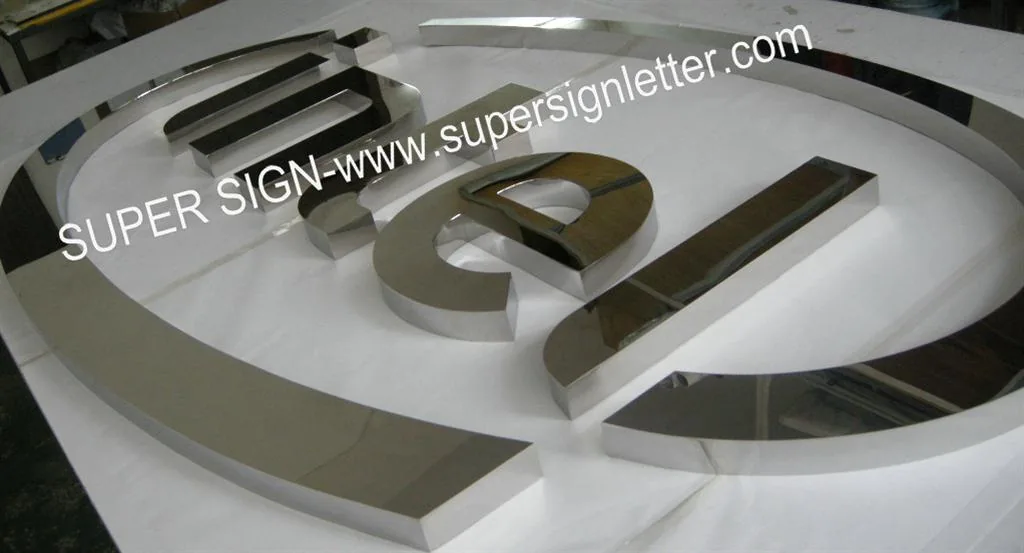
Brushed, satin, polished, mirror, plated, anodized and painted — what each looks like and what it costs you in maintenance.
Artwork, finished letter height and the site. That is enough to price the job properly.