
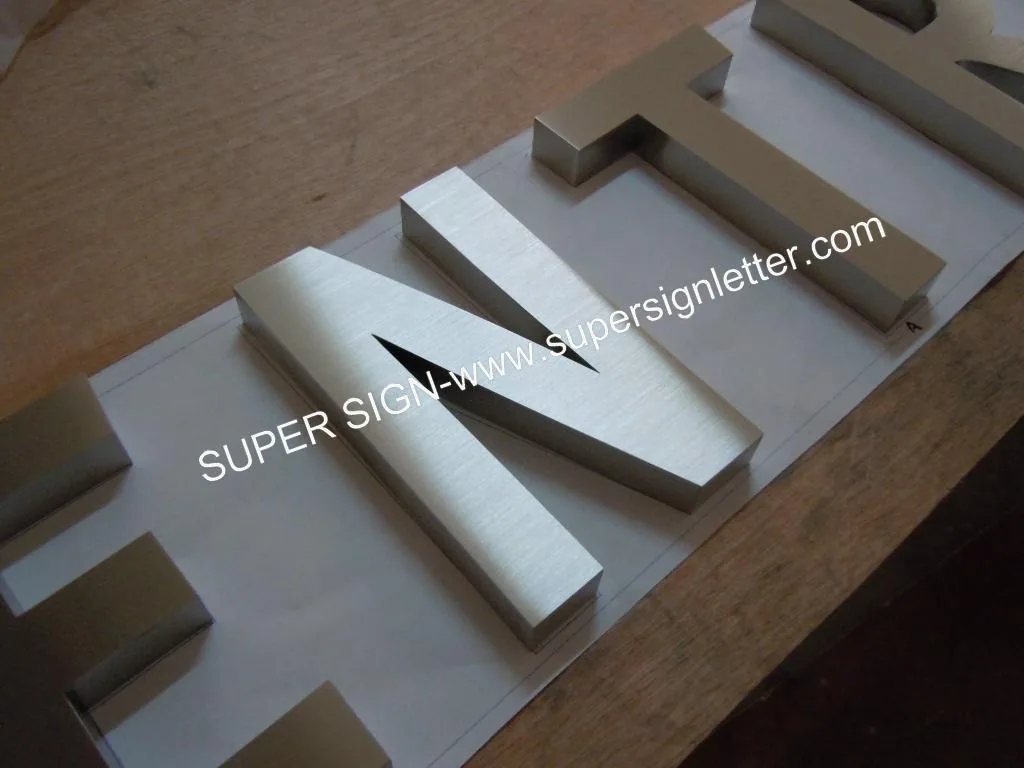
304 or 316 stainless for sign letters?
The grade decision is really a site decision. Here is how to make it without guessing.
Plate thickness on a flat-cut letter, return depth on a built-up one — and why both are visible from the street.
Flat-cut letters are cut solid, so the plate thickness is the letter depth. The catalogue lists solid aluminum in 1, 2, 3, 5, 6, 10 and 20mm; solid brass in 1, 3, 5, 8 and 10mm; and solid acrylic in 5, 10, 20 and 30mm.
On a fabricated letter the return depth does two jobs. It sets how much shadow the letter throws, and on an illuminated build it sets how evenly the face lights. Frontlit returns in the catalogue run typically 60mm to 100mm; the slimmer end suits thin and slim fonts. Double-sided flag signs run deeper, 120mm to 160mm.
A very thin font in a deep return lights unevenly and looks hollow. Where a slim lit letter is wanted, the resin-faced build goes down to a 25mm minimum depth, which is the slimmest lit option listed.
Send the artwork with the finished height of the tallest letter and tell us the viewing distance. We will come back with a thickness or depth and the reason for it.
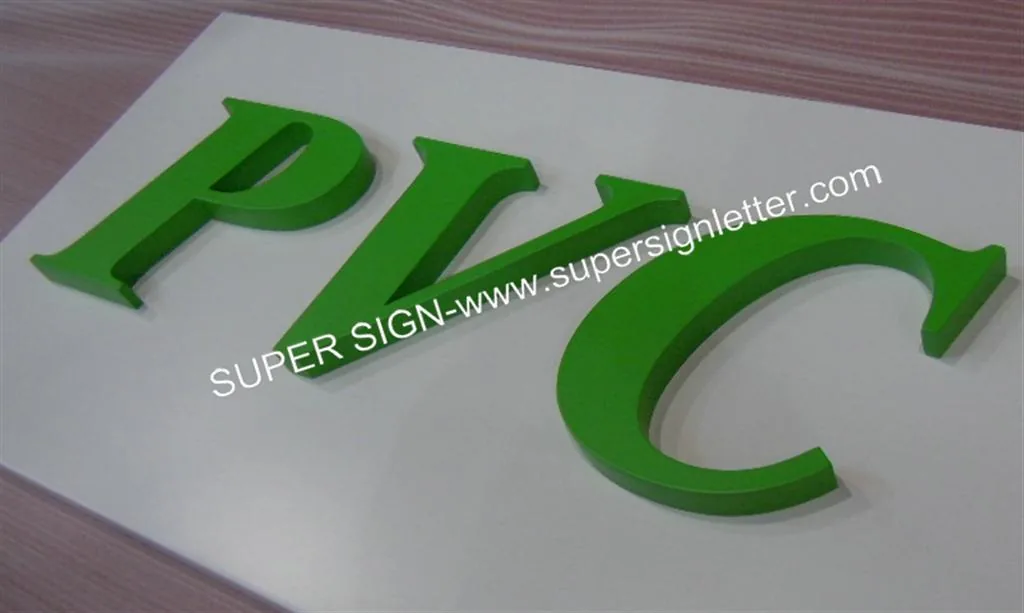
Pictured: Painted PVC Lettering 01
Send the artwork and the site details. We will come back with the grade, the thickness or depth, the finish and the fixing method — with the reasons.
The grade decision is really a site decision. Here is how to make it without guessing.
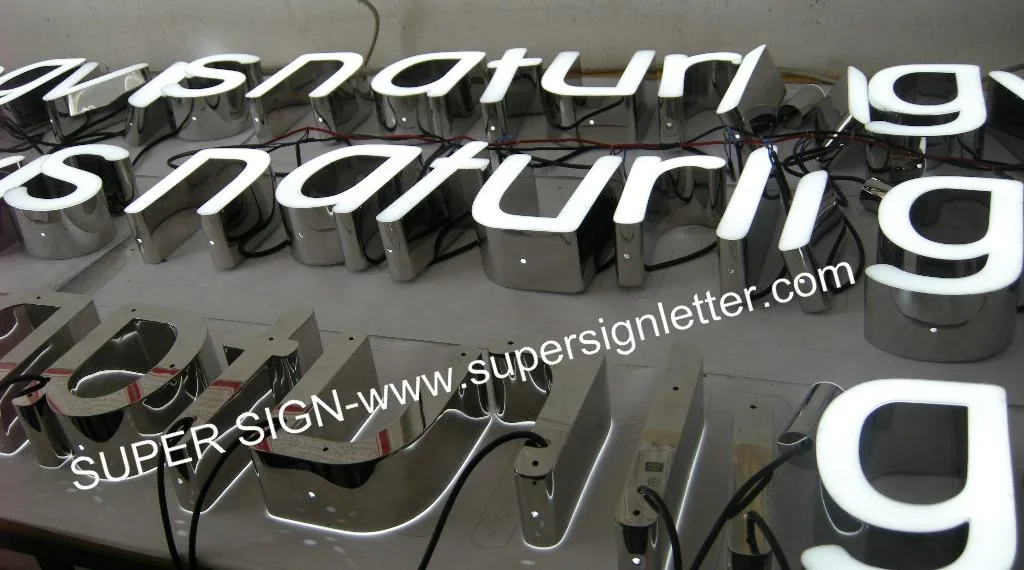
Three ways to light the same wordmark, and what each one looks like at noon and at midnight.
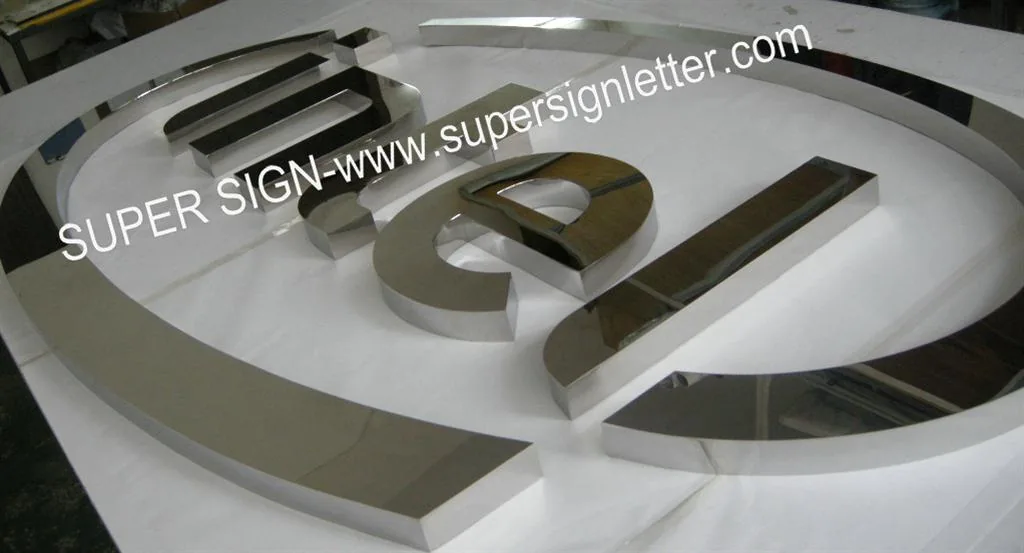
Brushed, satin, polished, mirror, plated, anodized and painted — what each looks like and what it costs you in maintenance.
Artwork, finished letter height and the site. That is enough to price the job properly.