
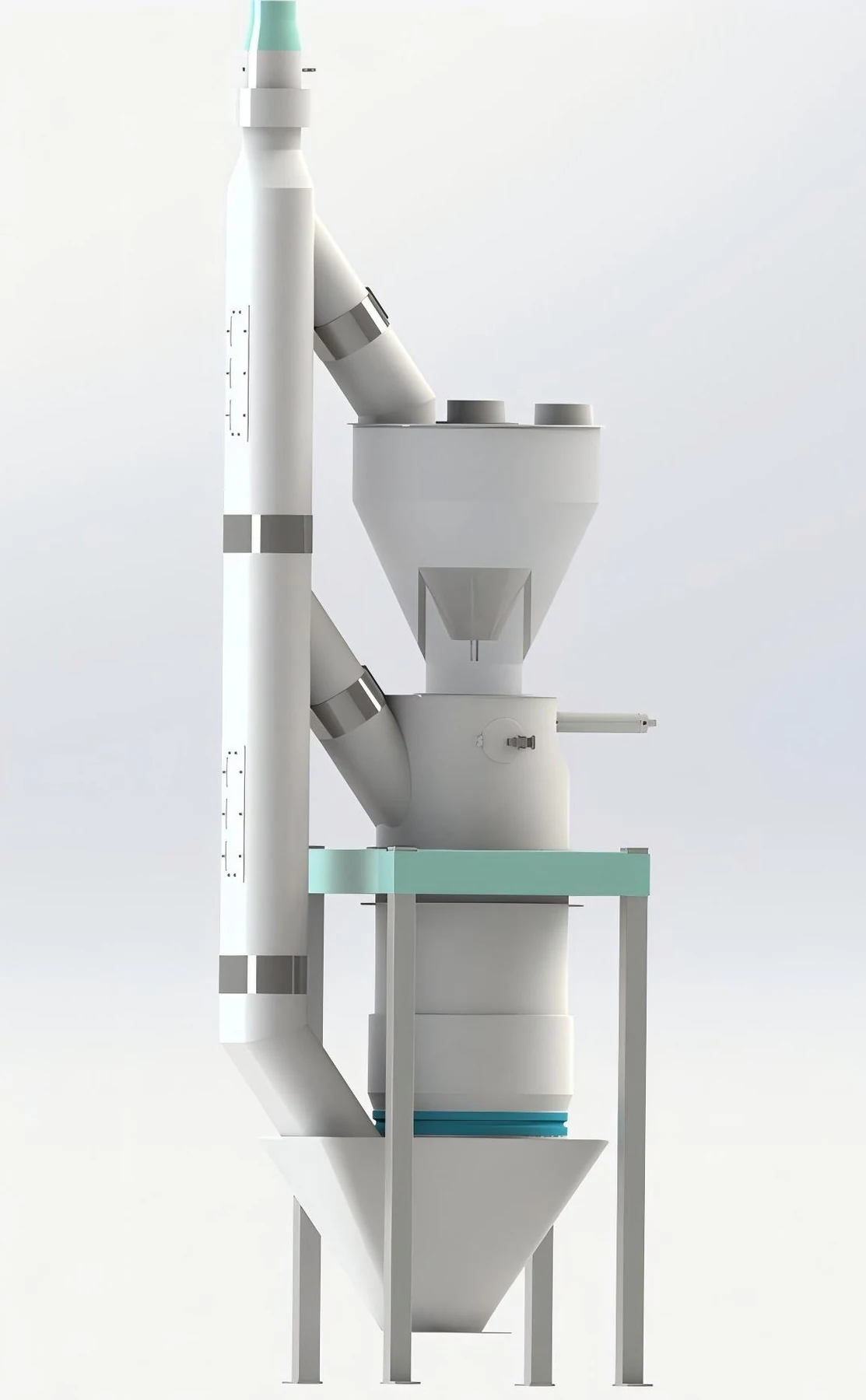
JHDM Automatic Discontinuous Totalizing Hopper Weigher
A batch totalising scale for in-plant metering. Material fills a weighing hopper, the weight is recorded, the hopper discharges and the controller adds the batch to a running total - repeated continuously, which is how a discontinuous weigher produces a continuous throughput figure.
Application
The JHDM series non-continuous cumulative automatic hopper weigher offers a throughput capacity ranging from 12 m3/h to 90 m3/h, which makes it suited to weighing and metering tasks in the intermediate stages of in-plant production processes. It can be used for product metering in applications whether calibration is required or not.
Who It Is For
- Flour, rice and feed mills metering between processing stages
- Plants that must produce a verified throughput figure for trade settlement
- Process engineers who need an accurate in-line total without stopping the flow
- Bulk terminals recording tonnage before truck or ship loading
What Goes Wrong Without It
Estimating throughput from conveyor running hours gives a number nobody can defend in a dispute
Airflow in a pneumatic or gravity line pushes on the weighing hopper and corrupts the reading
Internally mounted bearings sit in the product stream, which is a hygiene failure in food duty
Scales that cannot be inspected without dismantling get inspected less and less often
Key Benefits and Product Features
Precise weighing
Internal pressure balance ensures high accuracy by removing the effect of airflow on the weighing unit.
Hygienic and safe
External bearing design keeps bearings out of the product zone and prevents contamination.
User-friendly
Straightforward to operate and to maintain in daily production.
High reliability
Robust performance in sanitary environments.
Wide range
Accommodates diverse weighing capacities across the 12 to 90 m3/h band.
Flexible control
Supports both calibratable and non-calibratable modes.
Network ready
Integrates with master control systems through a digital interface and defined command set.
Remote operation
Enables full remote monitoring and control.
How the Machine Is Built
The weighing body is supported by three legs with three suspended load cells for optimal stability. The weighing hopper carries an internal air pressure differential design that minimises the impact of airflow on the weighing unit. Bearings are mounted externally for hygiene, safety and reliability. Inspection windows are fitted so daily checks and maintenance do not require dismantling, and the enclosure is shaped to prevent dust accumulation. The control unit includes digital interfaces and a specific command set for receiving host commands and transmitting real-time measurement data, and is available in Remote Control, Local Economic and Local Touchscreen models.
Technical Data
Values marked TBC are confirmed against your duty at quotation. We do not publish figures we cannot stand behind.
| Series | JHDM |
|---|---|
| Type | Non-continuous cumulative automatic hopper weigher |
| Throughput capacity | 12 m3/h to 90 m3/h |
| Load cell arrangement | Three suspended load cells on three-leg support |
| Airflow compensation | Internal air pressure differential design |
| Bearing arrangement | External bearings |
| Access | Inspection windows for daily checks |
| Enclosure | Dust-resistant housing |
| Metering modes | Calibratable and non-calibratable |
| Control versions | Remote Control / Local Economic / Local Touchscreen |
| Host interface | Digital interface with command set, real-time measurement data |
| Accuracy class, dimensions, weight | TBC - quoted against the duty |
How It Compares
Versus a continuous belt weigher
A belt weigher measures load on a moving belt and never stops the flow, but its accuracy depends on belt tension and tracking. A discontinuous totalising weigher weighs a static batch, which is why it can be supplied in a calibratable mode.
Versus the High-Precision Feeder
The feeder controls a delivery rate into a process. This weigher totalises what has passed a point in the line, for metering and settlement.
Versus weighing at the packing machine
Packing weights tell you what left the plant in bags. An intermediate hopper weigher tells you what moved between stages, which is where losses are actually found.
Specifying and Installing It
Confirm the volumetric throughput required and check it sits inside the 12 to 90 m3/h band.
State whether the metering must be calibratable for verification, or is for internal process use only.
Choose the control model - Remote Control for central operation, Local Touchscreen for stand-alone, Local Economic where the requirement is simpler.
Confirm the host protocol before dispatch so the digital interface is configured to your master control system.
Support the unit on a rigid structure and leave clear access to the inspection windows.
Customisation: material of construction, weighing capacity, control tier and host protocol are all specified against your process. Tell us what the line already runs and we build to it.
Other Machines in This Range
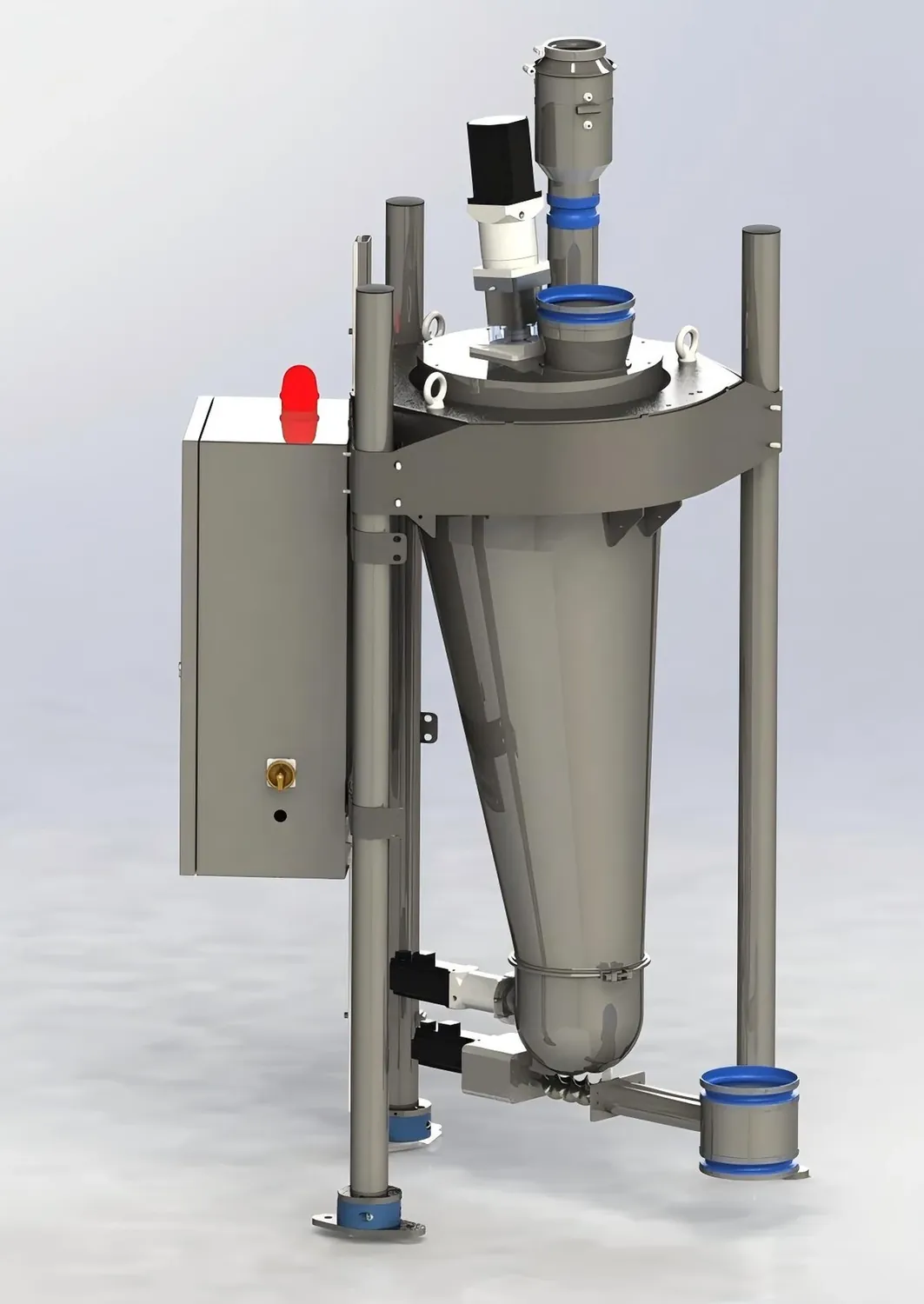
High-Precision Feeder
A screw feeder, a hopper weighing unit and a control unit working as one loop. The controller reads material weight and screw speed in real time,…
View Specifications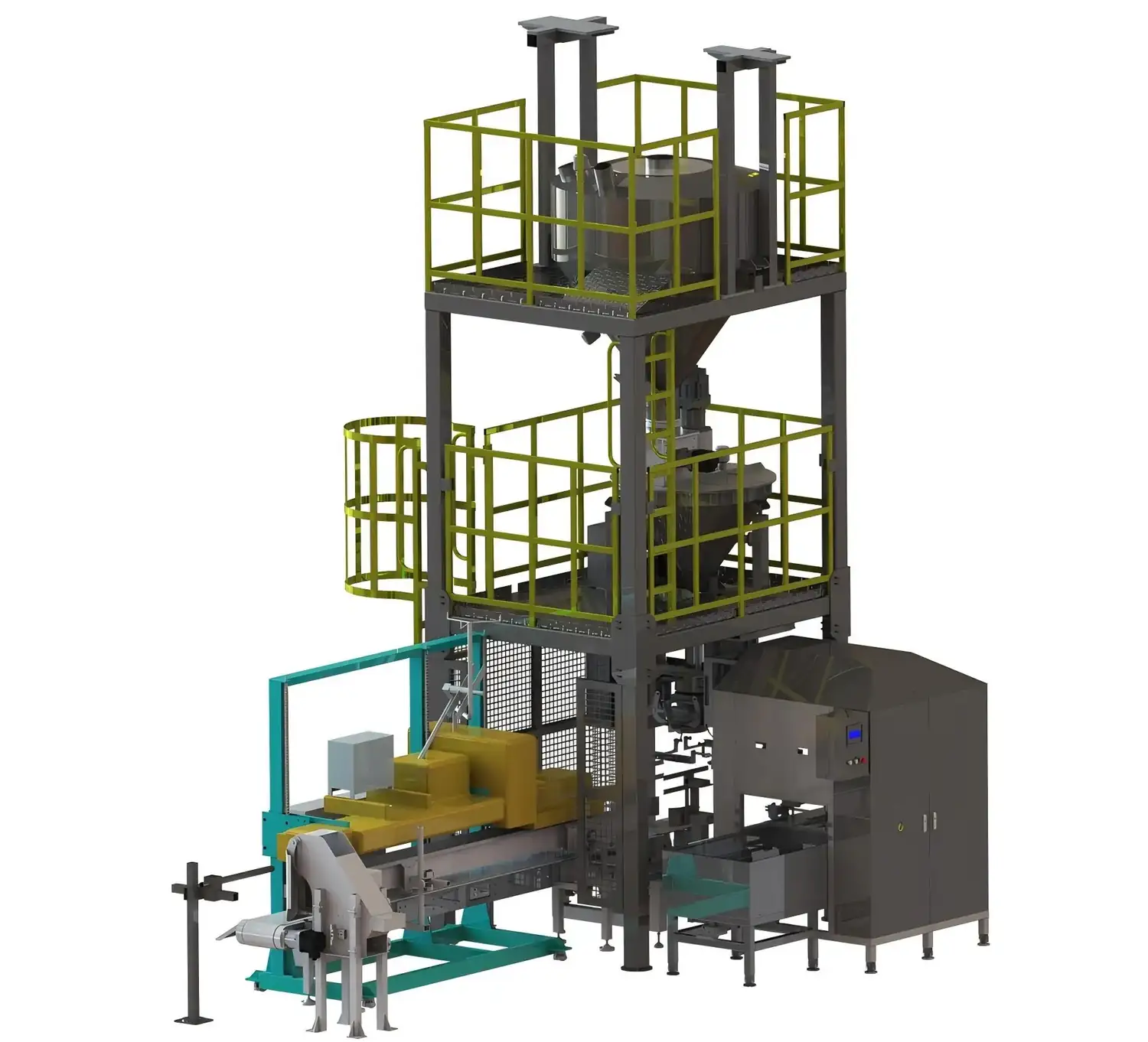
Fully Automatic Bottom-Fill Packaging Machine Without Hopper
A complete bagging line in one frame: it loads the bag, fills it from the bottom through a valve, weighs it, sews the mouth and conveys the finished…
View Specifications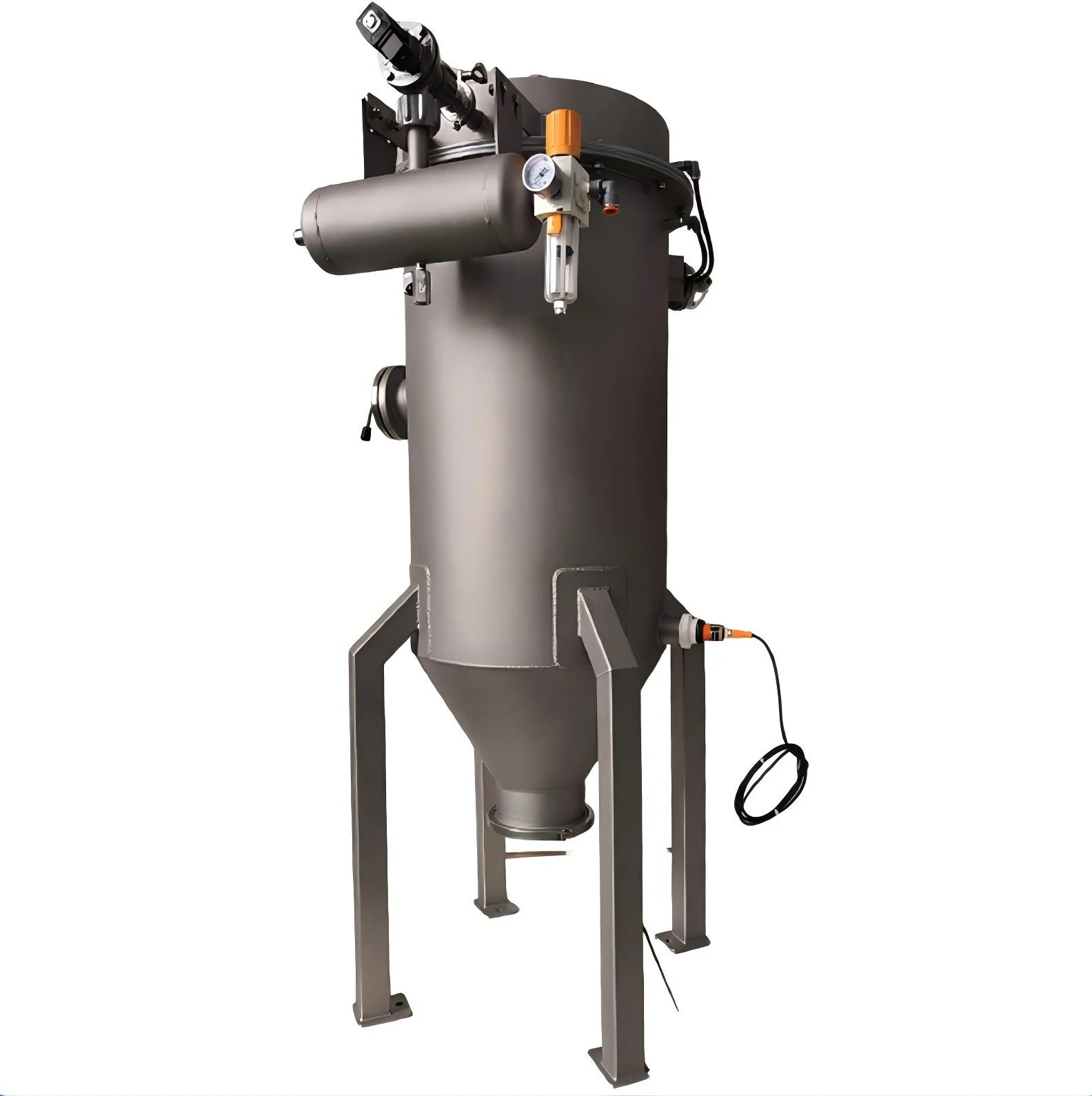
Dust Collector
A fan pulls dust-laden air away from the charging point, cartridge filters intercept the particles, clean air is exhausted and the collected dust…
View SpecificationsBackground Reading
FAQ About the Automatic Discontinuous Totalizing Hopper Weigher
What throughput does the JHDM cover?
From 12 m3/h to 90 m3/h. Because it is a volumetric throughput figure, the tonnage per hour depends on the bulk density of your material.
Can it be used for trade settlement weighing?
It is available in a calibratable mode for applications where verification is required, and in a non-calibratable mode for internal process metering. Tell us which national approval regime applies before we quote.
How does it stay accurate when air is moving through the line?
The weighing hopper uses an internal air pressure differential design that effectively minimises the impact of airflow on the weighing unit.
Why are the bearings mounted outside?
External bearing mounting keeps them out of the product zone, which is what makes the machine suitable for hygienic and sanitary environments.
Can it be operated remotely?
Yes. The control unit supports full remote monitoring and control and integrates with a master control system.
Request a Quotation for the Automatic Discontinuous Totalizing Hopper Weigher
Send the material, bulk density, throughput and accuracy target. Our engineers reply with the specification and price within 24 hours.