
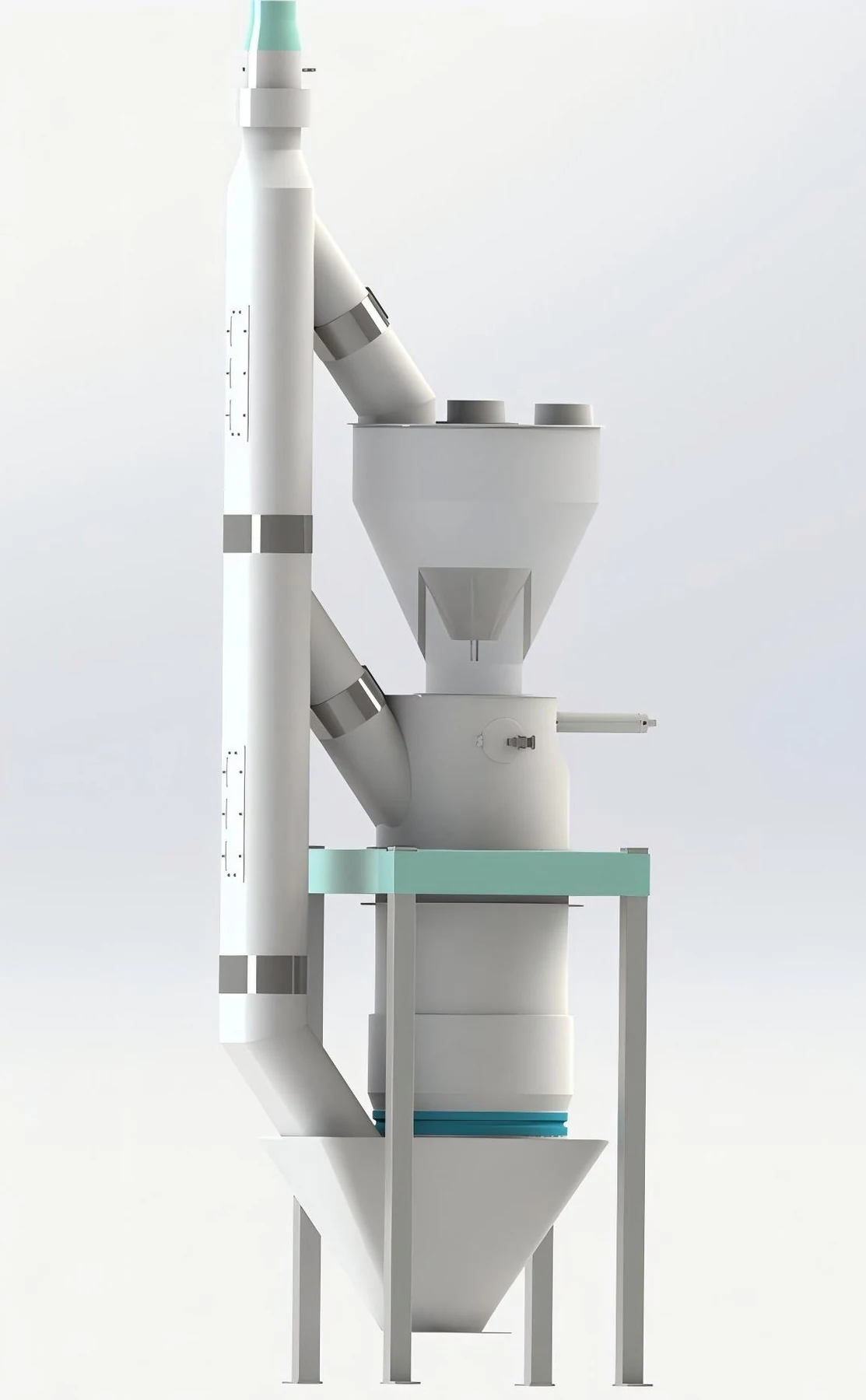
How a Discontinuous Totalizing Hopper Weigher Works
A totalizing hopper weigher does not measure flow. It weighs a batch, empties it, weighs the next one and keeps a running total - which is why it can be accurate in a way that a continuous measurement of a moving stream cannot.
The cycle
Material fills the weighing hopper while the inlet gate is open. The gate closes, the load settles and the controller records the weight. The discharge gate opens, the hopper empties, the controller records the empty weight and adds the difference to the cumulative total. The cycle repeats. Because each measurement is taken on a static load, the reading does not depend on belt tension, speed or material profile.
Why three load cells
The JHDM weighing body is supported by three legs with three suspended load cells. Three points define a plane, so the body cannot rock between supports the way a four-point arrangement can. That is what gives a stable zero between cycles.
Why airflow is the hidden error
In a gravity or pneumatic line, air moves with the material. Any pressure difference across the weighing hopper pushes on it and the load cells report that push as weight. The JHDM uses an internal air pressure differential design that minimises this effect, which matters more than most specification sheets suggest.
Hygiene in the weighing zone
Bearings mounted inside the product path collect material and shed lubricant into it. External bearing mounting removes that, and a dust-resistant housing shape stops accumulation on the structure - which is also what protects the calibration over months of running.
Calibratable and non-calibratable
Where the figure has to stand up for trade settlement, the unit is specified in calibratable mode. Where it is a process figure used inside the plant, non-calibratable mode is sufficient and simpler. Decide this before ordering, because the national approval regime determines it.
Where it sits in a line
Typically in the intermediate stages of in-plant production, between processing steps, or at a terminal ahead of ship or truck loading. It answers the question of how much material passed a point - a different question from how fast it is being delivered, which is what a feeder controls.
Machines Discussed in This Guide
Automatic Discontinuous Totalizing Hopper Weigher
A batch totalising scale for in-plant metering. Material fills a weighing hopper, the weight is recorded, the hopper discharges and the controller…
View Specifications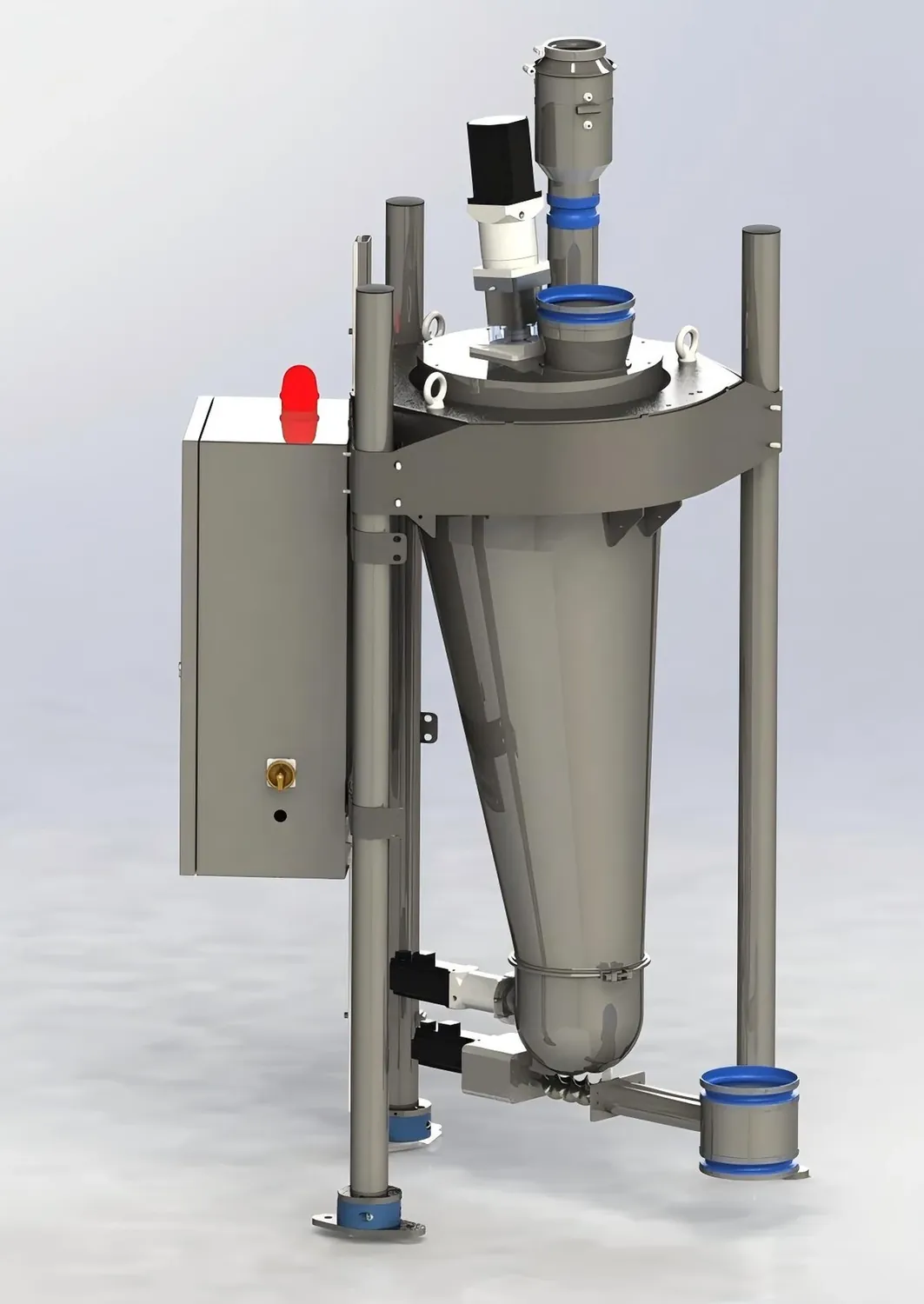
High-Precision Feeder
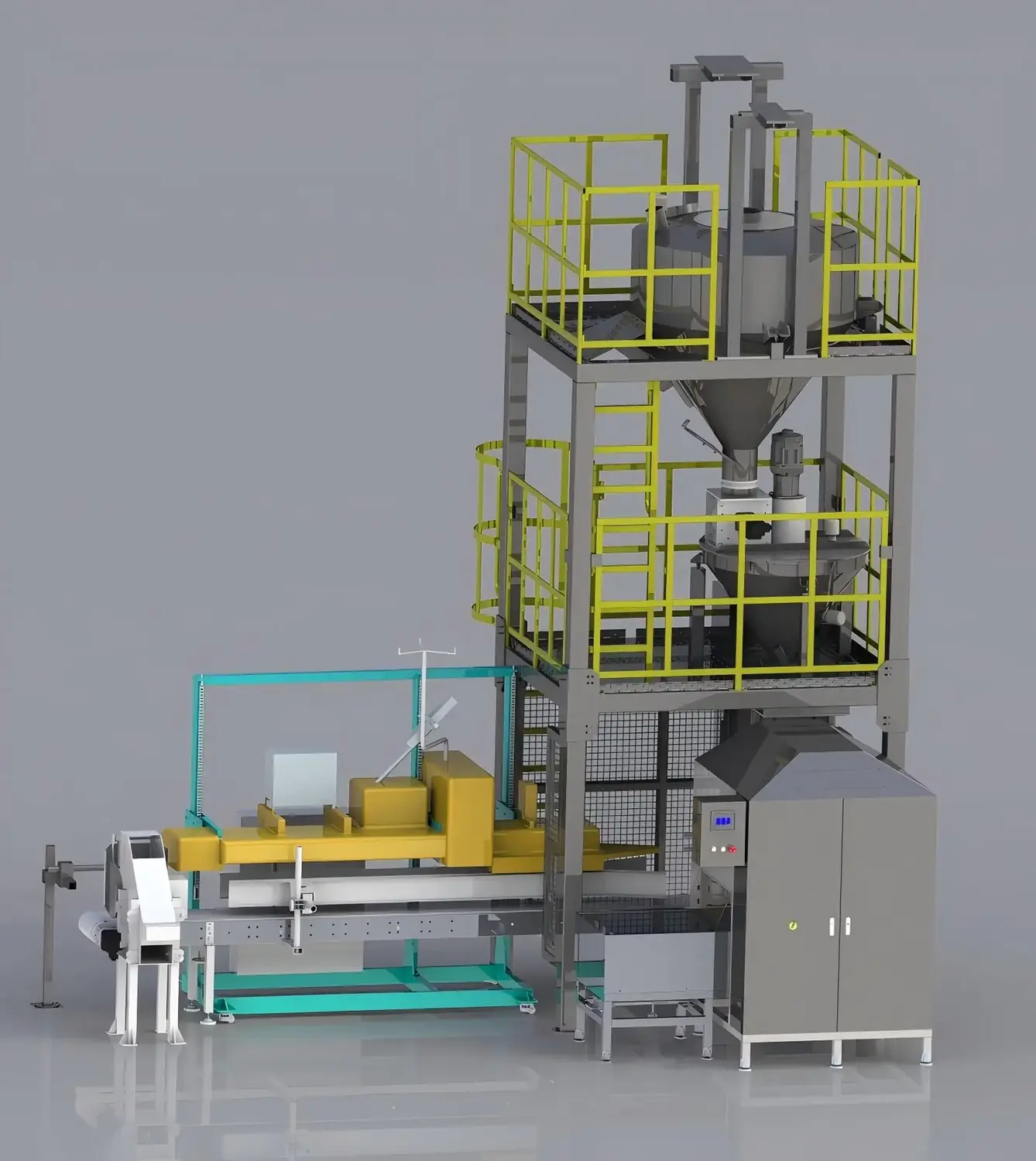
A screw feeder, a hopper weighing unit and a control unit working as one loop. The controller reads material weight and screw speed in real time,…
View SpecificationsOther Articles in the Knowledge Center
Questions From This Guide
What throughput does the JHDM series cover?
From 12 m3/h to 90 m3/h. Since that is a volumetric figure, the tonnage depends on the bulk density of the material.
Is a totalizing weigher more accurate than a belt weigher?
For the same duty it removes several error sources - belt tension, tracking and material profile - because it weighs a static load. That is why it can be offered in a calibratable mode.
Can the total be read in the control room?
Yes. The control unit transmits real-time measurement data to the host and accepts host commands over a digital interface with a defined command set.
Talk It Through With an Engineer
Send your material data and process conditions and we will tell you what the equipment can and cannot do.