
Choosing a Weighed Feeder for Powder Dosing
Almost every powder dosing problem traces back to the same thing: the feeder was sized on a tonnage figure without anyone asking what the bulk density was. Here is the order the decisions should actually be made in.
Start with bulk density, not tonnage
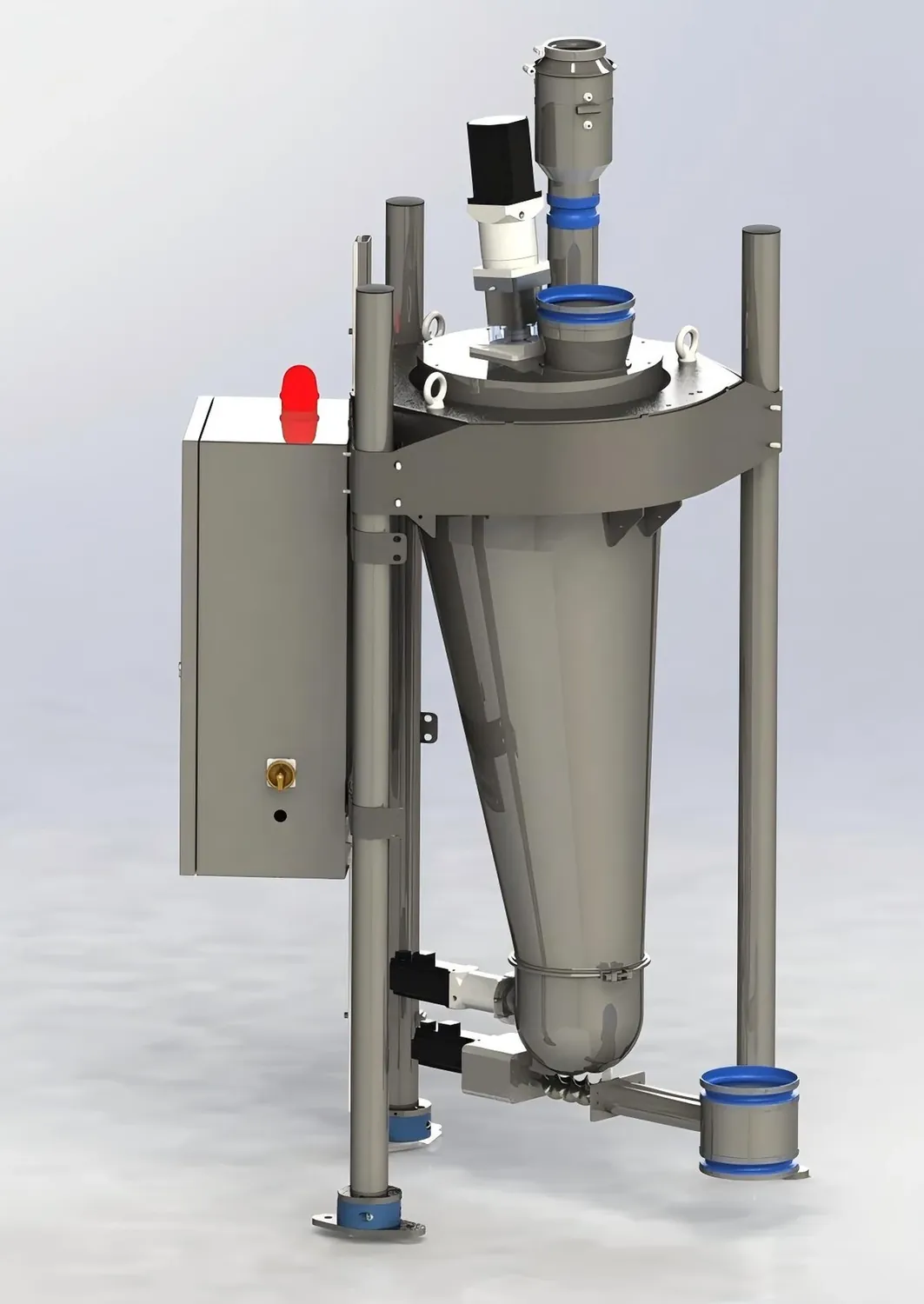
Throughput figures for powder feeders are tied to a density. The SRX High-Precision Feeder reaches a maximum of 3.6 tons per hour for powder with a bulk density of 0.6. Feed it something lighter and the tonnage falls even though the volumetric rate is unchanged. Quote your material's density with the tonnage or the sizing is guesswork.
Decide what the feeder is controlling
Four modes cover four different jobs. Continuous flow monitoring measures without controlling. Continuous flow quantitative control holds a rate. Micro-weighing quantitative control handles minor ingredients where the absolute quantity is small and the tolerance is tight. Batch cumulative quantitative control delivers a defined total and stops.
Check the construction against the hygiene requirement
For food and pharmaceutical duty, a feeder built entirely of 304 stainless steel with seamless laser welding removes the crevices that a bolted or intermittently welded structure leaves behind. A simple structure is not only cheaper to build, it is the only kind that gets cleaned properly.
Plan the integration before ordering
Digital communication interfaces and command sets exist so the feeder can accept commands from SCADA or PLC and return real-time data. Confirm the protocol early; retrofitting the interface after installation is the expensive way to do it.
Match the control tier to the operation
Remote Control suits a plant run from a central room. Local Touchscreen suits a stand-alone station where the operator is at the machine. Local Economic is for duty where the control requirement is simple and the budget is not.
Install it so it can weigh
A weighed feeder resolves small differences. Rigid support, level mounting and isolation from pipe strain and structural vibration are part of the specification, not site details to be worked out later.
Machines Discussed in This Guide
High-Precision Feeder
A screw feeder, a hopper weighing unit and a control unit working as one loop. The controller reads material weight and screw speed in real time,…
View Specifications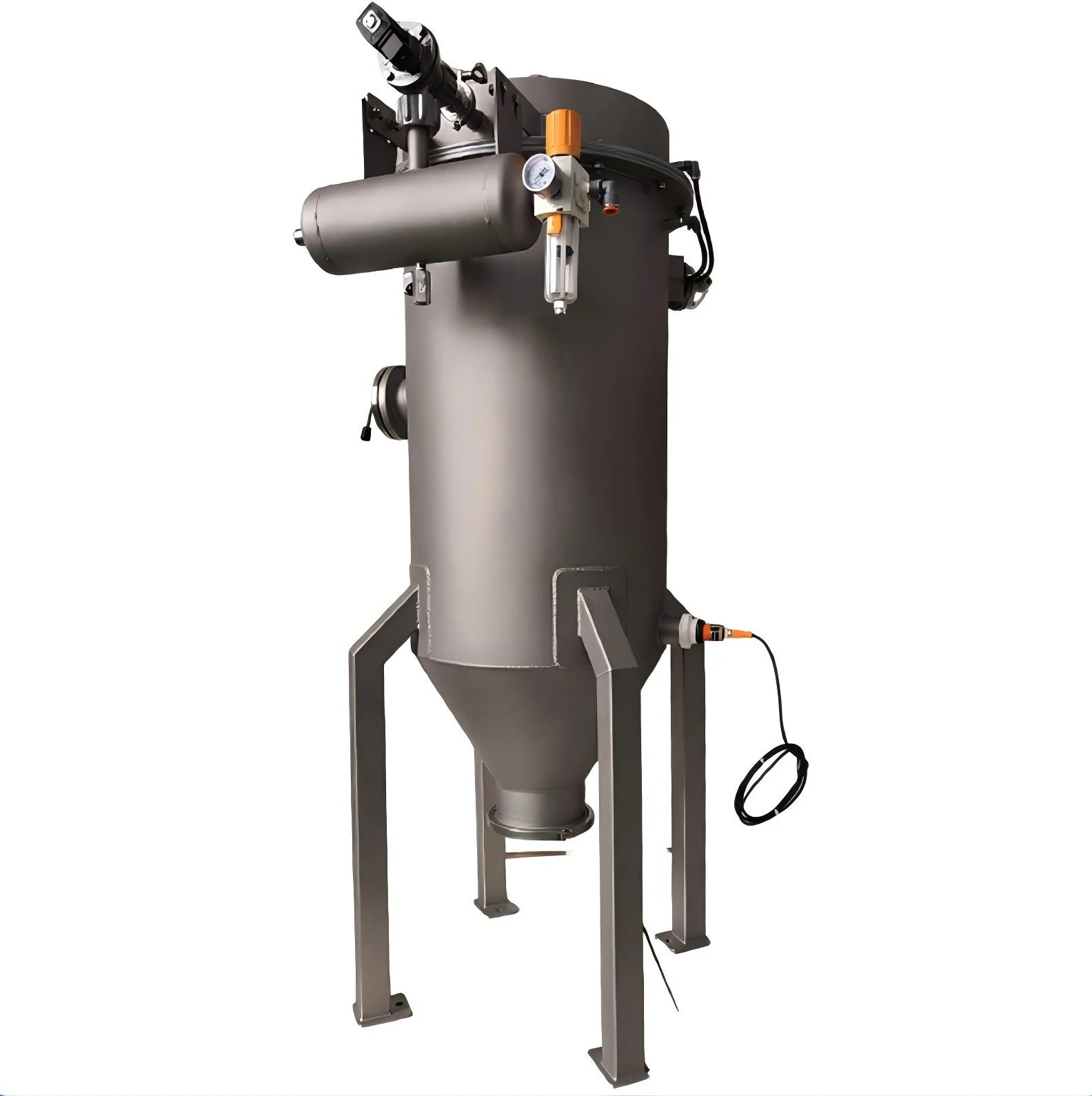
Dust Collector
A fan pulls dust-laden air away from the charging point, cartridge filters intercept the particles, clean air is exhausted and the collected dust…
View SpecificationsOther Articles in the Knowledge Center
Questions From This Guide
What is the maximum throughput?
3.6 tons per hour for powders with a bulk density of 0.6. The figure scales with density, so send your material data for a confirmed rate.
Can one feeder handle both minor ingredients and bulk additions?
It supports micro-weighing quantitative control and batch cumulative quantitative control in the same unit, but the hopper and screw are sized for a duty range. Tell us both extremes and we will confirm whether one unit covers them.
What is the feeder made from?
Entirely 304 stainless steel with seamless laser welding, in a modular design for straightforward installation.
Talk It Through With an Engineer
Send your material data and process conditions and we will tell you what the equipment can and cannot do.