
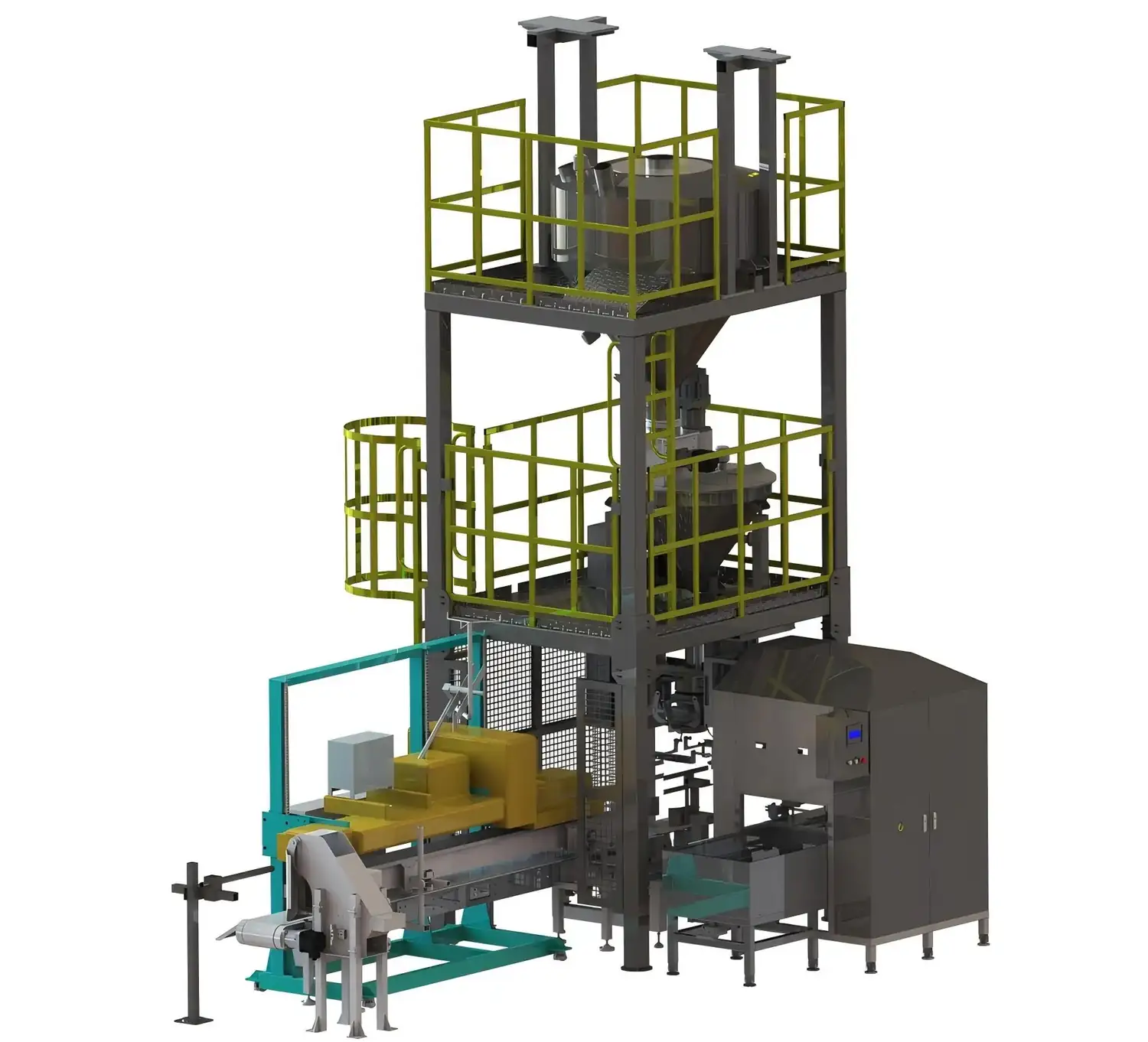
Fully Automatic Bottom-Fill Valve Bag Packaging Machine
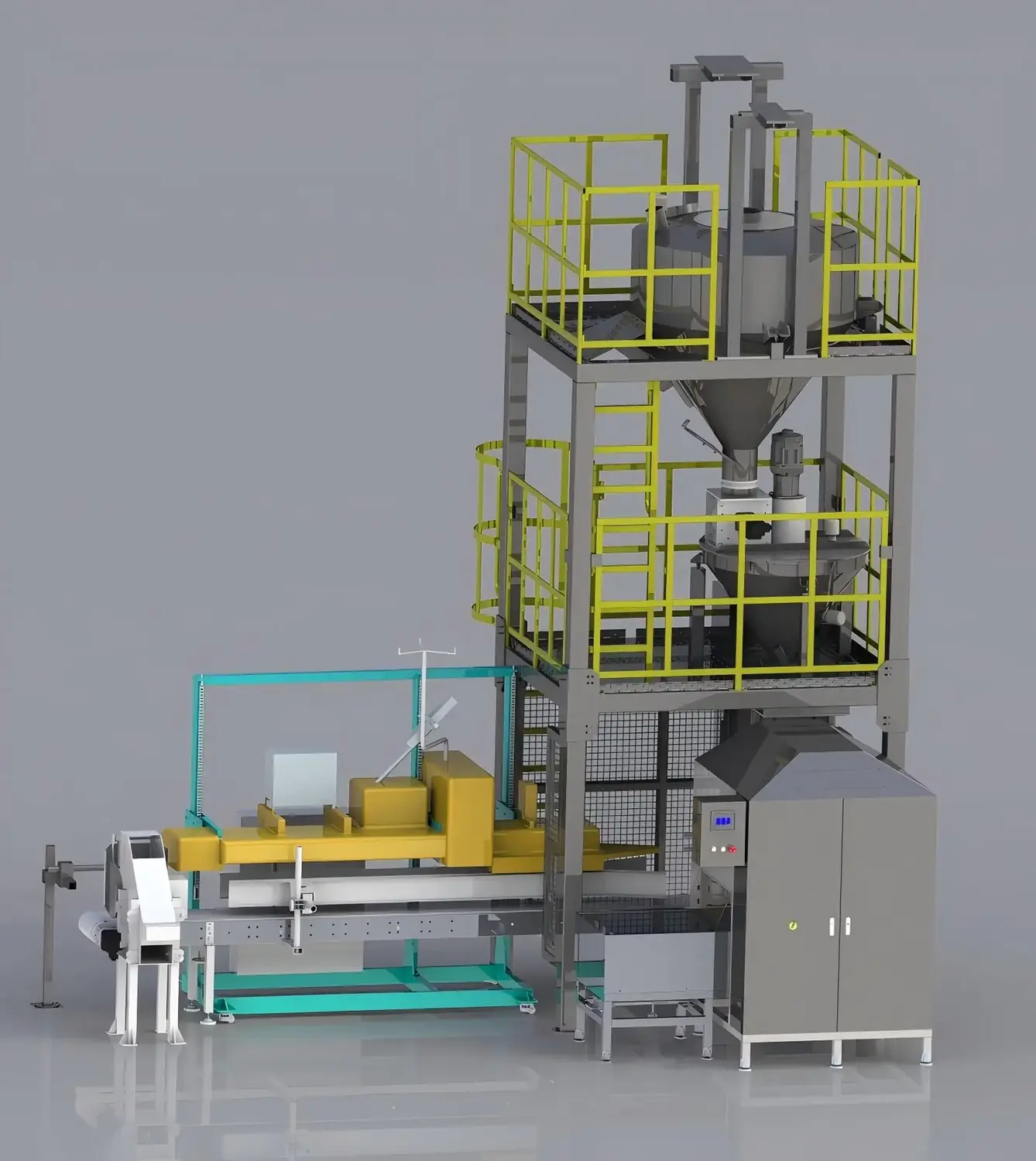
A complete bagging line in one frame: it loads the bag, fills it from the bottom through a valve, weighs it, sews the mouth and conveys the finished bag away. Bottom filling is the point - material enters below the settled bed instead of falling through air, so segregation and dust both drop.
Application
The fully automatic bottom-fill packing machine is packaging equipment used across the food, chemical and pharmaceutical sectors. It suits the automated packaging of granules, powders and mixed materials. The bottom-fill valve bag design enables filling from the bottom, which reduces material segregation and dust generation and so improves packaging accuracy and efficiency.
Who It Is For
- Food and chemical plants bagging granules and powders at line speed
- Pharmaceutical operations where airborne dust is a containment issue
- Producers of mixed formulations where segregation ruins the blend in the bag
- Plants replacing a manual bagging station and its labour cost
What Goes Wrong Without It
Top filling drops material through air, which separates fine from coarse and puts dust into the room
Manual bag loading and sewing sets the line speed and the injury risk at the same time
Fill accuracy suffers at cutoff, which is where giveaway or underweight bags come from
Bagging stations that are not networked leave a blind spot in production reporting
Key Benefits and Product Features
Internal pressure balance design
Ensures precise weight measurement by removing airflow effects from the weighing element.
Bottom-fill feeding structure
Further reduces dust generated during feeding, because material enters below the surface of the settled bed.
Multi-axis servo intelligent control with cutoff gate
Achieves higher feeding accuracy, particularly through the final approach to target weight.
Large touchscreen interface
Operation is quick and straightforward for line staff.
Full automation
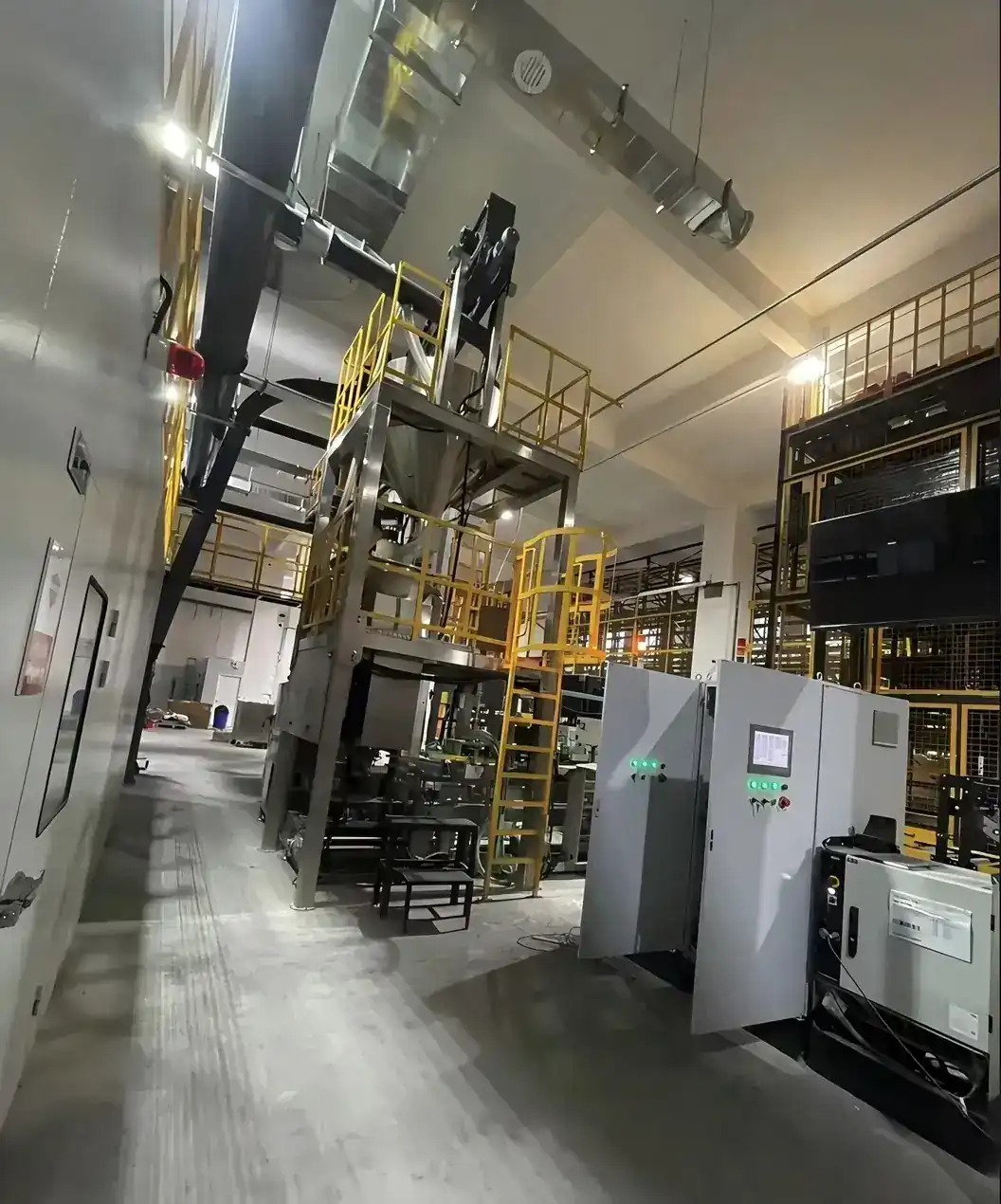
Automatic bag loading, bag filling, weighing, bag sewing and finished product conveying in one cycle.
Optional control systems
WP251 and Ampere (Jeman) control systems are available as options.
Network connectivity
Connects to the central control system.
Remote operation capability
The machine can be operated remotely.
How the Machine Is Built
The feeding system is composed of a buffer hopper, feeding wheel, feeding bin, cutoff gate, lifting module and high-precision weighing device. The bag loading system consists of an automatic bag feeding mechanism, a bag sleeving mechanism and a bag clamping device. The sealing and conveying system is made up of a bag-holding conveying mechanism, conveyor belt, bag mouth sewing machine and bag turning mechanism. The automatic control system is built from a programmable logic controller, touch screen and related electrical components, supported by a pneumatic control system.
Technical Data
Values marked TBC are confirmed against your duty at quotation. We do not publish figures we cannot stand behind.
| Filling principle | Bottom-fill valve bag |
|---|---|
| Materials handled | Granules, powders and mixed materials |
| Weighing | High-precision weighing device with internal pressure balance |
| Feed control | Multi-axis servo control with cutoff gate |
| Bag handling | Automatic bag feeding, sleeving and clamping |
| Sealing | Bag mouth sewing machine with bag turning mechanism |
| Conveying | Bag-holding conveying mechanism and conveyor belt |
| Control system | PLC, touch screen and electrical components; WP251 and Ampere (Jeman) optional |
| Pneumatics | Pneumatic control system included |
| Connectivity | Network connection to central control system, remote operation |
| Bag size range, bagging rate, air consumption | TBC - quoted against the duty |
How It Compares
Versus a top-fill open-mouth bagger
Top filling drops material through air. Bottom filling into a valve bag reduces segregation and dust, which is what protects both the blend and the working environment.
Versus a version with a holding hopper
This machine is supplied without a hopper, feeding through a buffer hopper, feeding wheel and cutoff gate instead - a shorter material path and less residual product between runs.
Versus manual bagging
One automatic cycle covers bag loading, filling, weighing, sewing and conveying, so line speed no longer depends on how fast an operator can hold a bag on a spout.
Specifying and Installing It
Send the material, its bulk density and its flow behaviour, along with the target bag weight and bags per hour.
Confirm the valve bag specification you use - bag size and valve type drive the sleeving and clamping design.
Decide on the control system option: the standard PLC and touchscreen package, WP251, or Ampere (Jeman).
Confirm the compressed air supply available, since the machine carries a pneumatic control system.
Plan the network connection to the central control system before installation if remote operation is required.
Customisation: material of construction, weighing capacity, control tier and host protocol are all specified against your process. Tell us what the line already runs and we build to it.
Other Machines in This Range
Automatic Discontinuous Totalizing Hopper Weigher
A batch totalising scale for in-plant metering. Material fills a weighing hopper, the weight is recorded, the hopper discharges and the controller…
View Specifications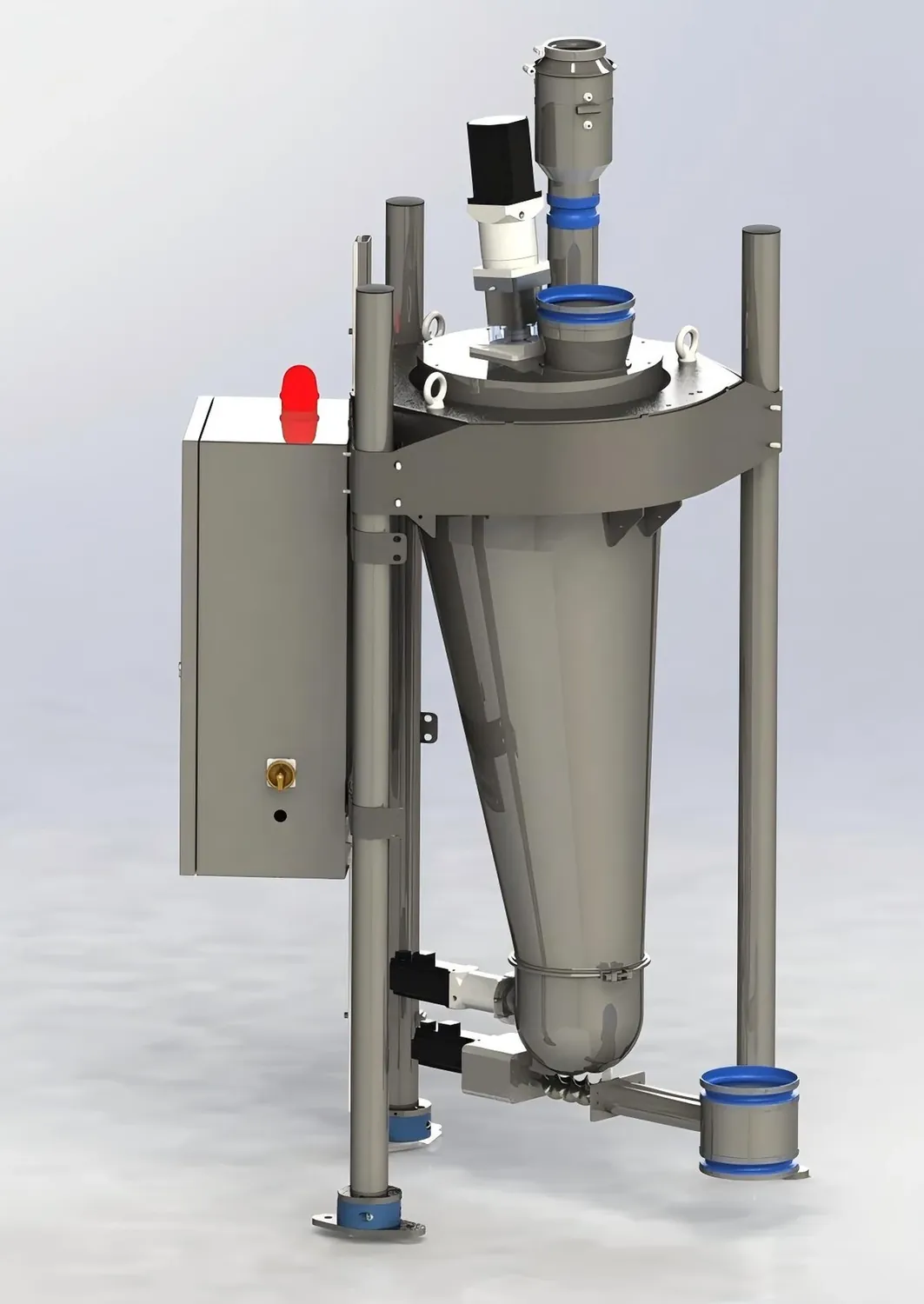
High-Precision Feeder
A screw feeder, a hopper weighing unit and a control unit working as one loop. The controller reads material weight and screw speed in real time,…
View Specifications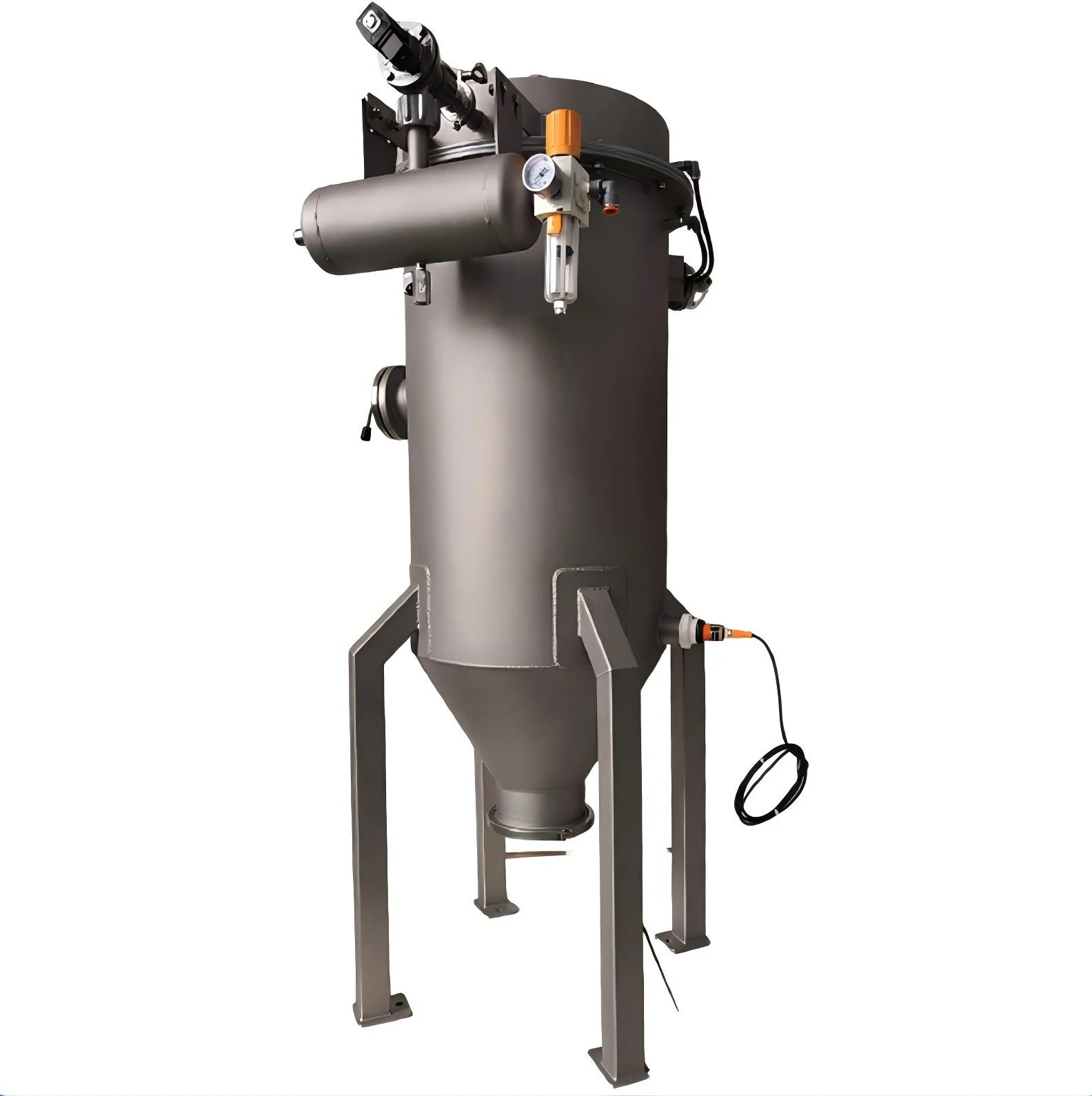
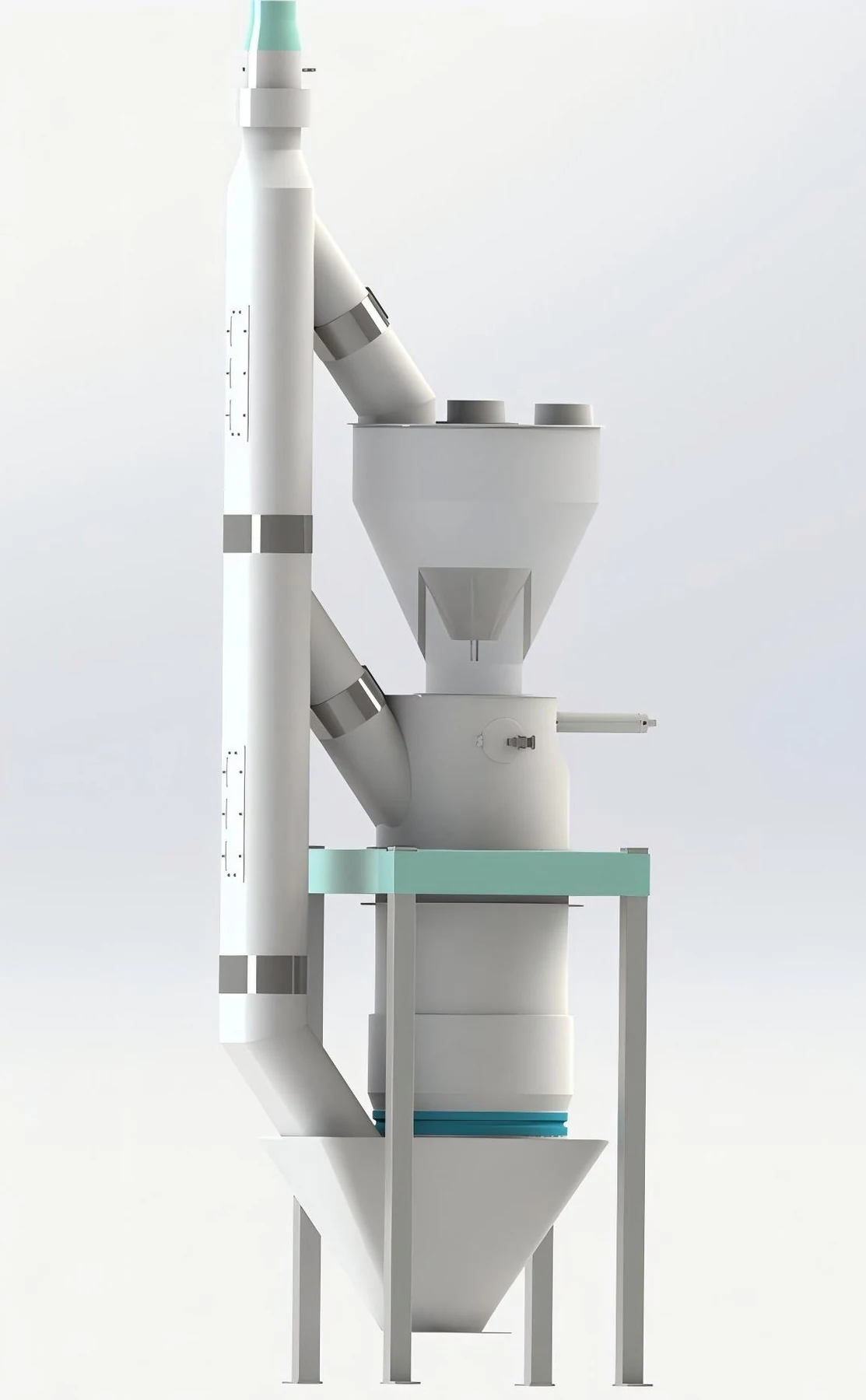
Dust Collector
A fan pulls dust-laden air away from the charging point, cartridge filters intercept the particles, clean air is exhausted and the collected dust…
View SpecificationsBackground Reading
FAQ About the Fully Automatic Bottom-Fill Packaging Machine Without Hopper
Why fill from the bottom rather than the top?
Bottom filling puts material in below the settled bed instead of dropping it through air. That reduces material segregation and dust generation, and improves packaging accuracy and efficiency.
Which industries is it used in?
It is widely used in the food, chemical and pharmaceutical sectors, for granules, powders and mixed materials.
Does it need an operator at the machine?
The cycle is fully automatic through bag loading, filling, weighing, sewing and conveying, and the machine supports remote operation and connection to a central control system.
Which control systems can be supplied?
The standard package is a PLC with touch screen and related electrical components. WP251 and Ampere (Jeman) control systems are available as options.
How is the final fill weight held accurate?
By combining the internal pressure balance design in the weighing element with multi-axis servo control and a cutoff gate on the final approach to target weight.
Request a Quotation for the Fully Automatic Bottom-Fill Packaging Machine Without Hopper
Send the material, bulk density, throughput and accuracy target. Our engineers reply with the specification and price within 24 hours.