
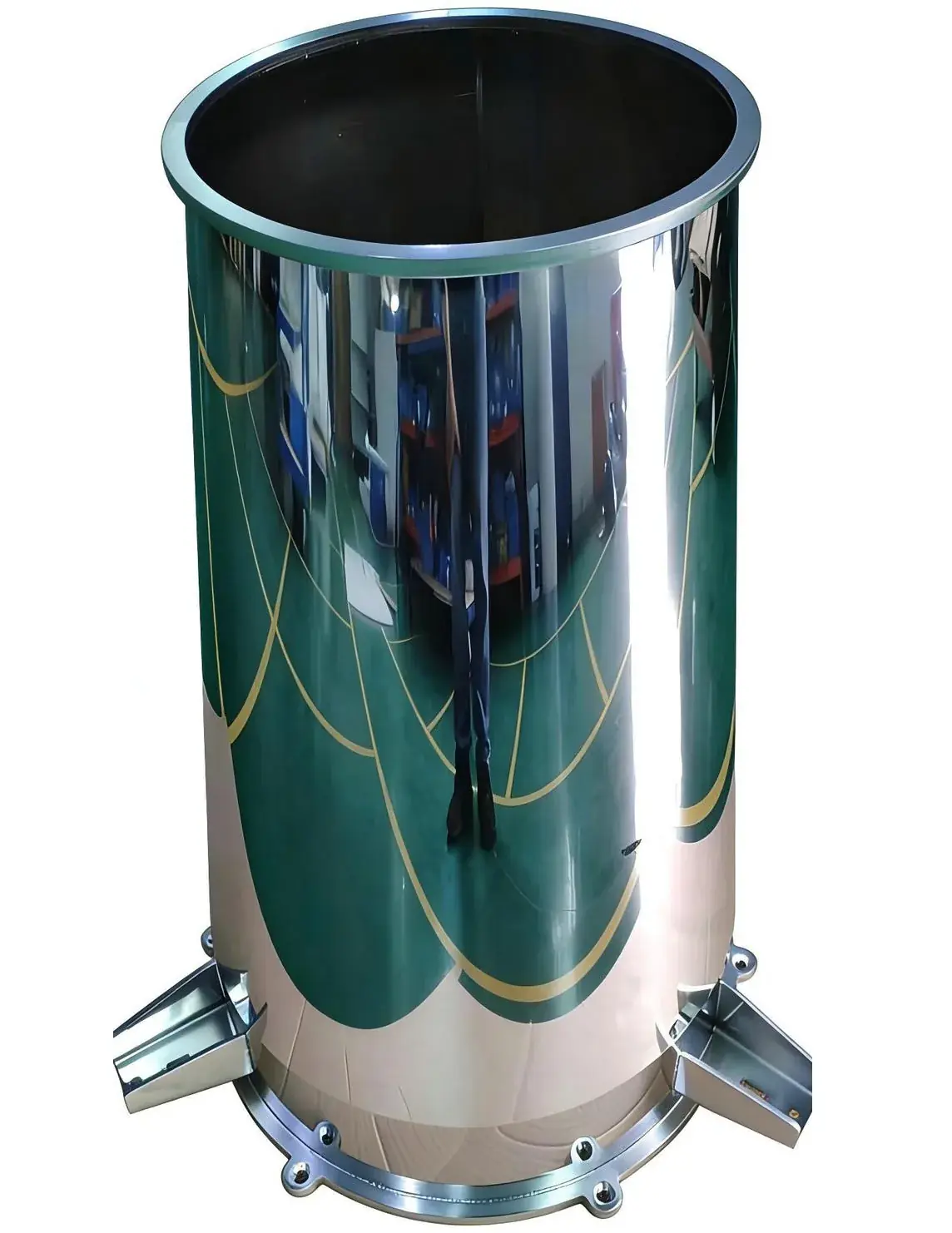
Material Selection for Battery Electrolyte Tanks
In battery fluid equipment the vessel is part of the chemistry. Every wetted surface, weld and seal either protects the material or quietly contaminates it, and the decision is made at material selection, long before commissioning.
Corrosion and purity are two separate problems
A material can resist attack and still be wrong. Corrosion resistance keeps the vessel intact; purity performance keeps the product uncontaminated. Precision-matched 316L stainless steel and PTFE linings are selected against both demands together, because solving only one of them shows up later as an out-of-specification batch.
What the surface finish is for
Mirror polishing to Ra 0.2 micrometres or better is not cosmetic. A rougher surface holds product in the profile, which means carryover between batches and cleaning cycles that do not fully clean. A polished wetted surface protects sensitive materials and makes the vessel realistically cleanable.
Welding decides where the leaks are
Joints are the weak point in any vessel. Automated TIG and plasma welding produces consistent, leak-free joints rather than the variable result of hand welding, and advanced sealing covers the connections that are not welded.
Mixing high-viscosity slurry
High-viscosity battery slurry is difficult to mix and low mixing efficiency is a common bottleneck. Vessel geometry and mixer selection have to be engineered against the actual viscosity, not carried over from a water-like duty.
Safety is part of the equipment
Fire prevention, leak detection and containment systems are built into the equipment in line with global standards, which matters because the consequence of a leak in this duty is not only lost product.
Design for the scale you will reach
Equipment engineered with scalability in mind carries from lab tests to mass production, spanning lab scale to GWh-level production lines. That continuity is what stops a successful pilot from needing a different design to go into production.
Other Articles in the Knowledge Center
Questions From This Guide
Which stainless grade do you use?
Precision-matched 316L stainless steel, with PTFE linings and equivalent materials where the chemistry requires them.
What polishing standard is available?
Mirror-polished surfaces at Ra 0.2 micrometres or better on the wetted side.
Is the equipment suitable for extreme operating conditions?
It is engineered for reliable performance in extreme temperatures and high humidity, to suit diverse operational needs.
Talk It Through With an Engineer
Send your material data and process conditions and we will tell you what the equipment can and cannot do.