
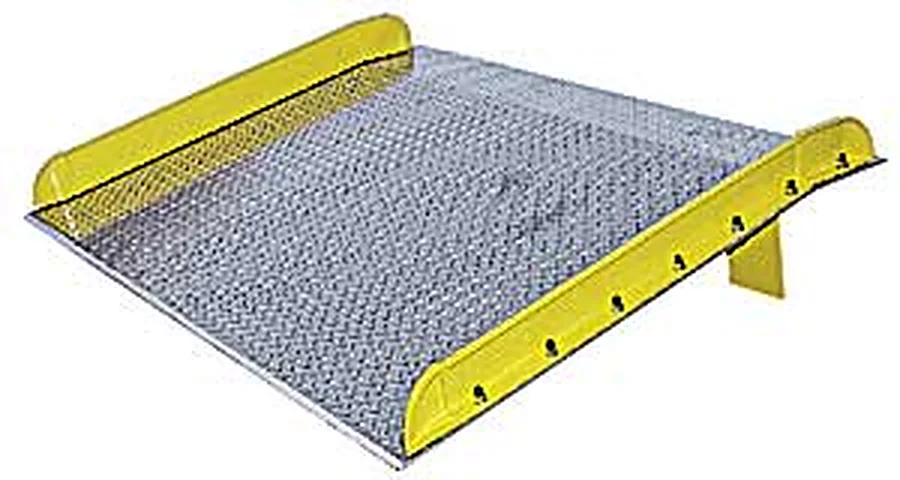
Dock Boards
Aluminium Dock Boards
An aluminium dock board bridges the gap and the height difference between a dock edge and a trailer bed. The S&L TAS series publishes 21 models…
View specificationsUndersized dock boards almost always come from one mistake: totalling the pallet weight instead of the whole crossing load. The published TAS table makes the right calculation straightforward once you know what to add up.
The board carries the fork truck, its load and the operator, all at once. A 5,000 lb counterbalance truck carrying a 3,000 lb pallet with a 200 lb operator puts 8,200 lb on the board, not 3,000 lb.
The S&L TAS series publishes three capacity classes: 10,000, 15,000 and 20,000 lb. Total the real load and then choose the class above it.
The published height difference rises with board length: 5 inches at 36 inch length, 7 inches at 48 inches, 10 inches at 60 inches and 12 inches at 72 inches.
A longer board over the same step gives a shallower approach angle, which matters for low-clearance trucks and for any load that could shift on a ramp. Choose the longest board the bay geometry allows.
The series is published in 60 and 72 inch widths. The figure to check is the overall width of the widest truck that will cross, plus the margin needed for the operator to stay comfortably inside the safety curbs.
The steel safety curbs run the full length of both edges. They are steel rather than aluminium because the curb is the part a wheel actually contacts.
Weight is the case for aluminium. A 60 by 48 inch board in the 10,000 lb class is 145 lb, light enough for a dock team to move between bays.
Wear is the case for steel. Steel-wheeled pallet trucks, swarf, castings and hot or sharp material abrade an aluminium tread faster than a steel one. A steel board normally stays in one bay, so the specification question becomes which bay rather than which shift.
Measure the height difference at the bay in question, both with an empty trailer and a loaded one. A loaded trailer sits lower on its suspension, and the difference between the two is often several inches.
Size the board for the worst case of the two, then check both curbs and the tread surface before every shift.
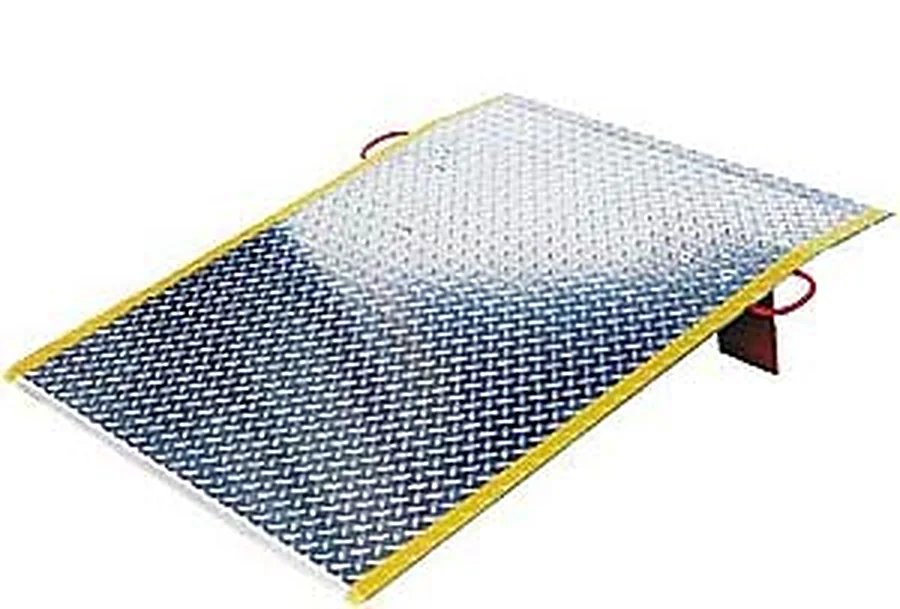
Aluminium dock board with yellow safety curbs and lifting loops at the leading edge
Dock Boards
An aluminium dock board bridges the gap and the height difference between a dock edge and a trailer bed. The S&L TAS series publishes 21 models…
View specifications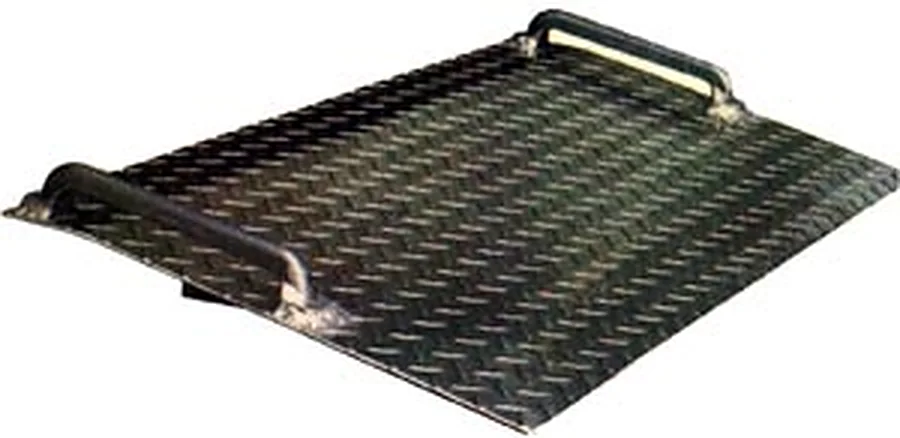
Dock Boards
Where a bay runs steel-wheeled trucks, castings or swarf-laden pallets, a steel deck outlasts an aluminium one. The S&L steel range uses diamond…
View specifications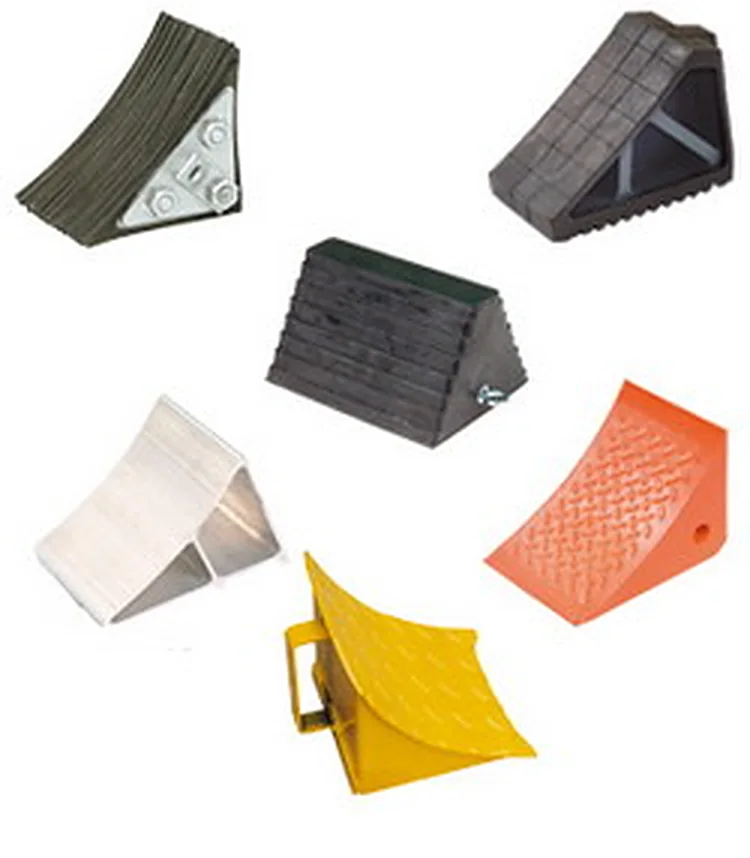
Wheel Chocks
A wheel chock is the cheapest thing on a loading dock and the one that most often is not there. S&L lists six models, SL-WC-01 to SL-WC-06, across…
View specificationsTwenty-one: seven sizes in each of the 10,000, 15,000 and 20,000 lb capacity classes.
Widths of 60 and 72 inches, and lengths of 36, 48, 60 and 72 inches.
No. The steel range is quoted per bay against the height difference and the truck that will cross it.
Height difference loaded and unloaded, the widest truck that will cross, and the total crossing weight. Those three numbers pick the TAS model.