Trailer Jacks
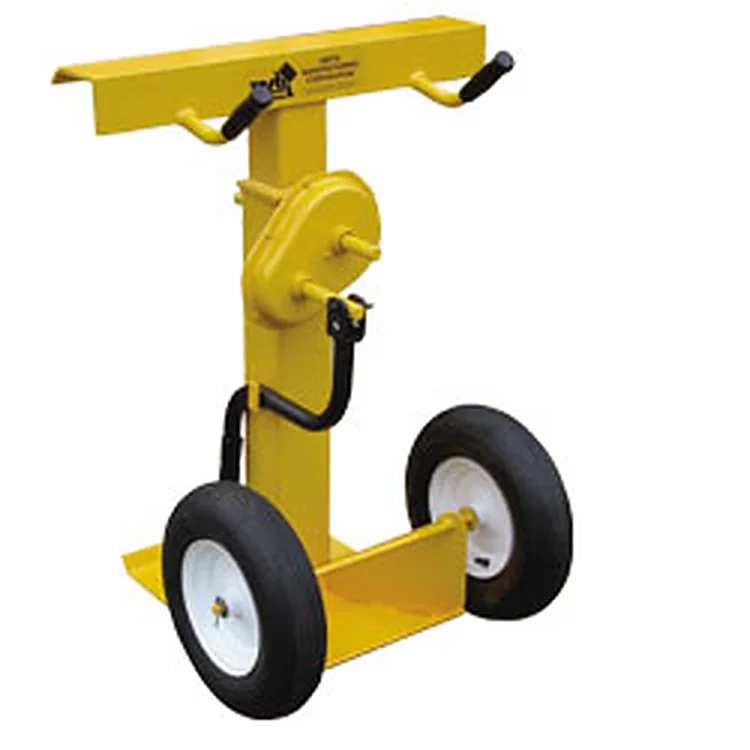
SL-TJ-05 Heavy Duty Two-Way Ratchet Trailer Jack
SL-TJ-05 is the top of the S&L jack range: the highest lifting rating at 50,000 lb, the largest wheels at 16 inches and the tallest service range at…
View specificationsA trailer jack datasheet usually carries two numbers, and buyers routinely order against the larger one. They describe different jobs, and only one of them tells you whether the jack can raise a settled trailer nose.
Static capacity is the load the jack supports once it is already in position and carrying weight. On the S&L range this runs from 50,000 lb on SL-TJ-01 to 100,000 lb on SL-TJ-02 and SL-TJ-05.
A jack with a static rating and no published lifting rating is a stabilising jack. SL-TJ-01 is exactly that: 50,000 lb static, no lifting figure, 35 lb, no wheels. It supports a nose; it does not raise one.
Lifting capacity is the load the mechanism will move against gravity, and it is always the lower of the two numbers. SL-TJ-02, SL-TJ-03 and SL-TJ-04 are all published at 40,000 lb lifting. SL-TJ-05 is the highest in the range at 50,000 lb.
If the trailer nose has settled onto its landing gear and has to come back up, the lifting figure is the only one that matters. Choosing on the static number is how a jack ends up straining against a load it was never rated to move.
A jack that cannot cross the yard is not in service. Wheel diameter, not weight, is what governs this, because a small wheel stops dead at the surface break a large one rolls over.
The S&L range spans 8 inch wheels on SL-TJ-04, 10 inch on SL-TJ-02 and 16 inch on SL-TJ-05. SL-TJ-03 takes a different approach with a wheel barrel frame, 8 inch wheels at the rear and a 4 inch wheel at the front, so a 180 lb jack can be steered rather than shoved.
Four of the five models cover 39.5 through 51 inches. SL-TJ-05 covers 41 through 55 inches.
That extra four inches at the top is the difference between reaching a high-deck trailer and packing timber under a jack to make up the height. If any part of your fleet sits above a 51 inch nose height, the service range decides the model before either capacity figure does.
SL-TJ-02 uses a spin top screw head: continuous rotation, quicker across a full service range, better where the jack is mostly stabilising.
SL-TJ-04 and SL-TJ-05 use a two-way ratchet with a 2 inch diameter screw. The pawl reverses, so lowering under load is a controlled ratcheted descent rather than a release. Under 40,000 lb that is the whole safety case.
SL-TJ-03 uses a single-direction ratchet screw lift and spreads its reaction across a 6 inch beam rather than a single top cap, which suits older trailer frames.
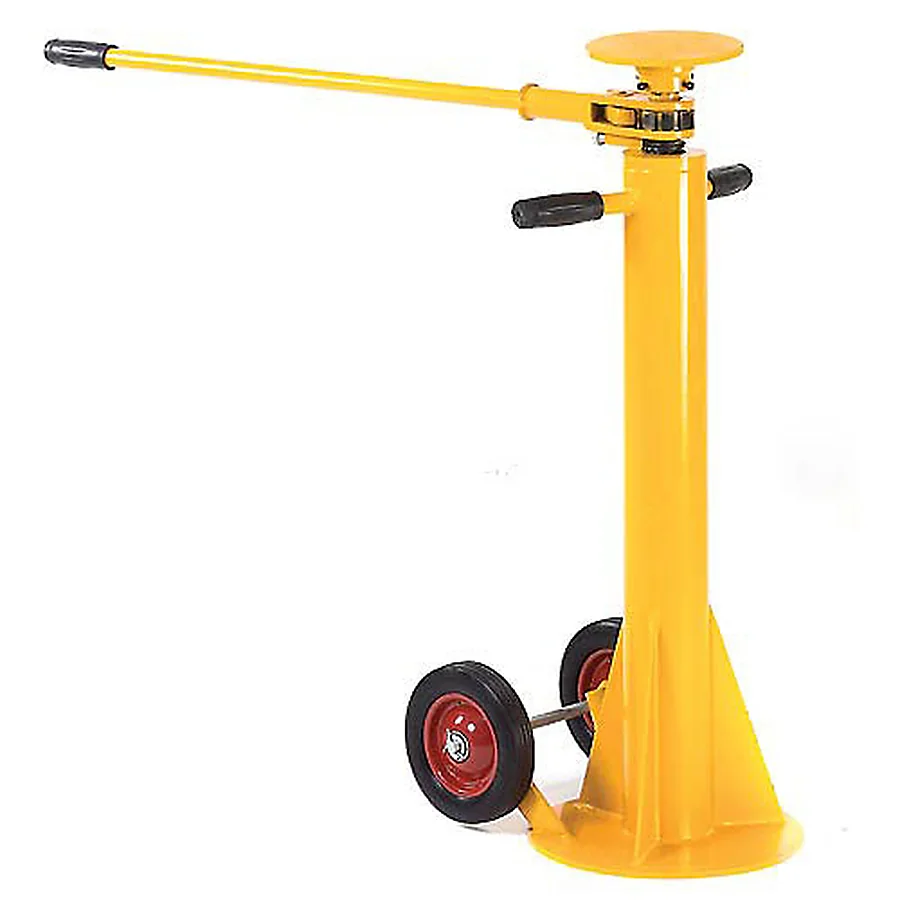
SL-TJ-02 wheeled trailer stabilising jack with spin top screw head
Trailer Jacks
SL-TJ-05 is the top of the S&L jack range: the highest lifting rating at 50,000 lb, the largest wheels at 16 inches and the tallest service range at…
View specificationsTrailer Jacks
SL-TJ-02 doubles the static rating of the carried jack and adds a published lifting capacity. It rolls out to the trailer on 10 inch semi-pneumatic…
View specifications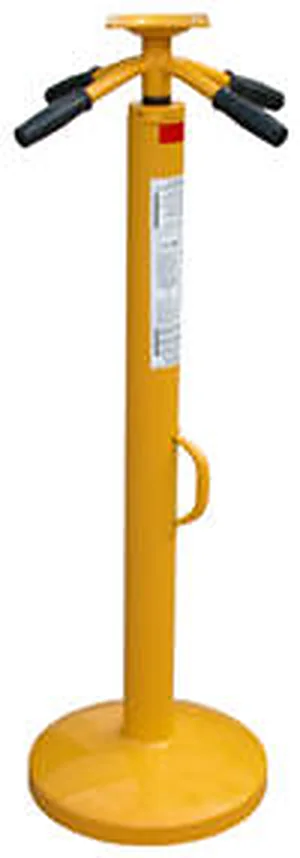
Trailer Jacks
SL-TJ-01 is the lightest jack in the S&L range and the only one without wheels. At 35 lb it is carried out to a parked trailer by one person, set on…
View specificationsSL-TJ-05 at 50,000 lb. The other wheeled models are published at 40,000 lb.
No, it is a different tool. SL-TJ-01 is rated 50,000 lb static and is intended to support a nose that is already down, not to raise one.
SL-TJ-05 at 41 through 55 inches. The rest of the range covers 39.5 through 51 inches.
That single answer narrows five jacks to one or two. Add the trailer nose height and the yard surface and the choice is settled.