
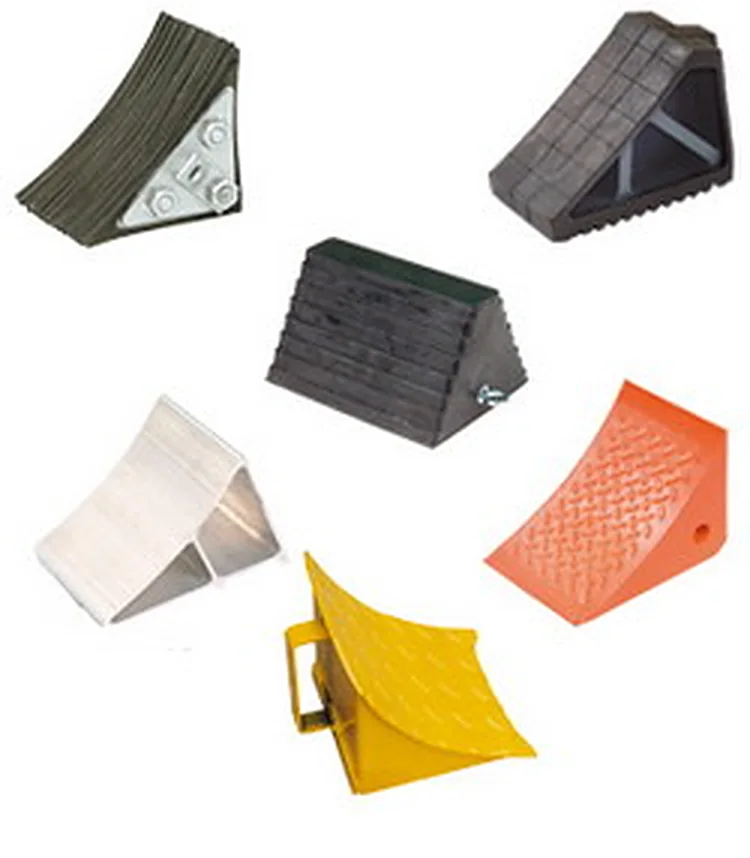
Wheel Chocks
Wheel Chocks
A wheel chock is the cheapest thing on a loading dock and the one that most often is not there. S&L lists six models, SL-WC-01 to SL-WC-06, across…
View specificationsMost sites buy one type of wheel chock and then wonder why half of them end up in the cab. The chock that works at a clean concrete dock face is rarely the one that works on a graded gravel yard.
Rubber grips by friction. On a swept concrete apron a moulded rubber chock like SL-WC-05 holds well, places quietly and will not spark. Wet that same apron with diesel or hydraulic oil and the friction it depends on drops away.
Steel and cast iron work differently. SL-WC-02, the cast iron model, bites into a gravel or broken surface where a rubber chock would simply slide. On loose surfaces the chock is wedging itself into the ground as much as against the tyre.
A chock is only effective if it is under the wheel. The single biggest reason chocks are not placed is that carrying them is unpleasant.
Two of the six S&L models solve this directly. SL-WC-03, the laminated rubber chock, has a welded steel bail handle. SL-WC-06, the diamond tread steel chock, has a side carry handle. If a driver has to walk the length of a trailer in the rain, specify one of those two.
A chock that cannot be seen gets driven over, and a trailer that looks unchocked gets chocked twice while another gets missed.
The steel models, SL-WC-01 and SL-WC-04, are finished in safety yellow. SL-WC-02 goes further and carries Safety First Check Your Wheels cast into the face of the iron, so the message is part of the casting rather than a label that peels.
Use two whenever the yard is graded, whenever the trailer is being loaded from one end, and whenever the trailer will be left without a tractor. A single chock assumes the trailer can only move in one direction, which a sloped surface does not guarantee.
Where a trailer is dropped for any length of time, pair the chocks with a stabilising jack so the landing gear is not carrying the nose weight on its own.
Range of rubber and steel truck wheel chocks shown together
Wheel Chocks
A wheel chock is the cheapest thing on a loading dock and the one that most often is not there. S&L lists six models, SL-WC-01 to SL-WC-06, across…
View specifications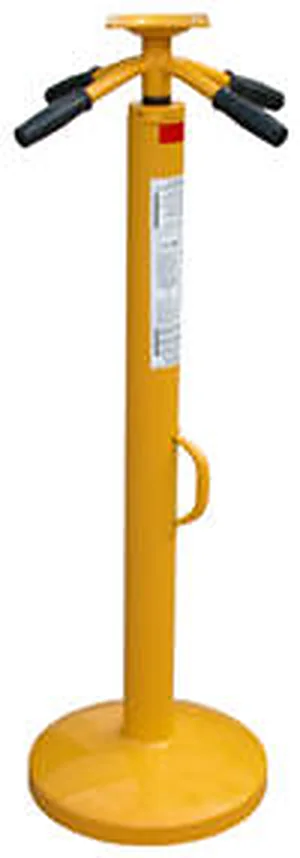
Trailer Jacks
SL-TJ-01 is the lightest jack in the S&L range and the only one without wheels. At 35 lb it is carried out to a parked trailer by one person, set on…
View specifications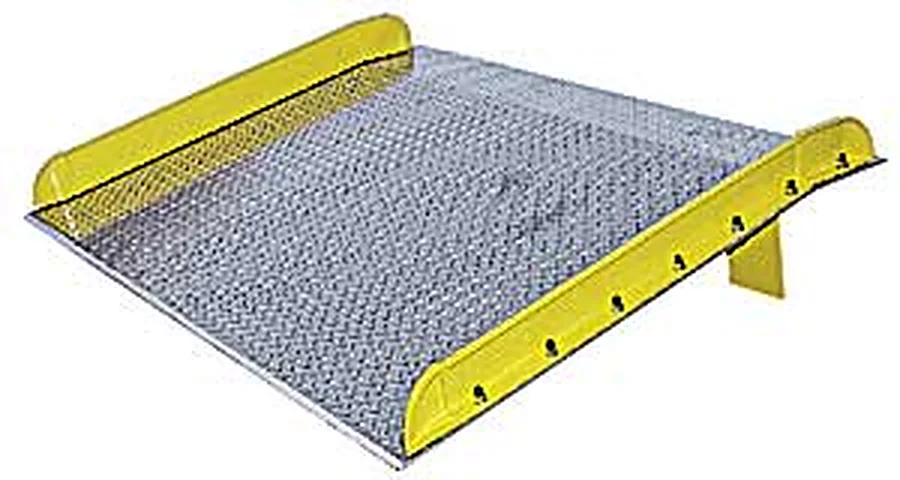
Dock Boards
An aluminium dock board bridges the gap and the height difference between a dock edge and a trailer bed. The S&L TAS series publishes 21 models…
View specificationsRated weights are not published on the original S&L documentation. Confirm the rating for the model you want at quotation and state the vehicle type.
Replace once the gripping face has worn smooth. A worn rubber chock relies on friction it no longer has.
Yes, and on a mixed site you should. Dock face and open yard often need different chocks.
Tell S&L what the dock apron and the open yard are made of and how far chocks have to be carried, and the recommendation will follow those rather than a price list.