
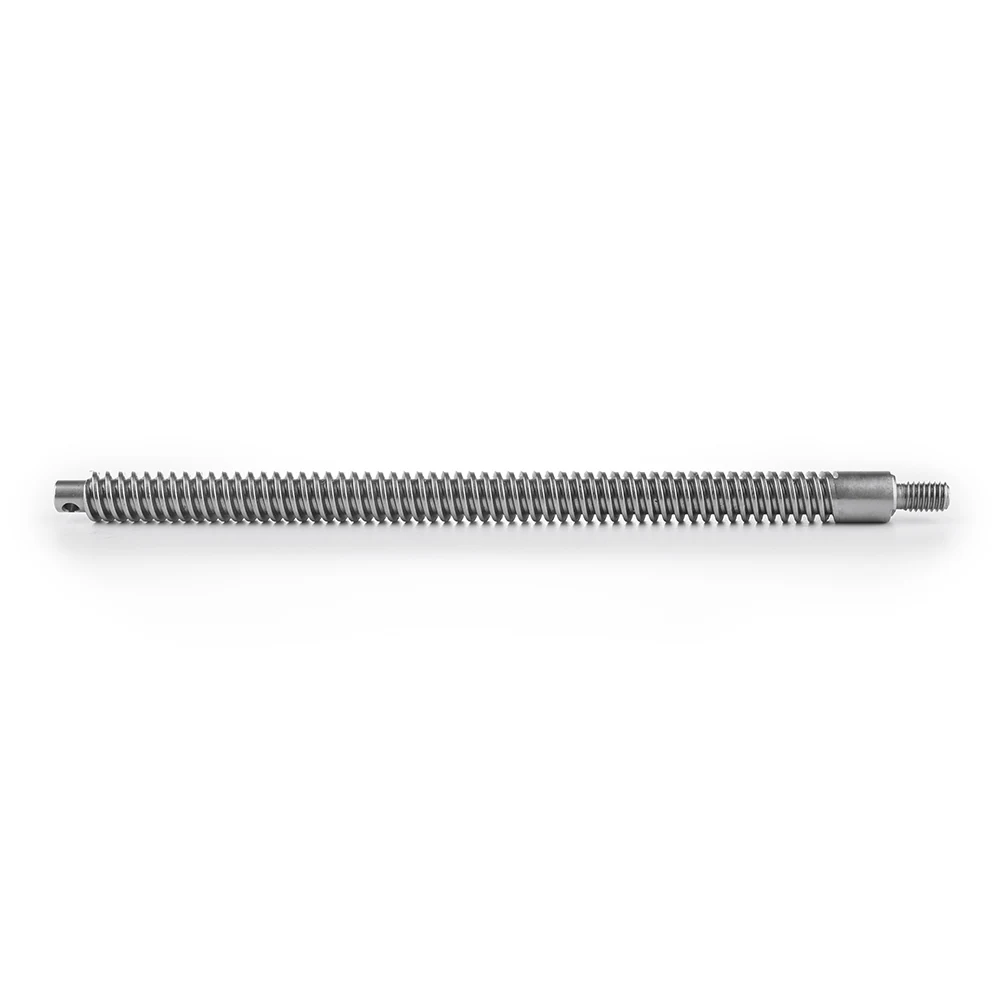
Precision Lead Screw
A slender lead screw with the thread and both bearing journals cut on the same centreline
A Long Thin Screw That Still Runs True
The difficulty with a lead screw is not the thread, it is keeping a long slender bar straight while you cut one. Sliding-head turning supports the bar within a few millimetres of the tool, so the journals at each end and the thread between them stay on one axis instead of bowing away from the cutter.
Screws in this family drive small positioning axes: media transports, adjustment mechanisms and laboratory stages where a few hundred millimetres of travel has to repeat.
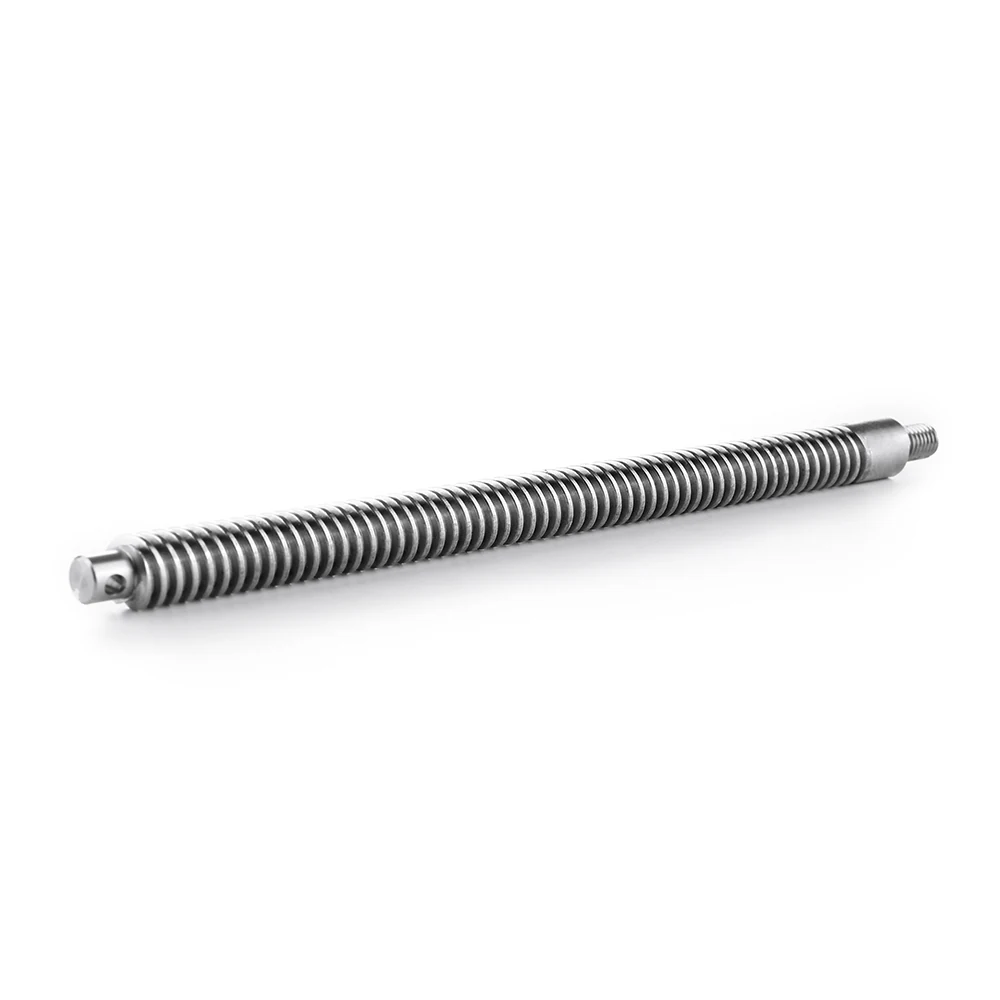
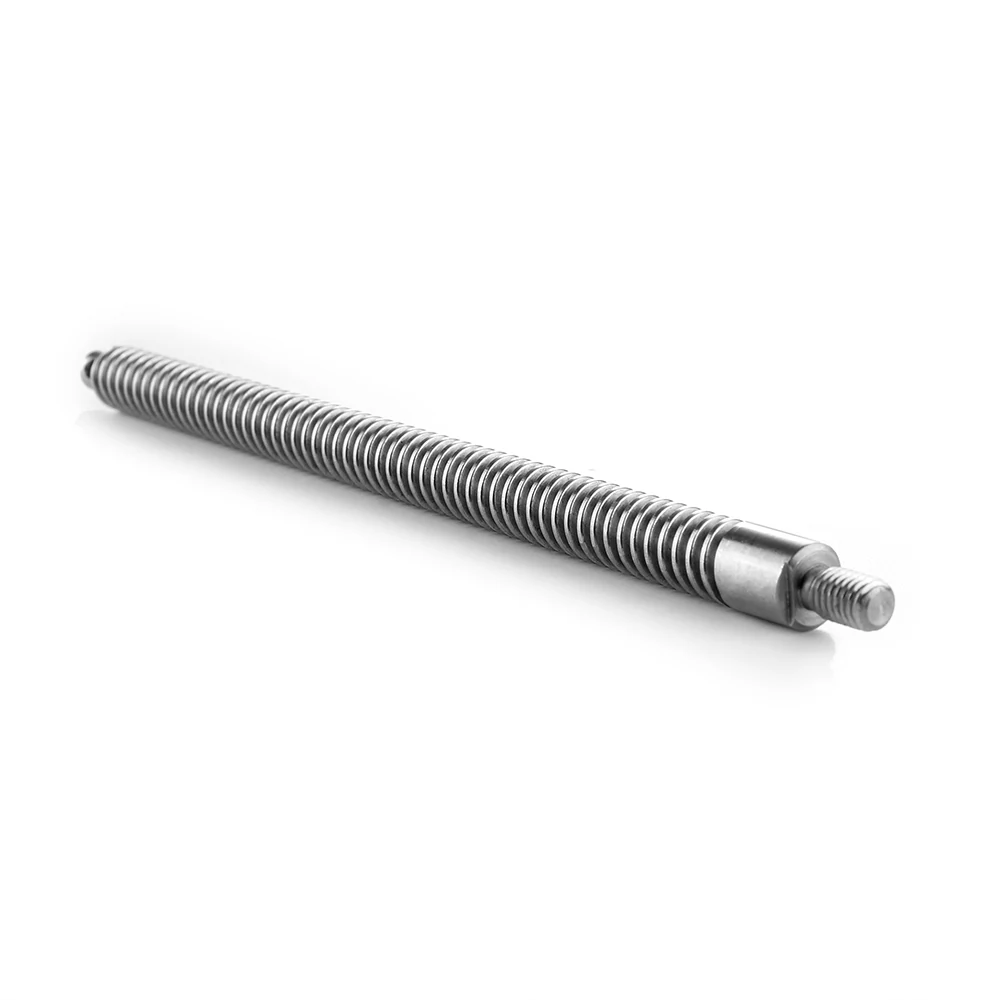
Why Slender Screws Are Turned This Way
Supported While Cutting
The guide bushing holds the bar close to the tool, which is what keeps a long screw straight.
Journals On The Thread Axis
Bearing seats are cut in the same sequence as the thread, so the nut does not fight the bearings.
One Setup, One Datum
No re-clamping between the thread and the ends, so nothing steps out of line.
Application Scenarios
- Small positioning axes in office automation equipment
- Adjustment screws in optical and laboratory stages
- Media feed mechanisms in financial machines
- Manual adjusters on production tooling
Who It Is For
- Designers of low-load positioning mechanisms
- Buyers replacing an imported screw with a local equivalent
- Engineers whose current screw whips at speed
- Teams needing short-run screws in non-standard lengths
What Goes Wrong With Badly Made Lead Screws
- Screws that bow during machining and whip in service
- Bearing journals that are not concentric with the thread
- Backlash caused by thread form variation along the length
- Long lead times on non-standard screw lengths
Guide-Bushing Support
Deflection is controlled at the cut, not corrected afterwards.
Single Axis
Thread and journals share one centreline by construction.
Any Length To Drawing
Length is a program value, not a stock code.
Technical Features
- Continuous thread form over the working length
- Turned bearing journal at each end
- Drive feature machined to drawing at the input end
- Thread run-out relieved rather than abrupt
- Deburred and cleaned before packing
Specifications
| Part Type | Precision lead screw |
|---|---|
| Typical Material | Stainless steel or free-cutting steel |
| Primary Process | Swiss-type CNC turning |
| Thread Form | To customer drawing |
| Journals | Turned at both ends on the thread axis |
| Tolerance | To customer drawing, confirmed at quotation |
| Straightness | Controlled by guide-bushing support; value agreed per drawing |
| Sample Lead Time | Within 30 days of drawing approval |
Thread form and length are taken from your drawing. Straightness is agreed per part rather than quoted as a blanket figure.
Materials We Run
- SUS304 stainless for general mechanisms
- Free-cutting steel where a nut material handles the wear
- SUS316L where the screw is exposed to moisture
- Customer-specified grades on request
Manufacturing Process
Bar Preparation
Straightened bar is loaded so the cycle starts from a known condition.
Turn Journals
Both bearing seats are cut on the same axis as the thread.
Cut Thread
The thread form is cut along the working length in one pass sequence.
Deburr And Wash
Thread crests are deburred and the screw is cleaned before packing.
Quality Control
- Thread form compared against the drawing on a profile projector
- Journal diameters measured at both ends
- Straightness checked on sample parts from each lot
- Nut trial fit where a mating nut is supplied
- ISO 9001 system in place since 2009
Customization Options
- Thread form, pitch and lead
- Working length and overall length
- Journal diameters and retaining features
- Drive end shape, flat, square or cross hole
- Matched nut supplied or nominated
Machined Screw Against Rolled And Ground Screws
| Rolled lead screw | Rolling is cheaper in long production runs; machining wins on non-standard lengths and on short series. |
|---|---|
| Ground ball screw | A ball screw gives far lower friction and much higher cost; a lead screw suits low-duty positioning where self-locking helps. |
| Threaded rod cut to length | Commercial rod has no machined journals and no control over straightness once it is cut. |
How To Order A Lead Screw
Define The Travel
Working length plus the nut length sets the thread length.
State The Load
Axial load and duty cycle guide the material and the thread form.
Describe The Bearings
Journal sizes come from the bearings you have chosen.
Supply Or Nominate The Nut
Fit is verified against the real nut before the batch ships.
Precision Lead Screw — FAQ
How straight can you hold a long screw?
Straightness depends on the length-to-diameter ratio and the material, so we agree a figure against your drawing rather than publishing one. The guide bushing on the sliding-head lathe is what makes a usable figure possible on slender work.
Can you supply a matching nut?
We can machine one from your drawing, or fit and verify a nut you nominate. Either way the pair is checked together before the batch ships.
Do you offer trapezoidal thread forms?
The thread form is cut from the program, so trapezoidal, square or a custom form all follow your drawing. Send the form details with the print.
What lengths can you machine?
Length is limited by the machine and the slenderness of the screw rather than by a stock range. Send the drawing and we will confirm before quoting.
Will you harden the screw?
Heat treatment is subcontracted and managed by us where the drawing requires it. Be aware that hardening a slender screw can move it, so we discuss the sequence before agreeing.
Related Products
Related Guides
Quote A Lead Screw To Your Drawing
Send the thread form, the working length and the journal sizes. If you have the nut, tell us and we will verify the pair before shipping.