Industrial equipment and custom parts sourced from vetted Chinese factories since 2007
[email protected]Mon-Fri 09:00-18:00 GMT+8
The inverter is the component that decides whether a solar installation performs, since it converts the direct current produced by the panels into the alternating current that appliances and the grid can use. China, already the largest producer of solar panels, has a substantial inverter manufacturing industry supplying string, micro and hybrid units to markets worldwide. For an importer or project developer, the sourcing task is to verify that a manufacturer can meet the electrical standards of the destination market, support the product after sale, and sustain quality across a production run. This guide covers product types, manufacturer selection, quality control, customisation, regulation and due diligence.
A solar inverter converts the direct current produced by solar panels into alternating current suitable for household appliances and grid connection, which makes it a vital part of any solar power system. Three types dominate. String inverters serve a series of panels through a single unit and remain the common choice for straightforward installations. Microinverters sit at individual panel level, which improves performance where shading or differing orientations affect panels unevenly. Hybrid inverters work with both battery storage and grid supply, giving the end user flexibility to store energy and manage consumption. Chinese manufacturers produce all three and tailor them to different system requirements. Deciding which type your market or project needs precedes any supplier conversation, because the manufacturing base differs by product family.
China's role in the global solar inverter market follows from its position as the world's largest producer of solar products. Manufacturers offer competitive pricing with quality control measures intended to meet or exceed international standards, which makes them attractive to businesses and individuals worldwide. Many also carry a broader renewable energy product range, extending into areas such as solar pump inverters, motor variable speed drives and motor soft starters, which indicates depth of power electronics capability rather than assembly of a single product. The market is expected to grow on the back of rising renewable energy awareness and government incentives, and trends towards digitalisation and decentralisation are reshaping product requirements. Suppliers investing against those trends are generally the more durable partners.
Four trends should influence what you specify. The push towards higher efficiency products continues, as manufacturers work to increase conversion efficiency and therefore energy yield from the same array. Smart inverters are becoming more common because they integrate with home automation systems and support better grid management, which contributes to a more stable supply. Hybrid inverters that work with both battery storage and grid supply are increasingly prevalent and attractive to end users who want flexibility. Global market expansion means Chinese manufacturers are actively adapting products for international customers rather than treating export as incidental. When comparing suppliers, ask which of these capabilities are in current production versus in development, because a roadmap is not a product you can ship.
Choosing the right manufacturer determines the longevity and efficiency of the systems you supply. Start with quality and reputation, looking for certifications such as ISO 9001 that indicate a functioning quality management system rather than a marketing claim. Examine the product range, since breadth across inverter types and related power electronics usually reflects genuine industry expertise rather than a single contract-manufactured line. After-sales service is vital in this industry, so establish what support and warranty coverage the manufacturer actually provides and how claims are handled across a border. Consider pricing on a price-to-performance basis rather than on unit cost alone. Finally, seek recommendations from industry contacts and trusted sources, and read testimonials and reviews with a critical eye.
Understanding the production sequence helps you ask better questions during an audit. It begins with design and engineering, where specifications including voltage, power rating and efficiency are established. Component selection and assembly follows, with transformers, semiconductors and circuit boards assembled to the design specification and components chosen for durability and performance. Quality control is applied to every unit through rigorous testing before final assembly and packaging for shipping. The point that matters for a buyer is component selection: inverter reliability is largely determined by the semiconductors, capacitors and magnetics chosen, and by whether those are consistent across a production run. Ask what is specified, who approves substitutions, and whether component changes trigger requalification, because silent substitution is a real field-failure risk.
Ensuring product quality is essential in inverter manufacturing and the testing regime is the evidence. Manufacturers conduct a series of environmental tests on their inverters, including temperature, humidity and vibration testing, to confirm the units withstand the conditions they will meet in service. Certifications such as ISO 9001 indicate adherence to international quality standards at the organisational level. Beyond the initial qualification, quality control should be a continuous process, with manufacturers actively seeking improvements and addressing issues that arise in the field. As a buyer, ask to see the test reports rather than the summary, ask what the failure rate has been on comparable production, and ask how field failures are analysed and fed back into design, because that feedback loop is what separates improving suppliers from static ones.
Given the diversity of solar power systems, many manufacturers offer custom manufacturing to suit specific needs. Custom specifications typically cover voltage, power rating and inverter type, allowing a string, micro or hybrid product to be adapted to a client's system design. Design and branding options let businesses differentiate products in their own market, which matters for distributors building a brand rather than reselling. Some manufacturers also offer software customisation, including proprietary monitoring software that provides detailed performance data from the installed fleet. Treat monitoring software as part of the product rather than an accessory: data ownership, hosting location, update commitments and what happens if the relationship ends are all worth settling in the contract while you still have commercial leverage.
International trade in inverters sits inside two regulatory regimes plus a technical one. Chinese manufacturers must comply with export regulations set by the Chinese government, which may include securing certain licences and certifications, with compliance to environmental standards also emphasised. Regulations in the destination country must be considered separately and can include safety standards, tariffs and labelling requirements. Over both sits compliance with international standards such as IEC and UL for safety and performance, which for grid-connected equipment is not optional. Establish which specific standards apply in your market before production, require written confirmation that the product is certified to them, and verify the certificates independently, since an expired or scope-limited certificate is a customs and liability problem waiting to happen.
Three publicly available tools let you verify a supplier before committing funds. Import and export data services allow you to search a company name and review shipment counts, supplier and customer names, and the products traded, which gives an independent read on scale in the inverter market specifically rather than across a whole catalogue. Chinese business information platforms let you search a company by its registered Chinese name to examine business registration details, confirm legal status and operational standing, and review credit reports and any listed legal disputes. Web archive services let you view historical snapshots of a company website, showing how the business has presented itself over time and whether its claimed history is consistent. Use all three together.
Prepare before negotiating. Understand your own needs first, including inverter type, quantities, technical specifications and target price, so the discussion is about value rather than discovery. Leverage knowledge of the market, pricing trends and where the manufacturer sits competitively. Build the relationship, since respectful open communication generally produces better outcomes than adversarial pressure. Alongside commercial terms, protect intellectual property: have the manufacturer sign a non-disclosure agreement before sharing proprietary information, register your rights in China because the system generally awards rights to whoever files first, and monitor the market for infringement. Verify the manufacturer's business licence, certifications and reputation, use secure payment methods that offer protection, and treat unrealistically low prices as a warning rather than an opportunity.
Agents and sourcing companies can be useful, particularly for businesses new to the Chinese market. Their contribution falls into three areas. In sourcing and negotiation, they identify suitable manufacturers and negotiate terms using knowledge of the market and local business practice that a first-time importer does not have. In quality assurance, they verify that products meet agreed specifications and quality standards, which is far cheaper than discovering a problem after shipment. In logistics and shipping, they manage transport arrangements, customs clearance and delivery. The trade-off is an additional cost and an additional party between you and the factory. Whether that is worthwhile depends on your order volume, your existing China experience, and how technically demanding your specification is.
For a repeat programme rather than a single order, supply chain management at the manufacturer becomes your concern too. Strong relationships between the manufacturer and its suppliers of raw materials and components are what keep quality consistent and production on schedule, so ask how long key component relationships have been in place. Inventory management balances production capacity against market demand and covers both raw materials and finished goods; a supplier holding no component buffer will transmit every upstream disruption straight to your delivery dates. Efficient distribution and logistics determine whether products arrive on time and in good condition. Fluctuating raw material prices can affect production costs and therefore pricing, so agree in advance how and when price adjustments may be proposed.
Boiler
Model HTK-GL-01 is a boiler supplied to beverage and dairy plants where process heat feeds pasteurising, clean...
View Details →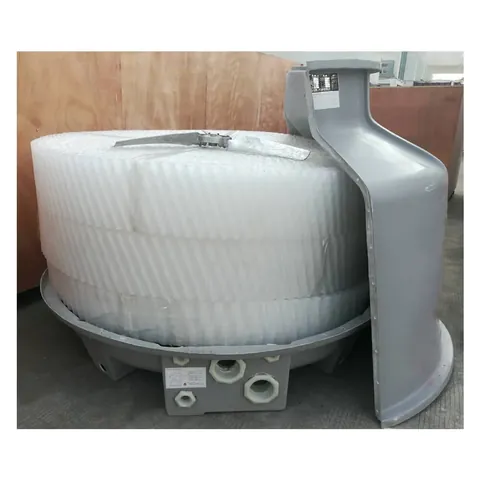
Cooling Tower
Heat rejected by pasteurisers, chillers and compressors has to go somewhere, and model HTK-LQT-01 is the cooli...
View Details →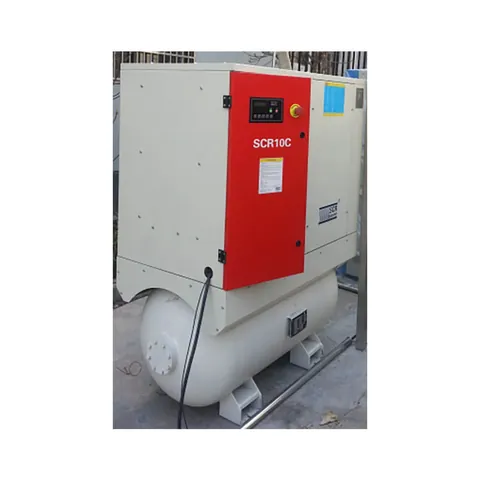
Air Compressor
Compressed air in a drinks plant touches the product, so model HTK-KYJ-01 is offered as an oil free screw air ...
View Details →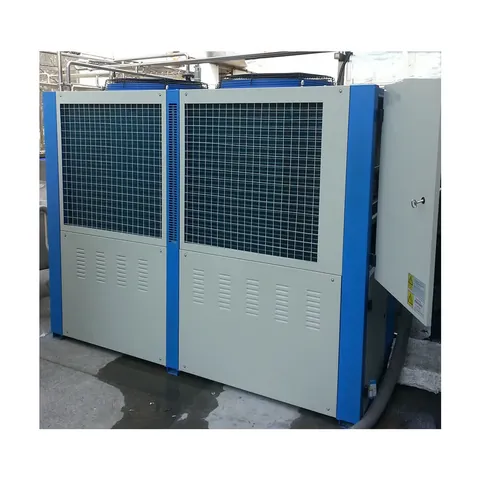
Chilling Unit
Model HTK-C-01 supplies chilled water to beverage and dairy processes where product temperature has to be pull...
View Details →Three main types. String inverters serve a series of panels through one unit and suit straightforward installations. Microinverters operate at individual panel level, which helps where shading or differing orientations affect panels unevenly. Hybrid inverters work with both battery storage and grid supply, offering flexibility to store and manage energy. Chinese manufacturers produce all three and adapt them to different system requirements.
Assess quality and reputation, looking for certifications such as ISO 9001. Examine the product range, since breadth across inverter types and related power electronics suggests genuine expertise. Establish what after-sales support and warranty coverage is provided and how claims are handled internationally. Consider price against performance rather than unit cost alone, and seek recommendations from industry contacts and trusted sources.
Compliance operates at three levels. Chinese export regulations may require certain licences and certifications along with environmental compliance. The destination country imposes its own safety standards, tariffs and labelling requirements. Over both, products must comply with international standards such as IEC and UL for safety and performance. Confirm the specific standards for your market before production and verify certificates independently.
Yes. Custom specifications commonly cover voltage, power rating and inverter type, so a string, micro or hybrid product can be adapted to a particular system design. Design and branding options allow product differentiation, and some manufacturers offer software customisation including proprietary monitoring software providing detailed performance data. Settle data ownership and update commitments in the contract.
Use import and export data services to check shipment history, trading partners and scale in the inverter category. Use Chinese business information platforms to confirm business registration, operating status, credit reports and any legal disputes, searching by the registered Chinese name. Use web archive services to review how the company website has changed over time and whether its claimed history holds up.
If this guide covers what you are buying, send the specification and we will quote it from a factory that has built it before.
Email Our Sourcing TeamMore Guides