Industrial equipment and custom parts sourced from vetted Chinese factories since 2007
[email protected]Mon-Fri 09:00-18:00 GMT+8
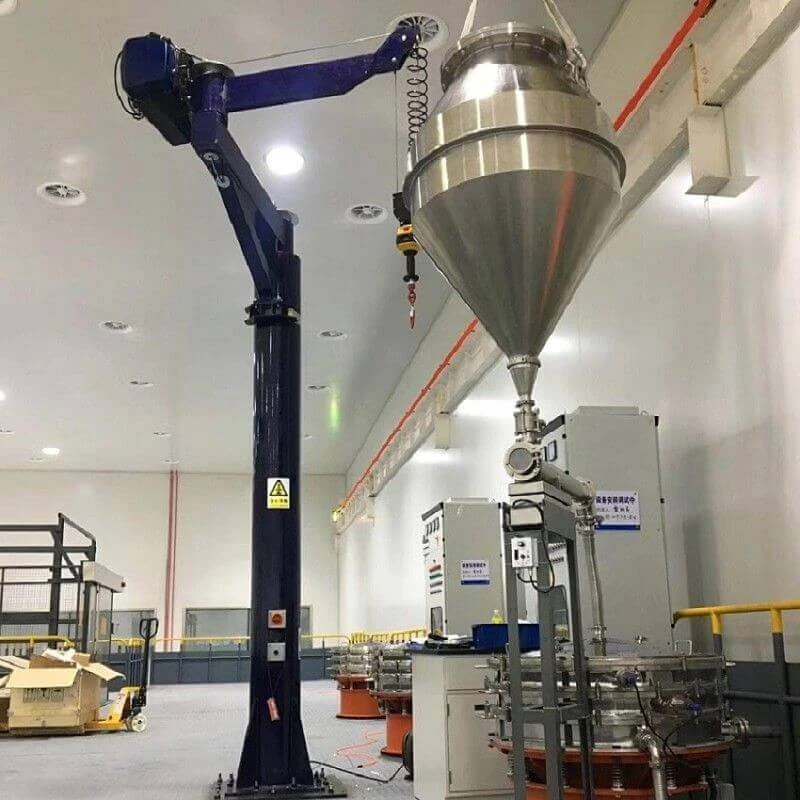
A jib crane is the workhorse of localised lifting: a boom that swings around a fixed pivot, serving one machine, one bay or one loading point without the cost and structural demands of a full overhead installation. Because jib cranes are comparatively simple, buyers often treat them as commodity items and order on capacity alone, then find the reach is short, the rotation is blocked, or the mounting will not suit the wall. This guide covers the jib crane types available from Chinese manufacturers, the specification points that decide whether the crane works, how to test and control quality, what freight costs look like, and how to structure a purchase so the equipment arrives fit for the job.
A jib crane occupies a small footprint and serves a circular working area, which makes it a strong fit for repetitive lifting at a single station. It is space-saving compared with an overhead installation, versatile enough for loading and unloading, assembly line work, maintenance and repair tasks, small-scale construction and port or dock operations, and relatively inexpensive to buy and install. It also improves safety by removing manual lifting from the task. The limitations are equally clear: reach is limited to the boom radius, load capacity is lower than a bridge crane, the pivot is fixed so the crane cannot follow work around the plant, mobility is minimal, and the boom, slew bearing and hoist require regular maintenance. Match the crane to a fixed, repetitive task and it performs; ask it to cover a whole bay and it will disappoint.
Wall-mounted jib cranes bolt to a building column or wall and carry no base, which saves floor space but transfers load into the structure. Their horizontal arm typically rotates through 180 degrees, giving a half-circle of coverage. Free-standing jib cranes are independent structures on their own foundation and rotate a full 360 degrees, providing complete coverage within their radius, which makes them the most flexible choice where floor space allows. Articulating jib cranes add a hinged second arm so the hook can reach around obstructions and into machine enclosures. Wall-travelling jib cranes move along a wall-mounted track, extending coverage along a line rather than around a point. Mast-style jib cranes also rotate 360 degrees and are supported at both floor and roof level. Choose the configuration before you discuss price.
Reference specifications vary by product, but every enquiry should pin down the same list. Lifting capacity must cover the load plus the lifting attachment. Span is the working radius of the boom, and it should be measured to the furthest point the hook must actually reach, not to the nearest convenient pillar. Height under boom is the clear headroom below the boom and determines whether tall items pass underneath. Rotation is the arc the crane can sweep, which depends on configuration and on any obstruction. Mounting type dictates the civil or structural work you must prepare. Lifting speed affects cycle time and operator control. Safety features such as limit devices and overload protection should be listed explicitly rather than assumed. Send all seven items with your first enquiry.
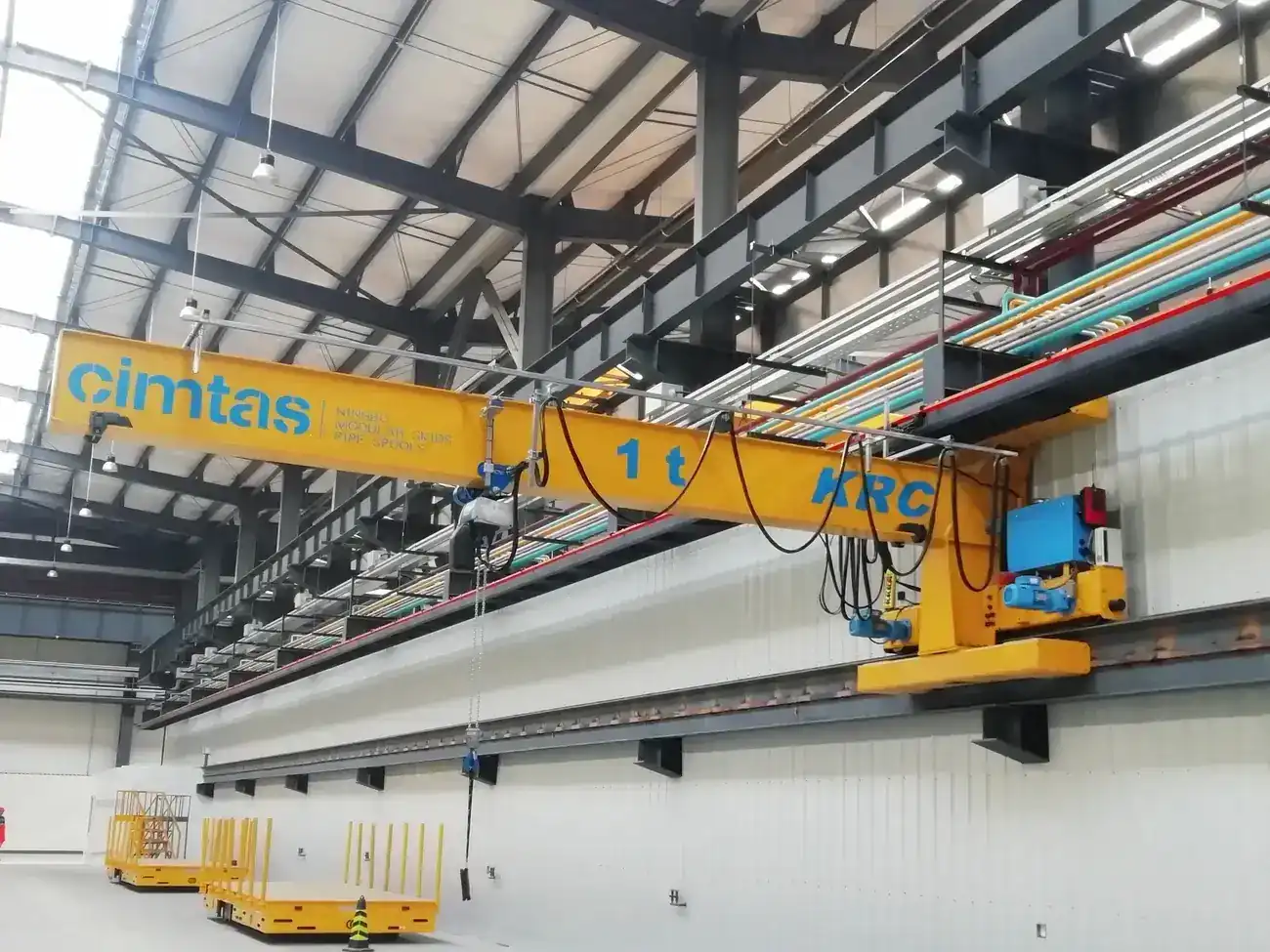
A jib crane must be installed on a foundation or structure capable of carrying the overturning moment created by a load at full reach, which is a larger force than buyers expect. Wall-mounted units depend entirely on the host structure, so confirm the column or wall is adequate before ordering. Once installed, operation follows a fixed sequence: inspect the crane and rigging, attach the load correctly using appropriate slings or hooks, lift smoothly without shock loading, move the load by swinging the boom and travelling the hoist, then set it down under control. Safety measures include respecting the rated capacity, keeping people clear of the load path, avoiding side pulls that load the boom laterally, and stopping if anything sounds or behaves abnormally. Train the operators and record that training.
Quality control for jib cranes centres on the boom, the pivot, the connections and the hoist. Expect visual inspection of welds, machining and paint, dimensional verification of boom length and height under boom, load testing that confirms the structure and brake hold under rated load at full reach, functional testing of rotation, travel, hoisting and limit devices, and electrical testing of the hoist and control circuit. Ask how the supplier controls quality during manufacture rather than only at the end: incoming material checks, qualified welders, stage inspections and traceable records. Request the test reports for the actual units you are buying. A supplier that provides serial-numbered reports without prompting has a system; one that supplies a generic certificate for any crane does not.
For a repeat-purchase programme it is worth asking the manufacturer for a sample unit before committing to volume. Receive it, assess build quality, test it under your real loading conditions and in your actual working geometry, and request modifications or improvements where the assessment shows them. Use the same conversation to settle commercial terms: pricing, minimum order quantities and delivery lead times. A sample that has been quietly hand-built to a higher standard than the production run is a known risk, so where possible take the sample from normal production and ask what changes between sample and series. For a single-unit purchase, the equivalent step is a factory acceptance test with your specification sheet in hand before the crane is packed.
China has a substantial jib crane manufacturing base, with suppliers concentrated around established lifting equipment clusters and covering fixed, portable, telescoping, wall-mounted, pillar-mounted, wall-travelling and floor-mounted designs. Opportunities include competitive pricing, breadth of configuration and willingness to customise. The risks are the familiar ones: variable quality between suppliers, intellectual property exposure if you share designs, and communication gaps on technical detail. Vet suppliers by checking business registration, asking for the product range they genuinely manufacture rather than trade, requesting references, and where value justifies it, visiting the plant. Trade shows and expos in China let you inspect several suppliers' cranes side by side, meet engineering staff rather than sales agents, and gauge how current their designs are.
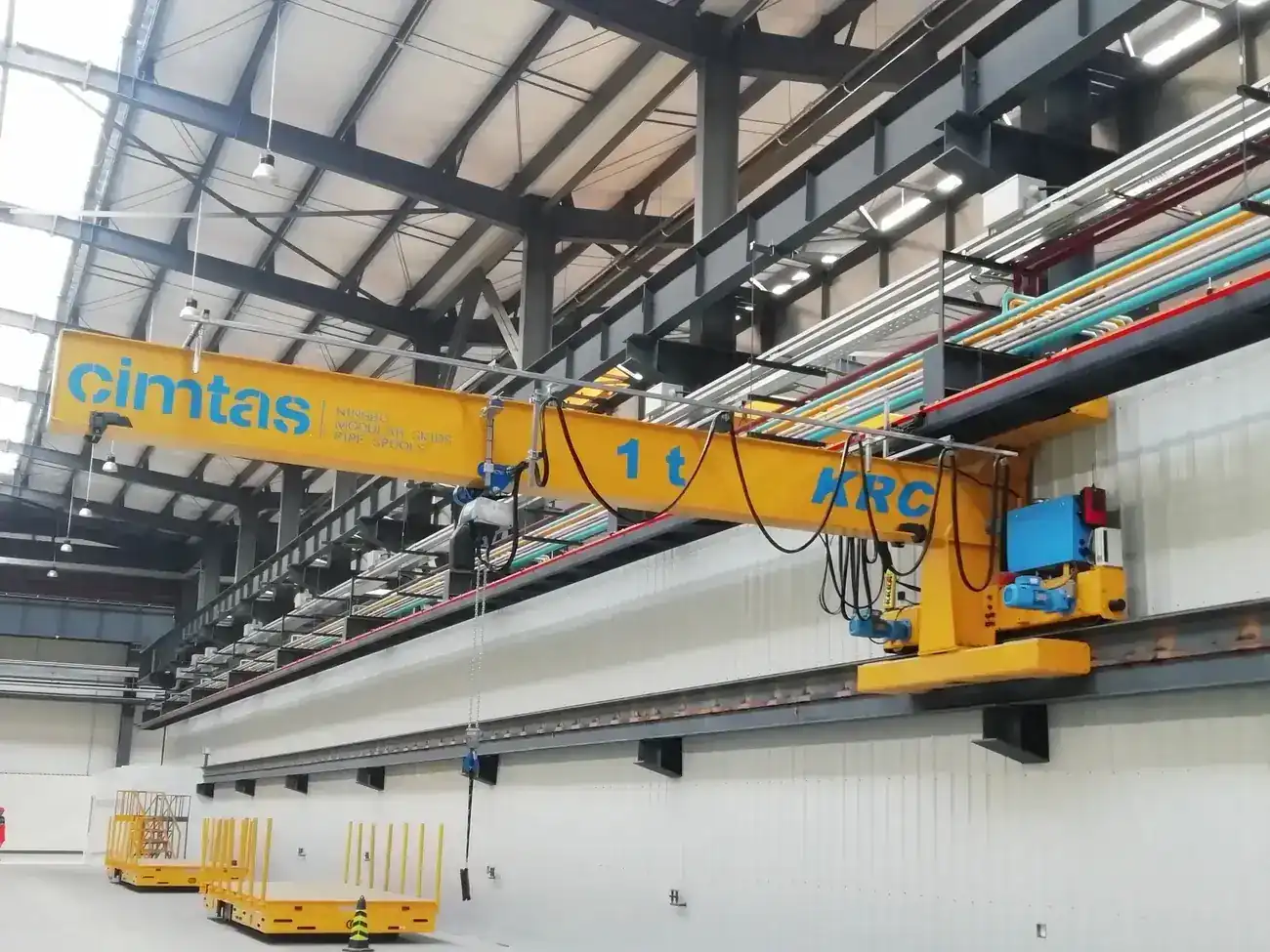
Freight is a meaningful share of the landed cost on a light crane. For a standard-sized jib crane weighing around 1000 kg shipped from China to the United States, sea freight typically falls in the range of 800 to 2000 US dollars, air freight in the range of 2000 to 4000 US dollars, and express courier services in the range of 300 to 800 US dollars, with the appropriate mode depending on dimensions, urgency and how the unit is packed. Those figures exclude duties, taxes, customs clearance, inland delivery and any handling at the destination. Get the crated dimensions and gross weight from the supplier before you request freight quotes, since volumetric weight rather than actual weight often drives the price on awkward, long components such as booms.
When comparing Chinese jib cranes with alternatives, separate visible from hidden costs. Visible costs are the quoted unit price, freight and duty. Hidden costs include the time spent specifying and clarifying across a language and time-zone gap, sample or inspection trips, the risk premium of a longer supply chain, spare parts lead time, and the cost of downtime if a component fails and the nearest support is on another continent. Quality across Chinese suppliers is variable rather than uniformly low, so the comparison is really between a well-vetted Chinese supplier and a domestic one, not between countries. Where the volume is meaningful and the specification is stable, the cost advantage usually holds. For one-off replacements needed urgently, local supply often wins on total cost.
Chinese jib crane manufacturers commonly offer private labelling and custom branding, which matters if you are a distributor rather than an end user. Options typically extend to paint colour, nameplates, manuals and packaging carrying your identity, and in some cases to design changes such as non-standard boom lengths or mounting arrangements. Treat branding as a contractual matter: specify exactly what appears on the nameplate, who is named as manufacturer for compliance purposes, and who carries liability. If you supply drawings or design input, protect it. Have a non-disclosure agreement in place before sharing anything proprietary, register intellectual property rights in China where the design has commercial value, and be aware that rights in China generally follow whoever files first.
Work through the same list on every purchase. Determine the purpose and the specific task the crane will perform. Set the load capacity from the heaviest real load plus attachments. Assess the working environment, including indoor or outdoor use, temperature, dust and corrosive exposure. Evaluate the reach and coverage the task demands and check nothing obstructs the swing. Choose the crane type that delivers that coverage. Confirm compliance with the safety standards applicable at your site. Assess maintenance and servicing requirements and spare parts availability. Evaluate supplier reputation through references and records rather than claims. Consider what customisation you need and confirm the supplier can deliver it. Finally, evaluate cost-effectiveness across the installed and operating life, not against the quoted price alone.
up to 6 ton Jib Crane
A jib crane for heavy lifting at the workstation, with a slewing range of 360 degrees and a rated loading capa...
View Details →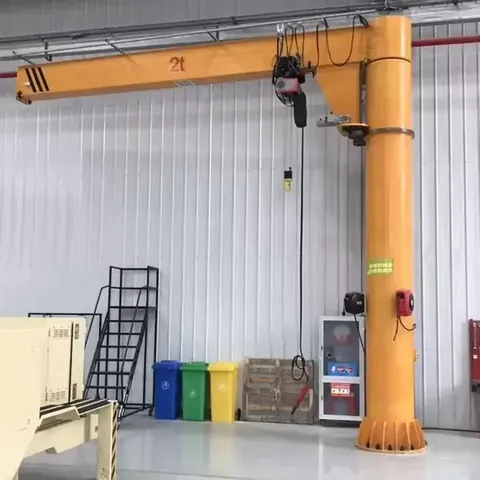
2 Ton Jib Crane
A 2 ton jib crane offered in wall mounted, free standing, column mounted, mast type and portable versions, wit...
View Details →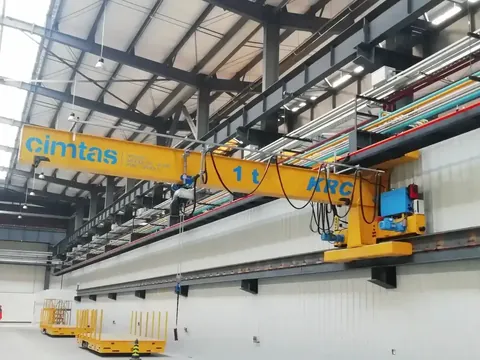
1 Ton Jib Crane
An LW wall jib crane with a loading capacity of 1.0 tons, mounted on walls or columns so the working floor sta...
View Details →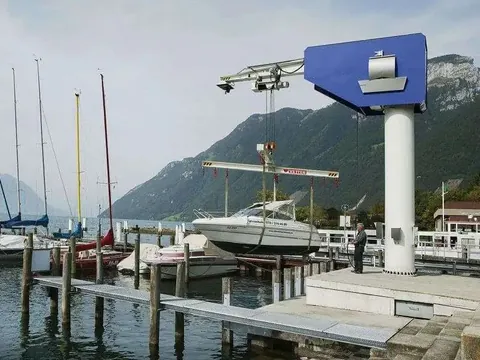
Davits Crane
A davits crane built for boat operations, loading and unloading heavy materials quickly and positioning loads ...
View Details →Free-standing and mast-style jib cranes rotate a full 360 degrees, giving complete coverage within their radius. Wall-mounted cranes typically rotate through 180 degrees because the wall blocks the remaining arc. Wall-travelling units extend coverage along a line rather than around a point, and articulating cranes trade some simplicity for the ability to reach around obstructions with a hinged second arm.
For a standard-sized jib crane weighing around 1000 kg from China to the United States, sea freight typically runs between 800 and 2000 US dollars, air freight between 2000 and 4000 US dollars, and express courier services between 300 and 800 US dollars. These exclude duties, taxes, clearance and inland delivery, and the applicable rate depends on crated dimensions as well as weight.
Define the specification in writing, require documented visual inspection, load testing at rated capacity, functional testing of rotation and limit devices, and electrical testing, all tied to the unit you are buying. Request a sample or a factory acceptance test before shipment, verify the supplier's business registration and references, and inspect the crane on arrival against the contract specification before signing off.
Yes. Boom length, height under boom, capacity, mounting arrangement, hoist selection, control layout and finish are routinely adapted. Many manufacturers also offer private labelling and custom branding for distributors. Send your working geometry and load data with the enquiry, and put any design input you share under a non-disclosure agreement before disclosure.
Variable quality between suppliers, communication gaps on technical detail, intellectual property exposure when sharing designs, and documentation that does not match the destination country's safety requirements. Mitigate by vetting suppliers properly, specifying in writing, using non-disclosure agreements and registering rights in China, and agreeing the applicable compliance regime before production begins.
If this guide covers what you are buying, send the specification and we will quote it from a factory that has built it before.
Email Our Sourcing TeamMore Guides