Industrial equipment and custom parts sourced from vetted Chinese factories since 2007
[email protected]Mon-Fri 09:00-18:00 GMT+8
A plastic thermoforming machine heats a sheet of plastic until it is pliable, forms it over or into a mould, cools it and trims the result. It is the process behind most rigid packaging, many automotive interior panels, medical trays and point of sale displays. Chinese manufacturers supply the full range from compact vacuum formers to high-speed automatic lines, and the price spread across that range is very wide. For a buyer, the work is in defining the machine against your actual product, testing quality before payment, and accounting for the costs that never appear on a quotation. This guide covers each step.
Vacuum forming machines draw a heated sheet against a mould using vacuum alone and are the simplest and most economical option for shallow, straightforward parts. Pressure forming machines add positive air pressure on the opposite side of the sheet, which produces sharper detail and better surface definition. Twin sheet forming machines form two sheets simultaneously and bond them, creating hollow parts that would otherwise require assembly. Rotary forming machines move sheets through heating, forming and ejection stations on a rotating carousel, which raises throughput for continuous production. Matched mould forming machines press the heated sheet between two mould halves for the highest dimensional control. The right choice depends on part geometry, required detail and volume, and getting it wrong is expensive because the machine type cannot be changed later.
Thermoforming is chosen for three reasons. It supports high-speed production, with automatic machines cycling continuously to meet large packaging volumes. It offers design flexibility, since moulds can be changed relatively easily to produce different shapes. Tooling costs are lower than for injection moulding, which makes the process viable at volumes where an injection tool could not be justified. The limits are equally important to understand. The process is restricted to thinner plastic sheet, so heavy-walled parts are out of scope. Material waste is higher because the trim skeleton around each formed part must be removed and either recycled or discarded. Precision for complex parts is lower than injection moulding achieves. Confirm that your part sits comfortably inside these limits before specifying a machine.
Six specifications determine whether a machine suits your product. Forming area is the maximum sheet area the machine can process and sets the largest part or the number of cavities per cycle. Maximum depth of draw limits how deep a part can be formed. Sheet thickness range defines which materials and gauges the machine will handle. Speed or cycles per minute determines output. Power consumption affects running cost. Dimensions and weight determine what your floor and building can accommodate. As an illustration of what a production cup making machine looks like, sheet thickness range may run from 0.3 to 1.8 mm, maximum forming depth between 125 and 180 mm, and maximum forming speed up to 30 cycles per minute, with machine weight around 5 to 6.5 tonnes.
Thermoforming machines need more than a floor slab and a power socket, and buyers frequently discover this after the container arrives. Electrical supply on production machines is commonly three phase at 380 volts and 50 hertz, with rated power on larger cup making machines reaching around 140 kilowatts and typical operating draw lower than the rated figure. Compressed air is required at working pressures in the region of 0.6 to 0.8 megapascals, with consumption of several cubic metres per minute on a production machine. Cooling water consumption is measured in fractions of a cubic metre per hour. Machine footprints on larger units run to several metres in each dimension. Confirm your supply voltage, frequency, air capacity, water supply and floor space before ordering, not after.
Operating sequence is consistent across machine types and understanding it helps when evaluating a supplier's demonstration. First the material is chosen, since different plastics have different forming temperatures, draw characteristics and shrinkage. The sheet is then pre-heated to the point where it becomes pliable without degrading, which is the step that most affects part quality. Thermoforming follows, with the softened sheet drawn or pressed into the mould by vacuum, pressure or a matched tool. The formed part is cooled so it holds its shape before demoulding. Finally the part is trimmed from the surrounding sheet. When you watch a machine run, pay attention to heating consistency across the sheet and to cooling time, because both directly determine cycle time and reject rate.
Five checks should be completed before the balance of payment is released. Physical inspection covers build quality, frame rigidity, wiring, guarding and general workmanship. An operation test runs the machine through complete cycles to confirm all stations function and sequence correctly. An accuracy test verifies that formed parts meet the dimensional requirements consistently rather than on a single good sample. Speed and efficiency testing confirms the machine achieves the quoted cycle rate with your material, not with an idealised sheet. Safety feature testing confirms guards, interlocks and emergency stops work as intended. Wherever possible, have the machine run your own material and mould during a factory acceptance test, because a machine that performs on the supplier's demonstration sheet may not on yours.
Four compliance references recur. ISO 9001 evidences a quality management system at the manufacturer. CE marking is required where the machine is placed on a market that mandates it and covers machinery safety requirements. UL certification applies to electrical safety in markets that require it. Occupational safety standards in the destination country govern how the machine may be operated once installed, including guarding and operator protection. Within China, manufacturers work to national GB standards, industry standards and local standards, some compulsory and some voluntary. Establish which regime applies at your site before production, require written confirmation and copies of certificates, and verify them rather than accepting a logo on a brochure, because retrofitting safety compliance after delivery is costly and often incomplete.
Thermoforming machine prices from China generally range between 10,000 and over 100,000 US dollars, which is wide enough that a quoted figure tells you little on its own. Four factors explain the position within that range. Machine size and capacity, covering forming area, draw depth and throughput, is the dominant driver. Automation level moves the price substantially, since a manually loaded machine and a fully automatic line differ in function rather than degree. Brand and supplier reputation carries a premium that may or may not reflect build quality. Additional features such as advanced control systems, stacking, trimming and in-line inspection add cost. When comparing two quotations, normalise all four before concluding that one supplier is cheaper than another.
Several costs land after the invoice and are routinely omitted from buying decisions. Installation and setup requires technicians, rigging and services connection. Training costs cover bringing operators and maintenance staff to competence. Operating costs cover material, labour and consumables. Maintenance and repair is ongoing, and replacement parts will be needed over time as components wear. Energy costs are significant on a machine drawing tens of kilowatts continuously. Disposal costs apply to trim waste and to the machine at end of life. Insurance and taxes apply from the moment the asset is yours. Add import duties, taxes and clearance to all of this. A machine that is 15 percent cheaper on the quotation can easily be more expensive once these are counted.
Settle the commercial terms as deliberately as the technical ones. On pricing basis, ex-works means you take responsibility from the factory gate, FOB means the seller delivers to the vessel, and CIF adds freight and insurance to the destination port. On payment, advance payment favours the seller entirely, a letter of credit uses banks to tie payment to documents and protects both sides, telegraphic transfer is common and usually split between deposit and balance, and open account allows payment after goods are received within terms such as 30, 60 or 90 days, which is rarely offered to a new customer. Negotiate the balance against a verifiable event such as a passed factory acceptance test rather than the supplier's own declaration.
Do the due diligence before money moves. Research thoroughly and verify supplier credentials, including business registration and certifications, using import and export trade data services to check shipment history, Chinese business information platforms to confirm registration and credit status, and web archive services to see how long the company website has genuinely existed. Request samples, and where the value justifies it, visit the manufacturer. Use secure payment methods that offer recourse. Inspect before shipping rather than after arrival. Keep communication clear and put everything in writing, including specifications, delivery dates and acceptance criteria. Ask for references from other export customers. Treat deals that look too good to be true as exactly that, since unrealistically low prices are the most consistent warning sign.
Sea freight from China typically takes around 30 to 40 days, while air freight can take anywhere from a few days to a week and is rarely economic for a machine weighing several tonnes. Ensure compliance with the regulatory standards applicable to machinery in your market, understand the import duties and taxes payable, obtain the necessary documents including commercial invoice, packing list, bill of lading and certificates of compliance, plan customs clearance in advance and arrange inland logistics. Before shipment, settle after-sales terms: what the warranty covers and for how long, how repair services are provided at distance, availability and lead time for spare parts, and whether the supplier offers training on operating and maintaining the machine.
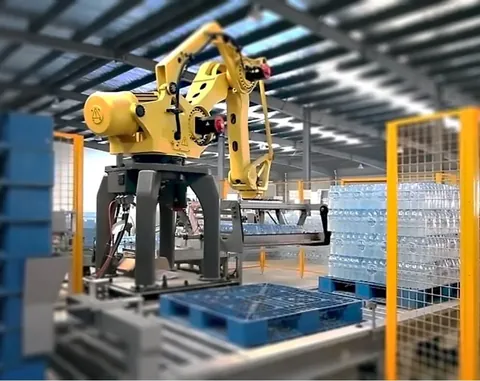
Palletizer
Stacking cartons by hand at the end of a fast filling line costs labour and produces uneven pallets. Model HTK...
View Details →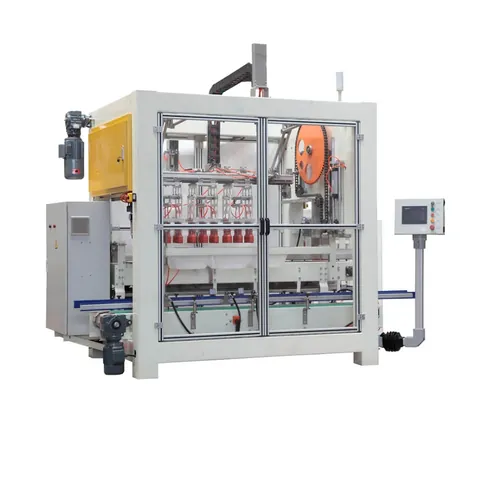
Carton Package Machine
Model HTK-ZXP-01 handles the carton packing stage between filling and palletizing. Working speed runs from 25C...
View Details →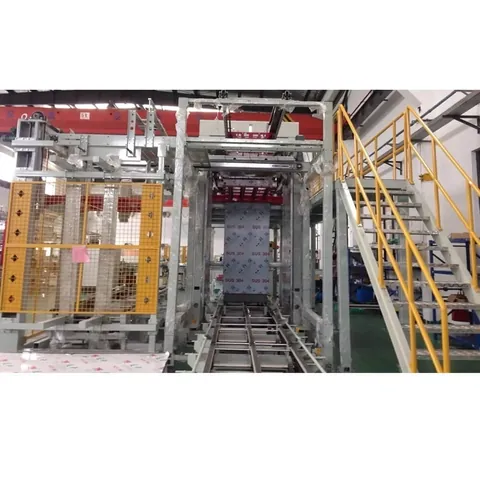
Depalletizer
Incoming packaged product arrives on pallets and has to reach the line one layer at a time. Model HTK-XDJ-01 t...
View Details →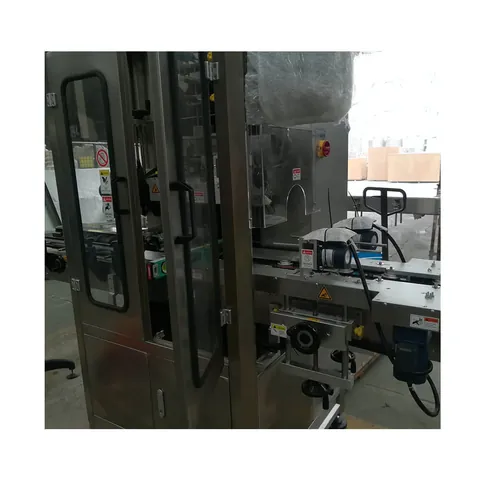
Shrink Sleeve Labeling Machine
Model HTK-TBJ-01 applies shrink sleeves to differently packaged products, so a bottle and a can range can be l...
View Details →The price range is generally between 10,000 and over 100,000 US dollars. Position within that range depends on machine size and capacity, level of automation, supplier reputation and additional features such as advanced controls, in-line trimming or stacking. Normalise those four factors before concluding that one quotation is cheaper than another.
Sea freight typically takes around 30 to 40 days. Air freight can take anywhere from a few days to a week, but is rarely economic for a production machine weighing several tonnes. Add time for customs clearance and inland delivery, and confirm crated dimensions and weight early since oversized pieces are handled and priced differently.
Run five checks: physical inspection of build quality and wiring, an operation test through complete cycles, an accuracy test confirming formed parts meet dimensions consistently, a speed and efficiency test against the quoted cycle rate, and verification that guards interlocks and emergency stops function. Where possible have the machine run your own material and mould during a factory acceptance test.
ISO 9001 for the manufacturer's quality management system, CE marking where the machine is placed on a market that requires it, and UL certification for electrical safety where applicable. Occupational safety standards in the destination country govern operation and guarding. Chinese manufacturers also work to national GB standards and industry standards, some compulsory and some voluntary.
Installation and setup, operator and maintenance training, energy, ongoing operation, maintenance and repair, replacement parts as components wear, trim waste disposal, insurance and taxes, plus import duties and customs clearance. Together these can outweigh a fifteen percent difference in quoted machine price, so build the total cost of ownership before selecting a supplier.
If this guide covers what you are buying, send the specification and we will quote it from a factory that has built it before.
Email Our Sourcing TeamMore Guides