
CE And RoHS What LED Importers Actually Need To Check
What the marks mean, what a certificate does and does not cover, and the questions to ask a factory.
In This Guide
CE Is A Declaration Not A Certificate
The CE mark is the manufacturer's declaration that the product conforms to the applicable European directives. For LED lamps the relevant ones are typically the Low Voltage Directive and, where a radio is present, the Radio Equipment Directive.
A test report from a laboratory supports that declaration. It does not replace it, and a laboratory certificate is not the same thing as a CE marking authorisation.
RoHS Restricts Substances
RoHS restricts specified hazardous substances - lead, mercury, cadmium, hexavalent chromium and certain flame retardants - in electrical equipment. Testing is normally against IEC 62321.
RoHS is about materials, not about electrical safety. A product can be fully RoHS compliant and electrically unsafe, and the reverse.
What A Certificate Actually Covers
This is where most import problems originate. A certificate names a specific applicant, a specific manufacturer, a specific product and a specific tested model, often with a range of additional model codes.
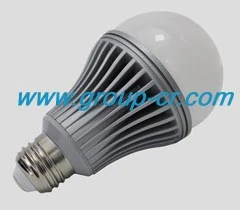
Our own certificates illustrate the point: the CE (LVD) certificate BST1703508020002Y-1SC-2 and the RoHS certificate BST1703508020001Y-1RC-4, both issued by Shenzhen BST Technology, name LED BULB with main test model CRBU-E27-CW-9W-001 and a list of additional model prefixes.
A model outside that list is outside the certificate, however similar it looks. We publish the numbers and the scope on our Trust page so the boundary is visible rather than implied.
The Questions To Ask A Factory
Ask for the certificate itself, not a statement that the product is certified. Read the applicant, the manufacturer and the model scope.
Ask whether your specific model code is inside the listed scope. If the answer is vague, treat that as the answer.
Ask which standard was tested against and what date the certificate carries. Standards are revised, and an old certificate against a withdrawn standard is worth less than it looks.
Ask what happens if a customs authority queries the documentation - a supplier with a real compliance position will have an answer.
Practical Advice For Buyers
Get the certification position in writing before the order, not with the shipment. It costs nothing before and a great deal afterwards.
Keep the certificate scans with your import file for as long as you sell the product.
Be suspicious of a supplier who claims every product in a broad catalogue is certified under one certificate. Scope is always narrower than a sales email suggests - including ours, which is why we publish it.
Product ranges covered in this guide
Products Discussed In This Guide
Questions About This Topic
Which of your products carry CE and RoHS certificates?
The LED bulb line, under the two certificate numbers published on our Trust page, which list the tested model and the additional model prefixes in scope. For models outside that scope, ask us and we will tell you what is held.
Can you send the certificate scans?
Yes, on request, and they can be sent with the shipping documents.
Is a CE mark enough for the UK?
The UK has its own conformity marking regime post-Brexit. Check the current requirement for your product category and destination before you rely on CE alone.
Other Guides In The Knowledge Centre
How To Choose The Right LED Lamp Base For Your Market
E27, E26, B22, E14, GU10 and MR16 explained, with the export mistakes that cost importers money.
Buying GuideLumens Not Watts How To Compare LED Bulbs Properly
Why wattage stopped being a measure of brightness, and what to ask a supplier instead.
Buying GuideLED Colour Temperature Explained From 2400K To 6500K
What kelvin values actually mean, where each band belongs, and how to avoid a room full of returns.
Design GuideHave A Specification Question
Send it by email with the application and the quantity. A written answer from someone who knows the range beats an hour of searching.