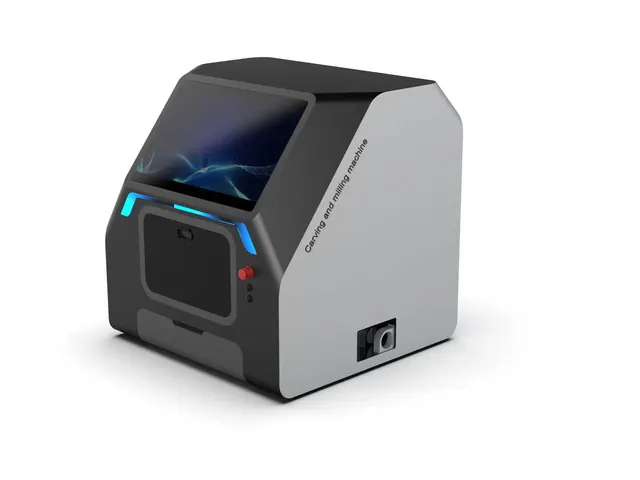
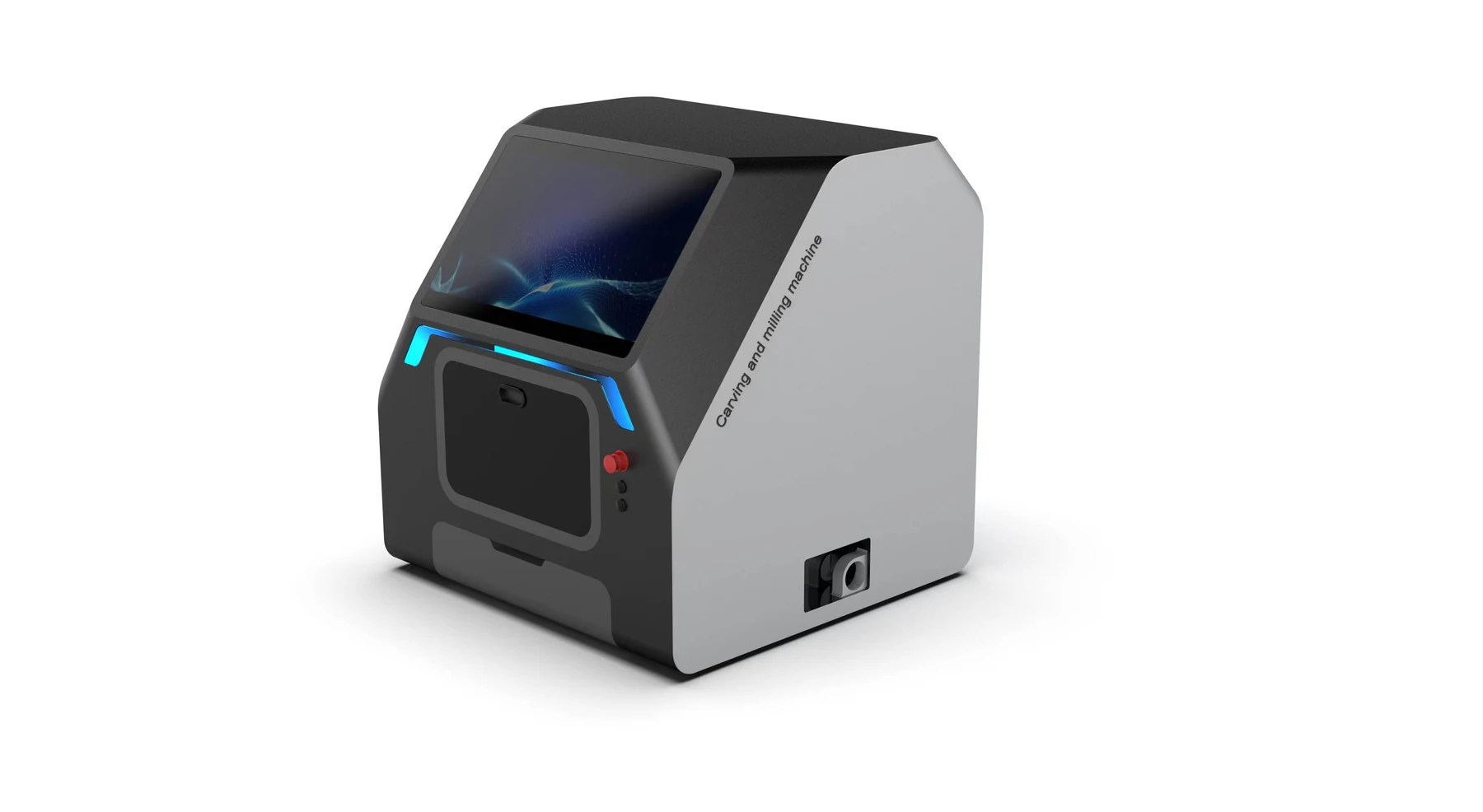
A Norwegian dentist planning to open a dental lab in Norway and expand into the wider EU asked about international laboratory partnerships and specifically whether our DTR-55 5-axis mill fits a Scandinavian lab workflow. The answer is yes, but the more interesting question is where DTR-55 slots into the modern EU lab economics — and what CE/MDR compliance actually requires for the equipment.
What a Norwegian/EU dental lab actually produces
A modern Scandinavian dental lab — whether serving the in-house clinic or external dentists — typically produces:
- Zirconia crowns and bridges (70-80% of output)
- PMMA temporaries and try-in restorations (15-20%)
- Wax patterns for lost-wax casting (shrinking share, but still present)
- PEEK framework for specific cases
- Occasional titanium milling (requires different tool library and feed parameters)
DTR-55 handles zirconia, PMMA, wax, and PEEK natively. Titanium milling is possible but requires separate tool sets and is slower — typically labs that do heavy titanium work use a dedicated titanium-focused machine rather than a general-purpose mill.
DTR-55 against EU mid-tier competitors
In the EU lab market, DTR-55's closest competitors are:
- Roland DWX-52D / DWX-42W (Japanese, ~EUR 24K-32K installed)
- vhf K5 (German, ~EUR 28K-38K installed)
- imes-icore 250i (German, ~EUR 22K-30K installed)
DTR-55 positions slightly below these on price (FOB USD 11K-14K, landed Europe EUR 14K-18K installed) with competitive core specs: 5-axis simultaneous, 30,000 RPM spindle, 11-tool auto-change library, 170 × 215 × 105 mm envelope. Where the gap exists is in the CAM software ecosystem and service network — imes-icore and vhf have deeper EU dealer support and more mature CAM integrations.
CE mark and MDR compliance
Dental milling machines are typically Class I medical devices under MDR (lower than CBCTs, no Notified Body review required for Class I non-sterile non-measuring). But:
- Machine Directive 2006/42/EC compliance is required (CE marking for machinery, separate from MDD/MDR)
- Low Voltage Directive 2014/35/EU
- EMC Directive 2014/30/EU
- If sold with accessory software that affects restoration dimensions, software may be Class IIa medical device requiring Notified Body review
We ship EU-market units with full machinery CE documentation and Declaration of Conformity. The software we bundle (CASCAM) is open-architecture and not sold as a medical device — labs typically pair the mill with Exocad, 3Shape, or Zirkonzahn CAM which handle the medical device software compliance themselves.
Shipping Shanghai → Oslo or Copenhagen
Sea freight Shanghai → Oslo: 35-42 days via Suez + North Sea. Alternative: Shanghai → Hamburg (32-38 days) + short-sea to Oslo (2-3 days). Cost runs USD 2,200-3,500 for a 20 ft container accommodating the mill plus spare parts and tooling.
The mill is heavy (87 kg) and compact (443.5 × 718 × 628.5 mm crated dimensions, roughly 0.8 CBM). For a single-unit order, LCL is practical at roughly USD 600-900 for Shanghai → Oslo.
Norwegian import and VAT
Norway is outside the EU customs union but within EEA. Import duty on dental machinery (HS 8456): 0%. VAT (MVA): 25%, fully recoverable for VAT-registered businesses (all commercial dental labs in Norway are VAT-registered).
Customs clearance at Oslo or Bergen port: NOK 2,500-6,000 (USD 230-570). Typical clearance time 3-7 days after ship arrival.
Landed cost and ROI math for a Norwegian lab
For a DTR-55 with 11-tool library and starter tool kit:
- FOB Shanghai: USD 12,500
- Sea freight to Oslo (LCL): USD 750
- Norwegian clearance + VAT (VAT recoverable): USD 380 clearance + VAT cycle
- Installation support (remote via EU engineer, 2 days): USD 600
- Starter zirconia blanks (10 blanks): USD 400
- All-in commissioned cost: USD 14,600-15,500
For a lab producing 30-60 zirconia crowns per month, in-house milling vs. outsourcing to a wholesale lab typically saves EUR 80-140 per restoration (outsourcing quote EUR 150-200 vs. in-house material + time cost EUR 50-70). At 40 crowns/month and EUR 90 savings, the DTR-55 pays back in 4-5 months of use.
What the EU service and spare parts look like
We don't have a dedicated service office in Oslo, but we handle EU service through two channels:
- Factory-trained European service partners (currently one in Amsterdam, one in Frankfurt) who travel for on-site issues
- Remote diagnostics via the mill's IoT module — we can pull spindle hours, tool change logs, error codes directly
- Air-freight spare parts (spindle cartridge, controller PCB, tool changer actuator) dispatched within 48 hours of failure confirmation
Ready to price this out?
Tell us the model, quantity and destination port. We reply with FOB or CIF pricing, current stock status and a video demo where the unit is in our Shanghai warehouse.