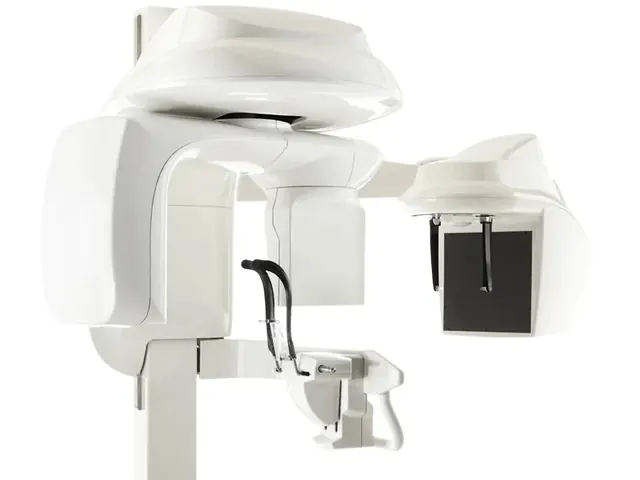
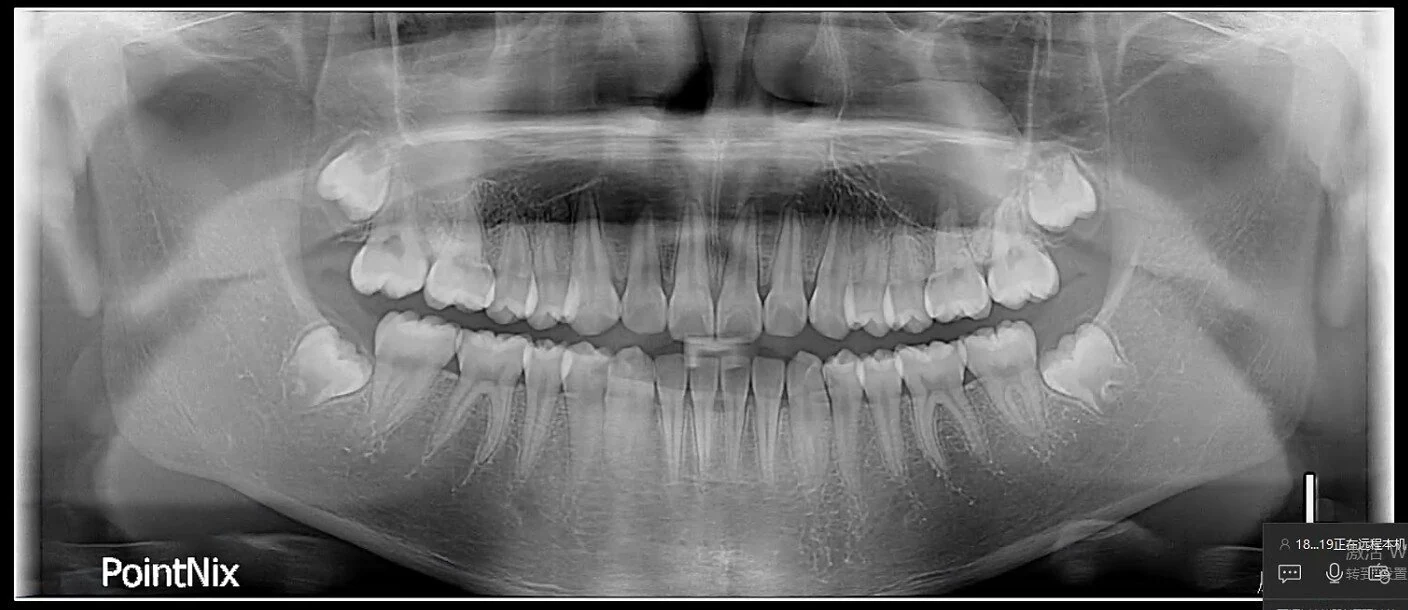
2-in-1 panoramic plus cephalometric imaging machines combine two distinct orthodontic imaging modalities — full-arch panoramic (OPG) for dentition overview and lateral cephalometric for craniofacial skeletal analysis — into a single floor-standing unit. For orthodontic practices (and general practices with meaningful orthodontic case volume), 2-in-1 pan+ceph occupies an important economic position: comprehensive orthodontic imaging capability at roughly half the capital cost of 3-in-1 pan+ceph+CBCT combination units, with clinically complete workflow for all standard orthodontic records and treatment planning. This guide walks through 2-in-1 pan+ceph selection from Shanghai.
Why orthodontic practice needs cephalometric capability
Cephalometric imaging is clinically essential for orthodontic practice in ways that 2D panoramic alone cannot substitute:
- Lateral cephalometric radiograph (lateral ceph): primary orthodontic records imaging for skeletal analysis, growth pattern assessment, and treatment planning. Quantitative craniofacial analysis (Steiner, Ricketts, Tweed, Jarabak, McNamara analyses) all depend on lateral ceph measurements.
- Posterior-anterior cephalometric (PA ceph): facial asymmetry assessment, transverse skeletal analysis
- Growth and development monitoring: sequential lateral cephs track craniofacial growth during orthodontic treatment, particularly critical in growing patients (8–16 years)
- Treatment planning: surgical orthodontic cases require detailed cephalometric analysis to determine skeletal vs. dental components of malocclusion
- Outcome documentation: pre-treatment and post-treatment cephs document treatment results for clinical quality assurance and medico-legal records
- Carpal hand-wrist imaging (some 2-in-1 units): growth-age assessment for determining orthodontic treatment timing in growing patients
2-in-1 vs. separate pan + separate ceph vs. 3-in-1 decision
Separate panoramic unit + separate cephalometric unit
- Advantages: independent equipment failure isolation; can position in different rooms
- Disadvantages: double floor space, double electrical, double shielding, higher total capital cost
- Price range: USD 14,000–22,000 landed for separate Chinese mid-tier units
- Use case: rarely optimal in modern practice
Integrated 2-in-1 pan+ceph unit (the focus of this article)
- Advantages: single floor-standing footprint, single electrical feed, shared patient positioning, lower capital cost than two separate units, unified software ecosystem
- Disadvantages: single-point-of-failure; ceph arm adds approximately 0.8–1.2m lateral floor space requirement
- Price range: USD 18,000–32,000 FOB Shanghai for Chinese mid-tier 2-in-1 units
- Use case: orthodontic practice, orthodontic-focused general practice, multi-disciplinary practice
3-in-1 pan+ceph+CBCT combination unit
- Advantages: comprehensive imaging (2D + 3D) in single unit; future-proofs imaging capability
- Disadvantages: higher capital cost, more complex regulatory pathway (CBCT-specific regulations)
- Price range: USD 32,000–55,000 FOB Shanghai for Chinese mid-tier 3-in-1
- Use case: comprehensive multi-disciplinary practice, orthognathic surgical practice, specialty clinic investing in long-term imaging capability
Key specifications for 2-in-1 pan+ceph units
Panoramic imaging specifications
- Tube voltage: 60–90 kVp range
- Tube current: 4–14 mA
- Panoramic exposure time: 10–16 seconds typical
- Panoramic image resolution: 4.5–6 lp/mm for Chinese mid-tier CMOS detector
- Panoramic programs: adult, pediatric, TMJ, bitewing, maxillary sinus, hemi-arch
Cephalometric imaging specifications
- Lateral ceph exposure time: 0.5–4 seconds scan time; older generation used single-shot exposure, modern uses scanning exposure
- Ceph image size: 30×25cm typical — captures full craniofacial field
- Ceph resolution: 4–6 lp/mm
- Cephalostat: earholder positioning device ensuring reproducible patient positioning between exams
- Programs: lateral ceph, PA ceph, SMV (submentovertex), carpal hand-wrist (on premium units)
Detector technology
- Single detector with shared use: older approach; detector moves between panoramic and ceph positions manually
- Dual detector (pan + ceph): modern approach; dedicated detector for panoramic and dedicated detector for cephalometric; immediate program switching without detector handling
- CMOS detector: universal current standard; CCD detectors in older equipment
- Dynamic range: 14–16 bit grayscale
Positioning hardware
- Motorized patient positioning column: accommodates patient height 1.0m (child) to 2.1m (tall adult)
- Laser alignment guides: positioning lasers for accurate placement
- Bite block and chin rest: standard patient stabilization for panoramic
- Cephalostat (ceph arm): earholder assembly for reproducible ceph patient positioning; adjustable height
- Forehead support: additional patient stability
Orthodontic workflow integration
Initial orthodontic records
- Comprehensive initial records typically include: panoramic, lateral cephalometric, intraoral photos (or IOS scan), study models (or IOS-derived models)
- 2-in-1 pan+ceph captures both radiographic records in a single patient appointment, approximately 8–15 minutes total imaging time
Treatment monitoring
- Typical treatment monitoring interval: 6–12 months for growing patients
- Panoramic monitors tooth movement, root health, eruption patterns
- Sequential cephs (less frequent, typically 12–24 months) monitor growth direction and treatment progress
Post-treatment records
- Final panoramic confirms tooth positioning, root parallelism, pathology absence
- Final lateral ceph documents treatment outcome relative to pre-treatment baseline
Cephalometric software ecosystem
Ceph capability depends on software ecosystem:
- Manufacturer imaging software: basic capture and export
- Cephalometric analysis software: specialized orthodontic planning software with automated or manual landmark identification, analysis calculation, treatment simulation
- Major cephalometric analysis platforms: Dolphin Imaging, Nemoceph, OrthoVision, CephSmile, various regional platforms
- DICOM output: universal for integration with third-party software
- Practice management integration: imaging data flows into orthodontic practice management systems (Ortho2, Dolphin Management, various regional systems)
Orthodontic practice economics
Comprehensive records economics for orthodontic practice:
- Initial orthodontic records fee: USD 150–450 per patient in most destinations, increasing to USD 350–800 in premium markets
- Monthly new patient records volume: 20–60 new case starts at mainstream orthodontic practice
- Monthly records revenue: USD 3,000–27,000 depending on volume and market
- Case acceptance improvement with comprehensive digital records: 15–30% higher case conversion for comprehensive plans
- Specialist referral capture: orthodontists with in-house imaging reduce referral flow-out and capture records fees internally
- Payback: typical 8–18 months at mainstream orthodontic practice
Chinese 2-in-1 pan+ceph quality tiers
Entry-tier (USD 18,000–23,000 FOB Shanghai)
- CMOS detector with shared pan/ceph or single-path switching
- Standard panoramic + lateral ceph programs
- Basic imaging software, DICOM export
- Adequate clinical image quality for routine orthodontic records
- Fit: orthodontic practice starting from scratch, cost-conscious acquisition
Mid-tier (USD 23,000–28,000 FOB)
- Dual detector (pan + ceph) for faster workflow
- Expanded program library (TMJ, pediatric, carpal hand-wrist)
- Premium software with cephalometric analysis integration
- Fit: established orthodontic practice, high-volume workflow
Premium tier (USD 28,000–32,000 FOB)
- Dual detector with premium CMOS
- 16-bit dynamic range, 5.5–6.5 lp/mm resolution
- Comprehensive program library
- Advanced software with automated landmark identification, AI-assisted analysis
- Fit: specialty orthodontic practice, academic, teaching hospital
Space and installation requirements
- Total footprint: 2.2×1.8m floor space typical for 2-in-1 pan+ceph unit (panoramic column + ceph arm extension)
- Ceiling height: 2.4m minimum; 2.6m+ preferred
- Floor loading: equipment weighs 180–320 kg; floor must support concentrated load
- Electrical: dedicated 20–30A circuit, 110/220V depending on country standard
- Radiation shielding: wall lead shielding per local radiation safety code (typically 1.0–2.0mm lead equivalent); operator barrier with leaded glass viewing window; ceph arm requires additional shielding on the ceph side of room
- Network: gigabit LAN to imaging workstation; PACS integration capability
- Patient access: wheelchair-accessible room design for accessibility compliance
- HVAC: moderate ventilation; room temperature 18–26°C for electronic stability
Radiation safety considerations
- Radiation safety officer: installation requires radiation safety assessment per destination regulation
- Operator certification: radiation safety training for operators (typically 1–3 day course)
- Quality assurance: periodic QA testing by medical physicist
- Patient shielding: lead apron and thyroid collar standard for patient; some jurisdictions moving away from routine patient shielding based on updated radiation dose research
- Warning indicators: “X-ray in progress” light outside room; door interlock per local code
- Pediatric protocols: reduced-dose protocols for pediatric patients; documented protocols per practice
Commissioning timeline
- Planning phase: 4–8 weeks — site assessment, shielding design, electrical planning, regulatory submission
- Shipment from Shanghai: 35–60 days ocean freight depending on destination
- Installation: 3–5 days physical installation with manufacturer engineer or authorized distributor
- Radiation safety acceptance testing: 1–3 weeks for physicist acceptance testing and regulatory certification
- Operator training: 2–4 days on-site training for operators
- First clinical case: typically 2–4 months from order to first patient imaging
Regulatory considerations
- Classification: Class IIb medical device in CE-MDR (pan+ceph X-ray equipment); Class II 510(k) in US FDA
- CE marking: required for EU distribution
- Chinese manufacturer NMPA certification: standard
- Destination country registration: ANVISA, CDSCO, COFEPRIS, SFDA, and other destinations require specific X-ray equipment registration
- Radiation safety regulatory: destination radiation safety authority registration required (e.g. state radiation health department in US; EURATOM framework in EU)
Common procurement mistakes
- Over-investing in 3-in-1 (adding CBCT) when CBCT use would be rare: capital cost differential is substantial; buy CBCT capability only when clinical use justifies it
- Under-specifying detector technology: dual-detector designs substantially improve workflow; shared-path detectors are legacy technology
- Ignoring cephalometric analysis software ecosystem: hardware is part of solution; software ecosystem drives orthodontic clinical value
- Inadequate space planning: ceph arm adds 1m+ lateral floor space; many practices underestimate installation footprint
- Skipping radiation shielding engineering: compliant installation requires proper radiation shielding design; shortcuts create regulatory failures and operator safety issues
- Not budgeting for operator training: proper patient positioning for ceph is operator-skill-dependent; investment in training pays off in image quality and workflow efficiency
Commissioning package
Typical 2-in-1 pan+ceph commissioning package:
- 2-in-1 pan+ceph main unit with dual detectors
- Imaging workstation with monitor
- Imaging software + DICOM workstation license
- Cephalometric analysis software (optional upgrade)
- Installation manual, operator manual, radiation safety documentation
- Patient positioning accessories (bite blocks, chin rests, earholders)
- Spare parts kit (common wear parts)
- Total FOB Shanghai: USD 20,000–32,000 depending on tier
- Landed cost typical destination: USD 24,000–40,000 including shipping, duties, installation
Sourcing a 2-in-1 panoramic + cephalometric unit from Shanghai?
WhatsApp us with your practice context (orthodontic, orthodontic-focused general, specialty), expected monthly records volume, space available for installation, destination country, and interest in carpal hand-wrist and advanced cephalometric analysis software. We’ll propose 2-in-1 pan+ceph options matched to your workflow, discuss dual detector vs. shared-path tradeoffs, cephalometric analysis software integration, and quote FOB Shanghai pricing with full commissioning package landed cost analysis including shielding and installation guidance.
Ready to price this out?
Tell us the model, quantity and destination port. We reply with FOB or CIF pricing, current stock status and a video demo where the unit is in our Shanghai warehouse.