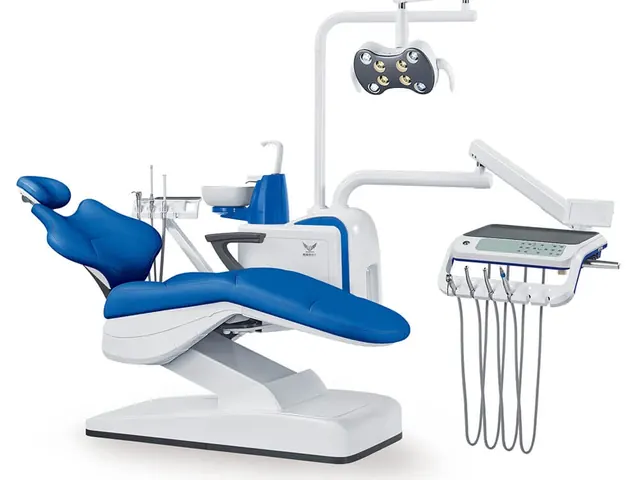
Dental operatory lights are the surgical illumination systems that make precision dental work possible. In modern dental practice, LED ceiling-mount or chair-mount operatory lights have almost universally replaced older halogen technology, offering substantially higher lux output, better color rendering, cooler operation, and longer service life. Despite appearing to be commodity equipment, operatory light selection involves meaningful technical considerations that affect clinical ergonomics and long-term operational cost. This guide walks through operatory light selection from Shanghai.
Why operatory light quality matters
Clinical dentistry is a visually demanding profession. Operators spend 6–10 hours per day working within 30–45cm of illuminated intraoral targets. Operatory light characteristics affect:
- Clinical precision: inadequate illumination or shadow patterns directly affect caries detection, margin visualization, and preparation quality
- Operator visual fatigue: poor color rendering and inadequate lux output contribute to eye strain, headaches, and accumulated visual fatigue over career
- Color matching for restorative dentistry: light color temperature and color rendering index (CRI) substantially affect shade-matching accuracy
- Patient experience: less glare and better beam shaping improve patient comfort during treatment
- Heat generation: older halogen lights created uncomfortable heat at close working distance; LED eliminates this
LED vs. halogen: the completed transition
Halogen operatory lights (legacy technology)
- Lux output: 15,000–25,000 lux typical
- Color temperature: 3,500–4,500K (warm white)
- Service life: 1,500–3,000 hours bulb life
- Heat generation: substantial; uncomfortable at close working distance
- Bulb replacement: USD 25–75 per bulb, 1–2 replacements per year typical
- Current market position: legacy installed base; no new halogen-only operatory lights in production
LED operatory lights (current standard)
- Lux output: 25,000–55,000 lux typical (up to 80,000 lux for premium)
- Color temperature: adjustable, typically 3,500K–6,500K range
- Service life: 30,000–50,000 hours LED life (functional equipment lifetime)
- Heat generation: minimal; comfortable at close working distance
- Color rendering: CRI 85–96 typical (excellent for dental work)
- Power consumption: 12–35W typical (vs. 50–150W for halogen)
- Current market position: universal standard
Key operatory light specifications
Lux output and distribution
- Peak lux: 30,000–55,000 lux at working distance (typical 70–100cm from light head to patient mouth)
- Adjustable intensity: at least 3-step, ideally continuous adjustment from 3,000–55,000 lux
- Beam pattern: rectangular or elliptical pattern sized approximately 80×180mm at working distance — matches typical oral opening
- Shadow reduction: multi-LED array reduces shadow artifacts from operator hands; single-LED lights have more pronounced shadow patterns
- Beam uniformity: uniform illumination across field, minimal hotspot at center
Color temperature
- Fixed vs. adjustable:
- Fixed color temperature (typically 5,000K): standard entry-tier
- 2-step adjustable (5,000K and 4,200K): standard mid-tier, supports shade matching and curing light-safe preparation
- Continuous adjustable (3,500K–6,500K): premium, supports range of clinical contexts
- Curing-safe mode: reduced-intensity yellow light mode prevents premature curing of resin composite materials during placement
- Shade-matching mode: color temperature calibrated to daylight (5,500K–6,500K) for accurate composite shade selection
Color rendering index (CRI)
- CRI 85 minimum for acceptable dental work
- CRI 90+: preferred for general clinical work
- CRI 95+: premium, important for esthetic dentistry and color matching
- R9 (red rendering): important for soft tissue visualization; specify R9 >80 for optimum
Mounting options
- Ceiling-mount: most common; rigid arm from ceiling track
- Wall-mount: space-saving option for small operatories
- Chair-mount (unit-mount): integrated with dental chair delivery system; light arm from chair column
- Cart-mount / floor-stand: mobile light for portable dentistry or overflow operatory
Arm and articulation
- Arm length and reach: typical 1.0–1.5m arm reach from mounting point
- Counterbalance: quality arms counterbalance to hold position without drift
- Articulation joints: 3–5 independent joints for full positioning flexibility
- Handle: sterilizable or autoclave-rated handle for sterile draping
- Motion smoothness: smooth position adjustment without stick-slip
Control and interface
- Physical switch: on/off button on light head
- Touchless control: infrared proximity sensor for touchless on/off and intensity adjustment — sterility and infection control benefit
- Foot control: foot pedal for hands-free adjustment during treatment
- Integration with dental chair controls: some chair systems integrate operatory light control into chair touchpad
Chairside chair-mount vs. ceiling-mount decision
Chair-mount operatory light
- Integrated with dental chair
- No ceiling installation required
- Arm reach limited by chair arm design
- Common in portable or rental operatory contexts
- Price: USD 280–1,200 FOB Shanghai (chair-mount only)
Ceiling-mount operatory light
- Independent from dental chair
- Larger reach and more flexible positioning
- Requires ceiling installation and structural mounting
- Standard in permanent operatory configuration
- Price: USD 380–2,500 FOB Shanghai (ceiling-mount complete assembly)
Shadow reduction technology
- Single-LED light: produces pronounced shadow from operator hands; less expensive, adequate for some workflows
- Multi-LED array (4–8 LEDs): overlapping beam patterns reduce shadow; premium feature
- Asymmetric LED placement: off-axis LED configuration fills shadow regions
- Beam splitter optics: some premium lights use internal optics to create multi-source illumination from single LED array
Quality tier pricing
Entry-tier operatory light (USD 180–380 FOB)
- Single LED or simple array, 25,000–32,000 lux peak
- Fixed or 2-step color temperature
- Basic physical switch
- Single joint or simple articulation
- Fit: cost-conscious single operatory, low-volume practice
Mid-tier operatory light (USD 380–850 FOB)
- Multi-LED array, 35,000–45,000 lux peak
- Adjustable color temperature
- Touchless control
- Full articulation with counterbalance
- Fit: standard general practice operatory
Premium operatory light (USD 850–2,500 FOB)
- Premium multi-LED with shadow-reduction optics, 45,000–55,000+ lux peak
- Continuous adjustable color temperature with curing-safe mode
- CRI 95+
- Touchless control with gesture recognition
- Premium articulation, quiet operation
- Fit: specialty practice, premium positioning general practice
Installation considerations
- Ceiling structural mount: light + arm assembly weighs 8–18kg; ceiling mount must support weight + dynamic load during arm repositioning
- Ceiling height: minimum 2.4m preferred for operator flexibility; 2.7m+ ideal
- Power connection: typically 110/220V single-phase; some premium units use 24V DC with external power supply
- Integration with dental chair electrical: operatory light typically independent electrical; optional dental chair integration for coordinated on/off
- Arm positioning during installation: arm orientation determines natural working positions; install to support primary operator handedness and work posture
Color temperature and clinical applications
- 3,500K–4,500K (warm white): general oral examination; less fatiguing for long procedures
- 4,500K–5,000K (neutral white): most general restorative work; good color rendering for shade matching
- 5,000K–6,500K (cool white, daylight): optimal shade matching for esthetic composite work; replicates daylight for accurate color assessment
- <3,000K (yellow, curing-safe): prevents premature curing of light-activated composite; useful during composite placement
Sterilization and infection control
- Handle sterilization: autoclavable or single-use handle covers
- Touchless control benefit: eliminates touch-contamination of light controls between gloved and ungloved states
- Surface cleaning: wipe-clean surfaces with standard disinfectants; avoid alcohol-based cleaners on optical surfaces if not manufacturer-approved
- Barrier protection: light head barrier covers available for heightened infection control protocols
Service life and warranty
- LED life: 30,000–50,000 hours typical; at 8 hours/day clinical use, that’s 10–17 years
- Driver and power supply: typically fails before LED; replace driver electronics at 6–12 years
- Arm counterbalance: counterbalance springs may weaken over time; service or replacement at 5–10 years
- Warranty: typically 24 months on Chinese mid-tier operatory lights; up to 60 months on premium
Common procurement mistakes
- Buying lowest-lux option to save money: 25,000 lux vs. 45,000 lux is a substantial clinical difference; operator productivity suffers with inadequate illumination
- Ignoring CRI specification: low-CRI LEDs save cost but impair color matching accuracy
- Under-specifying arm quality: cheap articulation creates daily frustration; arm is daily-touched component
- Not planning for touchless control: modest cost premium for substantial infection control benefit
- Skipping spare handle cover/grip consideration: handle covers need regular replacement; confirm availability and price in ongoing supply
Sourcing operatory lights from Shanghai?
WhatsApp us with your operatory count, mounting preference (ceiling or chair-mount), practice specialty (general, esthetic, surgical), and destination country. We’ll propose operatory light options matched to your clinical priorities, discuss lux output and CRI specifications, touchless control options, and quote FOB Shanghai pricing with full landed cost analysis.
Ready to price this out?
Tell us the model, quantity and destination port. We reply with FOB or CIF pricing, current stock status and a video demo where the unit is in our Shanghai warehouse.