
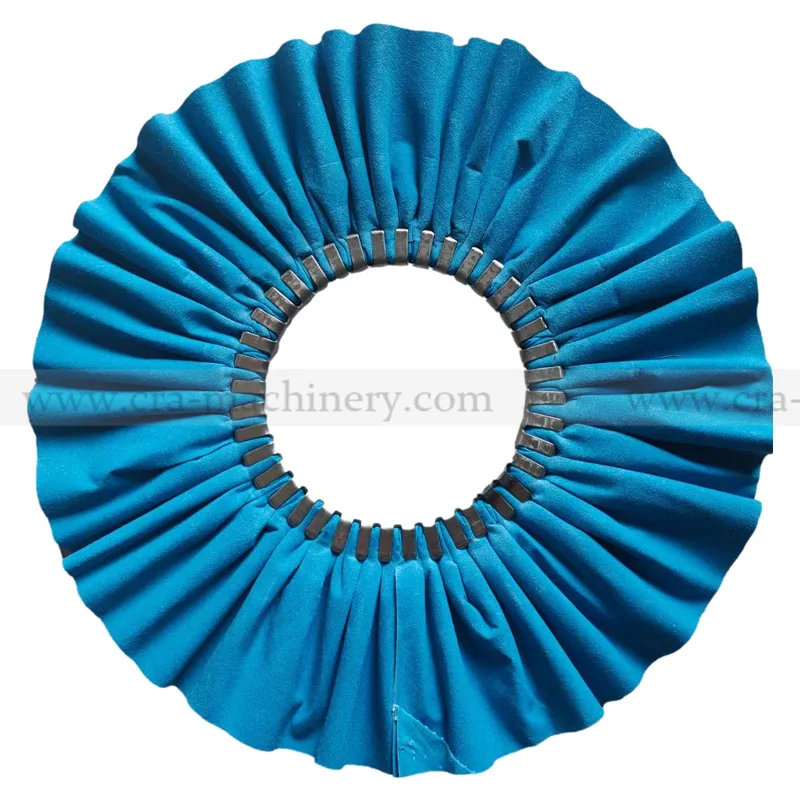
What Corrugated and Weave Buffs Are Used for
A corrugated buff, also known as an airflow buff or weave buff, is a polishing wheel made from cotton, treated cotton or sisal cloth with a structured surface that allows air to pass through during operation. This airflow reduces heat buildup on the workpiece during prolonged polishing cycles. The...
What A Corrugated Or Weave Buff Is
A corrugated buff, also known as an airflow buff or weave buff, is a polishing wheel made from cotton, treated cotton or sisal cloth with a structured surface that allows air to pass through during operation. This airflow reduces heat buildup on the workpiece during prolonged polishing cycles.
The wheel's structure comes from a series of ridges or waves pressed into the fabric, created by a forming knife system. Common weave options are 20, 30, 32, 36 and 44, which define the density and surface texture of the finished wheel.
Forming With The CRA-360 Machine
The CRA-360 forming machine handles the entire wave formation process. It includes a wave forming knife system, an operating platform, and a cloth rolling device. The machine runs on 380 V three phase 50 Hz power and uses 2 kW of electricity.
One operator can manage the machine. The forming sequence is: roll the fabric, load the roll into the machine, close the clamps, press the material into the wave pattern, open the clamps, fit the iron clinch ring, close and press again, then unload the formed body.
Clamp Changes And Diameter Coverage
Each clamp set on the CRA-360 covers a 100 mm outer diameter band. Changing clamps takes approximately 20 minutes. This allows the machine to produce wheels across a range of sizes without requiring a full machine change.
The machine is designed for consistent repeatable wave patterns. The clamp set determines the wheel’s outer diameter and the wave depth, which affects the wheel’s surface aggressiveness and heat dissipation.
Material Inputs And Final Assembly
The fabric used is cotton, treated cotton or sisal cloth, cut to the required width and rolled for feeding into the machine. The material must be fed on the bias to ensure even folding and wave formation.
After forming, the wheel body is fitted with an iron clinch ring. The ring is pressed into place to secure the fabric and maintain the wheel’s shape during high-speed operation. The final body is then ready for pressing and trimming.
Questions On This Topic
What is the difference between a corrugated buff and a standard airway buff?
A corrugated buff has a wave-shaped surface formed by a knife system, while a standard airway buff uses folded plies. The corrugated design provides more consistent airflow and surface contact.
Can the CRA-360 machine handle different fabric types?
Yes. The machine works with cotton, treated cotton, and sisal cloth. The material must be cut on the bias for proper wave formation.
How long does it take to switch between different wheel diameters?
Clamp changes take about 20 minutes. Each clamp set covers a 100 mm diameter band.
What power supply does the CRA-360 require?
The machine runs on 380 V three phase 50 Hz power and uses 2 kW of electricity.
Is the CRA-360 suitable for small production runs?
Yes. The machine is designed for one operator and supports quick changeovers between sizes, making it suitable for small to medium batch production.
Products Mentioned Here

Bias Cotton Airway/Airflow Polish Buffs
View Details
Bias Sisal Corrugated Polish Buffs
View Details
Bias Fabric Corrugated Polish Buffs
View Details
CRA-360 Airflow Buffs/Corrugated Polishing Buffs Making Machine
View DetailsStill Not Sure Which Machine Fits
Send us the wheel or the cut you need to produce and we will tell you which model covers it, and which one does not.