The Reflector Does Two Jobs
It shapes the beam and it decides how the aperture looks from below. Those two jobs pull in opposite directions.
A highly reflective surface returns more light into the beam - good for efficiency. It also makes the inside of the fitting visible as a bright ring - bad for comfort. Every finish is a position on that trade.
Gun Black
The darkest option in the range and the default where comfort matters most. Stray light hitting the reflector wall is largely absorbed, so from a normal viewing angle the aperture reads as a dark circle in the ceiling.
Used across the S1 Series and offered on the larger spotlight heads. The right choice for hotel bedrooms, offices with screens and any ceiling where the fittings should disappear.
Matt Black
Similar intent to gun black with a slightly different appearance. Both suppress the bright-ring effect; the choice between them is usually aesthetic, driven by how the aperture should look against a dark or light ceiling.
Available on the YY71 heads alongside matt white and bright silver.
Matt White
A middle position. Against a white ceiling the aperture is visually quieter than a dark one because it does not read as a hole, while the diffuse white surface avoids the specular hot spot of a polished finish.
Often specified in residential and hospitality interiors where a dark aperture would look too technical.
Bright Silver
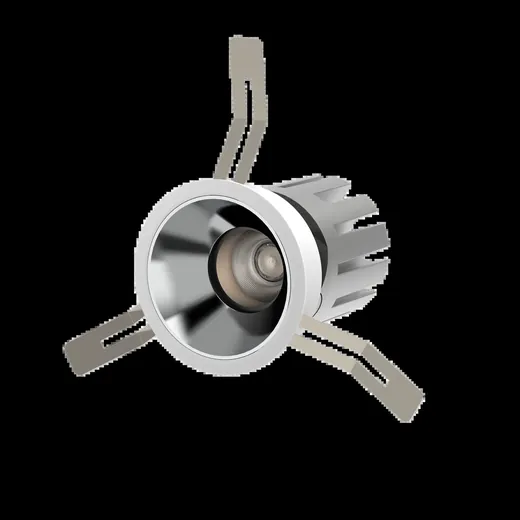
The highest output option. A specular surface returns the most light into the beam and gives the crispest beam edge, at the cost of a clearly visible bright aperture.
Appropriate where comfort is less critical or where maximum throw is needed: storage, plant rooms, high-ceiling display work seen from a distance.
Choosing Per Zone Not Per Project
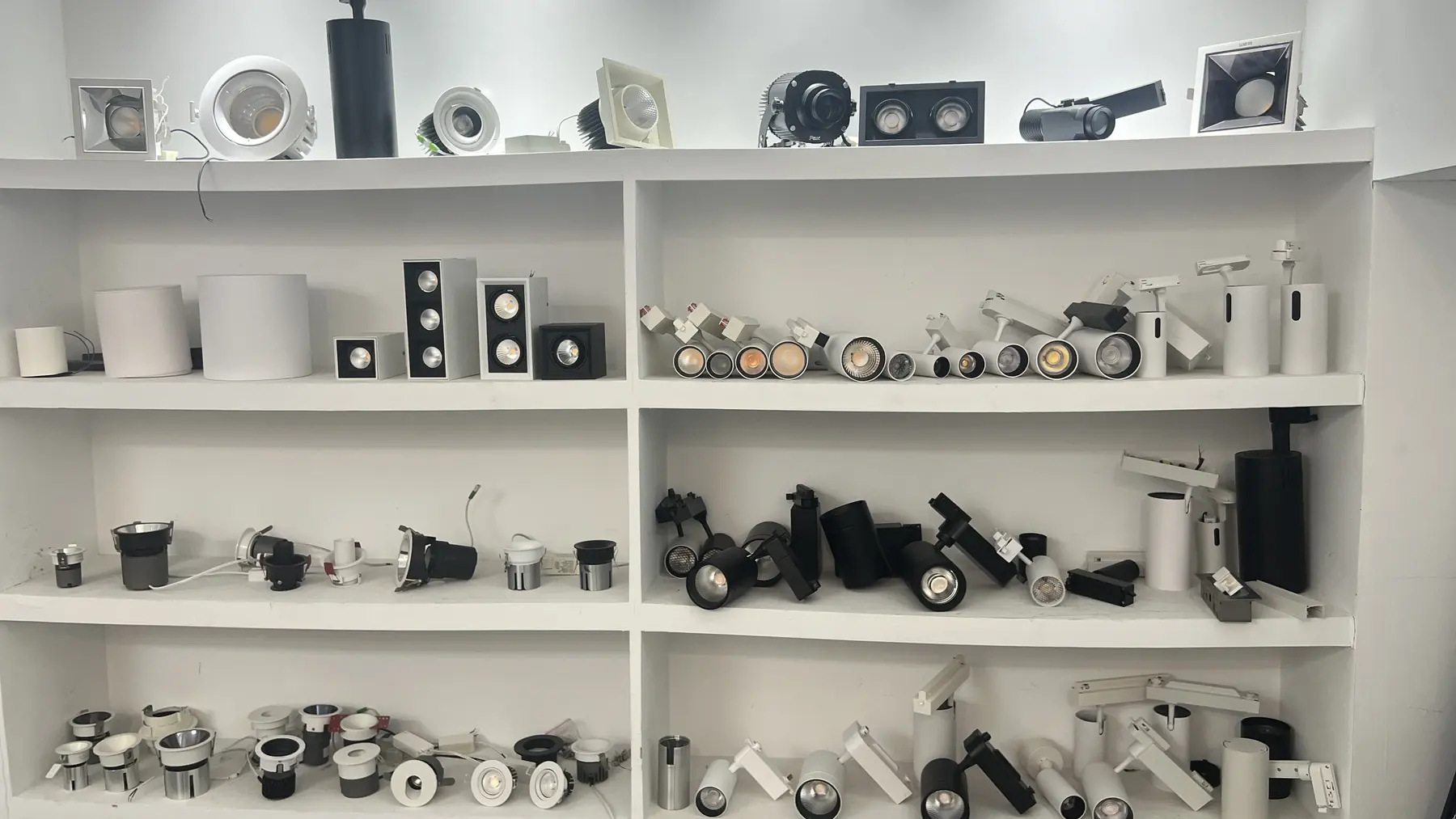
There is no reason a whole building needs one finish. Because the finish is specified per order line, a project can run gun black in the guest rooms, matt white in the lobby and bright silver in the back of house, all in the same model and the same cutout.