
- Home
- Knowledge Center
- Indoor WPC Against Outdoor WPC and What Actually Separates Them
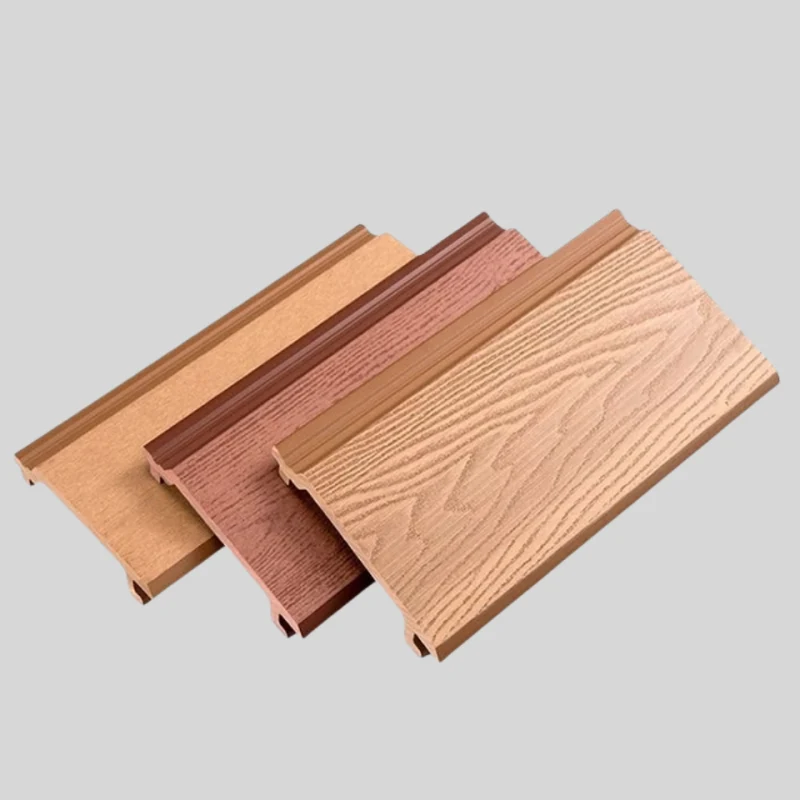
Indoor WPC Against Outdoor WPC and What Actually Separates Them
Same material family, two different products. Co-extrusion, section depth and how you fix them are the three things that matter.
Both are wood plastic composite, and that is where it ends
Interior and exterior WPC share a material family: wood fibre bound in a polymer. What separates them is the surface, the section and the way water is handled behind the board. Treating them as interchangeable is the most expensive mistake in this category, because the failure shows up on an elevation after the scaffold has gone.
Co-extrusion is the real difference
Outdoor boards carry a skin that is co-extruded with the core in the same pass. It cannot delaminate the way a surface bonded on afterwards can, and it is what gives the board fade resistance under direct sun. Interior panels carry a laminated veneer applied by hot and cold pressing, which is the right answer indoors and the wrong one outdoors.
Section depth and density
Outdoor sections run 219x26mm and 156x21mm with a high density, thickened body for impact and aging resistance, acid and alkali resistance and insect resistance. Interior panels run 10mm to 23mm deep because they only ever have to stay flat in a room.
Fixing and the cavity behind the board
Indoors, a panel goes onto a flat wall or a batten grid and that is the end of it. Outdoors the board needs a ventilated batten or aluminium substructure, concealed clips, expansion gaps at board ends and a drainage cavity behind. Water that cannot drain is what ends a facade, whatever the board is made of.
Decking is a third product, not a variant
WPC decking is a 140x25mm hollow chambered board in 2.4, 2.9, 3 and 5.4m lengths, made from 30% HDPE, 60% wood fibre and 10% additive, and fixed over a joist grid with edge clips. It is a walking surface with a different section and a different fixing method from any wall board.
Colour consistency across an elevation
Two production batches on one facade are visible from the street. Order the full elevation area in one run, and quote the original reference for any later phase so the colour can be matched as closely as extrusion allows.
Products Referenced In This Guide
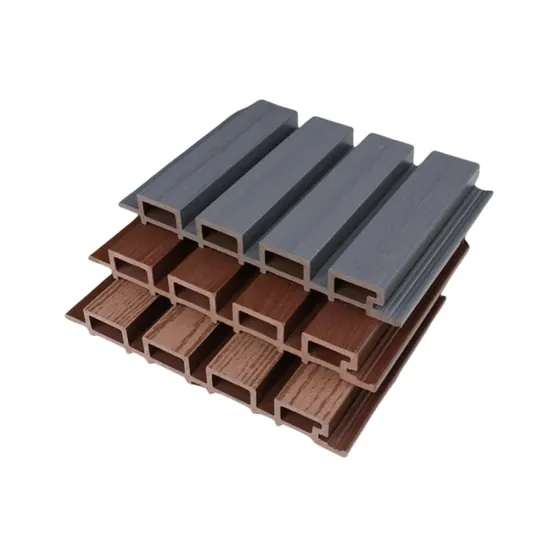
Outdoor WPC Wall Panels
Outdoor WPC wall panels 219x26mm at 2900mm, 60% wood fibre with recycled HDPE and co-extruded fade resistant surface. Exterior cladding for villas hotels offices.
See the specification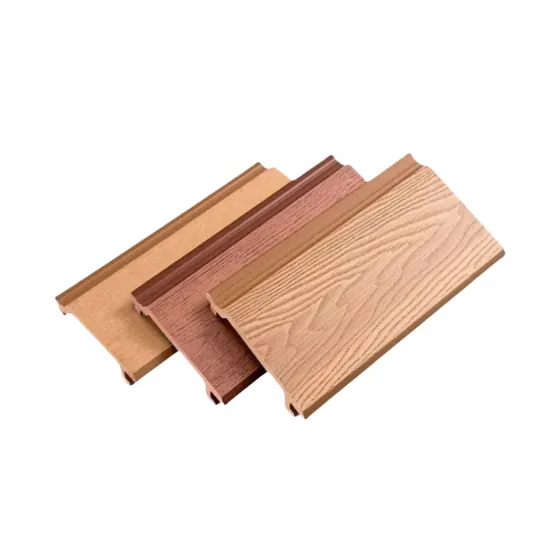
Outdoor WPC Wall Panel Cladding
Outdoor WPC wall panel cladding 156x21mm at 2900mm, high density co-extruded wood plastic composite with UV acid alkali and insect resistance for building facades.
See the specification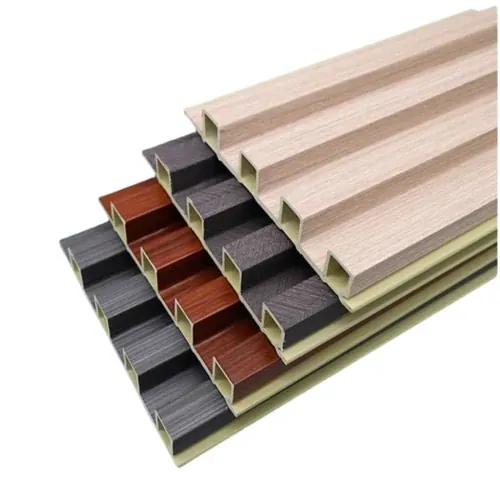
WPC Wall Panel Interior WW-IN16023
WW-IN16023 interior WPC wall panel, 160mm wide, 15mm deep, 2900mm long with a smooth wood veneer finish. Fluted wall panels for homes offices hotels and malls.
See the specification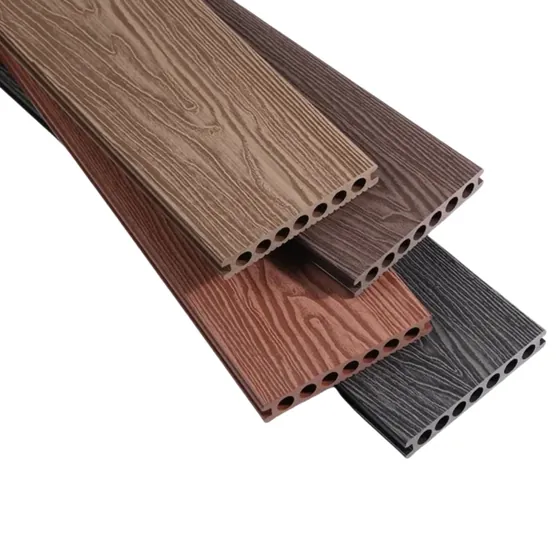
WPC Decking
WPC decking boards in 140x25mm, 2.4 to 5.4m lengths, 60% wood fibre and 30% HDPE. Moisture proof, UV and termite resistant composite decking for export projects.
See the specificationProduct Families Covered
Questions About This Guide
Can I use outdoor boards indoors?
What does the co-extruded layer protect against?
Do outdoor boards need painting?
What gap should I leave at board ends?
Put This Into Practice
Send the room, the area and the finish you are working to and a recommendation with the matching published specification comes back.