
Wheelbarrow Tray Capacity and Load Guide
Water capacity, sand capacity and rated load are three different numbers. Confusing them is how buyers end up with a barrow nobody can lift.
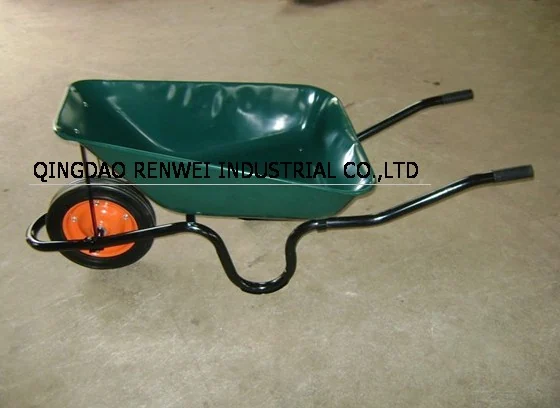
A wheelbarrow specification usually carries three capacity figures and they measure different things. Reading them as one number is the most common error in barrow buying.
Get them straight and the rest of the specification — tray gauge, tube diameter, wheel size — falls into place.
Water Capacity Is Volume to the Brim
Water capacity is the volume the tray holds filled level to the brim, published in litres. It is a size measurement, not a load measurement.
It is the right figure to compare when you are building a retail range, because it maps directly onto the size the customer perceives. A 100 litre tray is a big barrow; a 65 litre tray is a domestic one.
Sand Capacity Is the Practical Load
Sand capacity is the amount of dense material the barrow will usefully carry. It is always a much smaller volume than the water capacity, because dense material reaches the barrow's weight limit long before it reaches the top of the tray.
This is the figure that predicts how the barrow behaves on a real job. A tray filled to the brim with wet sand is not a working load, it is a barrow nobody can lift.
Rated Load Is the Structural Limit
Rated load is what the frame and wheel are designed to carry, published in kilograms. The WB86 series publishes it for every model, alongside the barrow's own weight.
Own weight matters more than buyers expect. A barrow that has to be lifted into a van or carried up steps by one person is limited by its empty weight as much as by its rating.
| Figure | What it measures | Use it for |
|---|---|---|
| Water capacity | Volume to the brim, in litres | Comparing tray size across a range |
| Sand capacity | Practical dense load | Predicting real working capacity |
| Rated load | Structural limit, in kilograms | Checking against site handling limits |
| Own weight | Empty weight of the barrow | Deciding whether one person can handle it |
Tray Gauge and Tube Diameter
Tray thickness decides whether the barrow survives rubble. The WB3800 record in this catalogue publishes 0.65, 0.70 and 0.80mm options, which is the range this class of barrow is normally built in.
Frame tube diameter and wall thickness do the same job for the chassis. Where the source catalogue publishes them they appear on the model page; where it does not, they are marked TBC rather than estimated.
Reading the Dimension Letters
The WB86 series publishes six body dimensions as letters: L, H, C, A, B and h. These correspond to the reference points on the source drawing — L is overall length, H overall height, C tray width, and A, B and h are frame reference dimensions from the same drawing.
If you need the drawing itself to interpret them precisely, ask for it against the model number.
Key Takeaways
- Water capacity is tray volume; sand capacity is the practical working load
- Rated load is the structural limit and own weight decides handling
- Tray gauge is what survives rubble — ask for it if it is not published
- The L H C A B h dimensions come from the source drawing
Products Mentioned in This Guide
Where to Go Next in the Catalogue
Wheelbarrow
The Most Popular Products
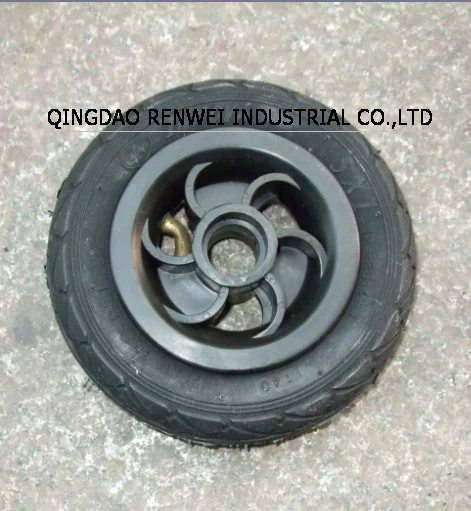
Rubber Wheel
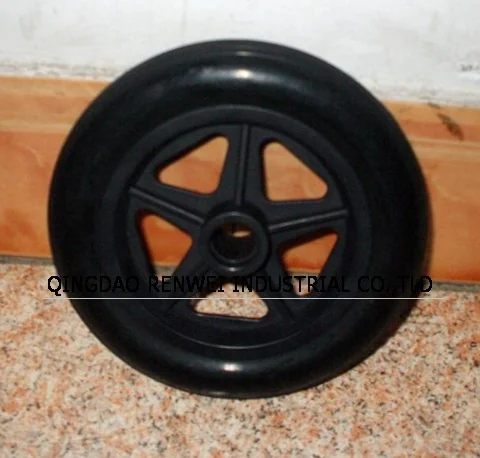
PU Wheel
Solutions Related to This Guide
Container Load Planning
Private Label and OEM
Wheel and Caster Matching
Questions About This Guide
Why is sand capacity so much smaller than water capacity?
Because dense material reaches the barrow's weight limit long before it fills the tray. A 100 litre tray full of wet sand would weigh far more than one person can lift.
What tray thickness should I specify?
The WB3800 record publishes 0.65, 0.70 and 0.80mm. Heavier gauges survive rubble and site use better; lighter gauges suit garden use and cost less.
How many wheelbarrows fit a container?
The source catalogue publishes 740 pieces per 40ft for the WB3800. Other models do not publish a quantity, so ask with your chosen packing method.
Continue Reading
Rubber Products and Moulding Basics
OEM and Private Label Checklist
Container Loading for Bulky Goods
Apply This to Your Own Specification
Send the measurements, loads and surfaces described in this guide and the sales desk will come back with model numbers rather than a brochure.