
Greenhouse Frame and Cover Specification Guide
Tube wall thickness and cover grammage are the two numbers that decide whether a walk-in frame sees a second winter.
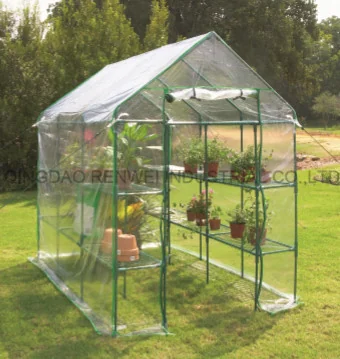
A walk-in greenhouse or plant stand is a tube frame and a cover, and almost every failure traces back to one of two specifications that many catalogues leave out.
This range publishes both, which makes models genuinely comparable rather than comparable on footprint alone.
Tube Diameter Is Not Strength
A frame tube published as 16*0.4 is 16mm in diameter with a 0.4mm wall. The wall thickness is what carries the load; the diameter mostly sets the stiffness.
A 16mm tube with a 0.6mm wall is substantially stronger than a 19mm tube with a 0.4mm wall, even though the second sounds bigger. When you are comparing two frames, compare the wall figure first.
Cover Grade: Grammage or Thickness
PE covers are published in grams per square metre — 140G/SQ.M PE LENO, for example. Higher grammage means a heavier, more tear-resistant cover.
PVC covers are published as a thickness in millimetres instead, such as 0.08mm. The two are not directly comparable, so match like with like when you are pricing a range.
| Cover type | How it is published | What it means |
|---|---|---|
| PE leno | Grams per square metre (e.g. 140G/SQ.M) | Woven reinforcement, tough and tear resistant |
| Clear PVC | Thickness in millimetres (e.g. 0.08mm) | Higher light transmission, less tear resistance |
Leno Weave and Why It Matters
Leno is a weave in which reinforcing threads are locked around the main threads. A tear that starts in a leno cover tends to stop at the next reinforcement rather than running the length of the panel.
For windy sites this is worth more than a small increase in grammage on a plain film.
Shelf Counts Are Published Per Side
Where a model has shelving, the source catalogue publishes a count and states whether it is per side — for example six pieces in side. Read it carefully when you are comparing two models, because a four-shelf frame and a four-per-side frame are different products.
Models without a shelf row in the specification do not have published shelving.
Anchoring Is the Real Failure Point
Almost every greenhouse frame lost to wind was lost at the anchors rather than in the frame. Ground pegs, guy ropes and ballast are what hold a light structure down.
The source catalogue does not publish an anchoring specification, so ask what is supplied before you build a retail range around a model for a windy market.
Key Takeaways
- Compare tube wall thickness before tube diameter
- PE covers are compared by grammage, PVC covers by thickness
- Leno weave stops tears running
- Shelf counts may be published per side, not in total
- Ask what anchoring is supplied
Products Mentioned in This Guide
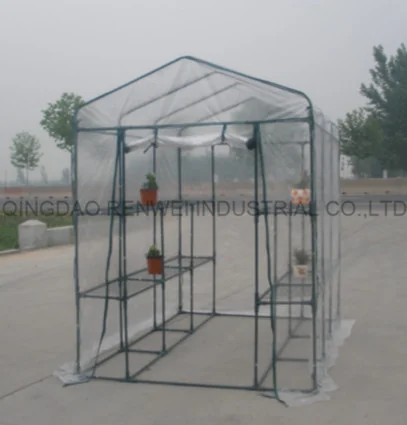
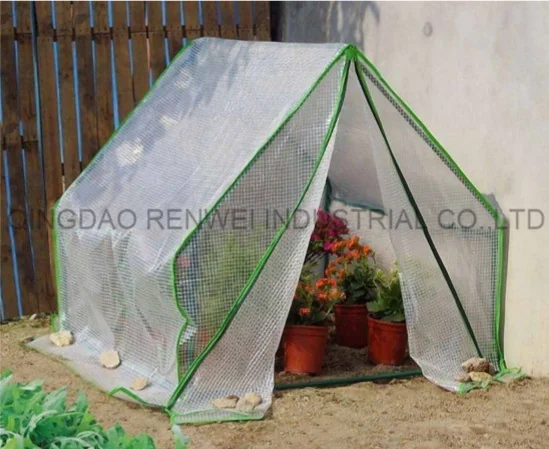
Where to Go Next in the Catalogue
Solutions Related to This Guide
Private Label and OEM
Container Load Planning
Sample and First Order
Questions About This Guide
What does 16*0.4 mean on the tube line?
A tube 16mm in diameter with a 0.4mm wall thickness. The wall figure is the one that carries load.
Is PE or PVC the better cover?
PE leno is tougher and cheaper; clear PVC transmits more light. Choose by climate and by what is being grown.
Are replacement covers available?
Replacement cover supply is not published on the source site. Ask against the model number if you need it for a retail programme.
Continue Reading
Rubber Products and Moulding Basics
OEM and Private Label Checklist
Container Loading for Bulky Goods
Apply This to Your Own Specification
Send the measurements, loads and surfaces described in this guide and the sales desk will come back with model numbers rather than a brochure.