
How To Choose The Beam Angle For A LED Track Light
Beam angle decides whether a display reads as an accent or a wash. This guide works from ceiling height and display width to the angle you should order.
Why Beam Angle Is The Decision You Cannot Undo
On a fixed-beam head the optic is set during production. If you order 60 degrees for a jewellery counter, no adjustment on site will make the beam tight again. Beam angle therefore has to be settled before the order, and it is the single specification buyers get wrong most often.
Start From Ceiling Height And Display Width
The beam spread on the display surface is roughly the mounting height above that surface multiplied by a factor for the angle. At 15 degrees the pool is about a quarter of the drop, at 24 degrees about four tenths, at 36 degrees about two thirds, at 45 degrees about eight tenths, and at 60 degrees a little over one. Measure the drop from the fixture to the merchandise, decide how wide the lit pool should be, and the angle falls out of the arithmetic.
Match The Angle To The Job
Use 15 and 24 degrees for accent work: jewellery, watches, single mannequins, artwork. Use 36 degrees as the general-purpose retail angle. Use 45 and 60 degrees to wash a wall bay or light a wide table without visible scallops between fittings.
When To Specify A Zoomable Head Instead
If the display changes with the season, the ceiling height is not confirmed, or the buyer cannot commit to the layout, a zoomable head removes the risk. The installer turns the optic to set the beam between roughly 15 and 60 degrees on the ladder. It costs more per head than a fixed optic, and it is almost always cheaper than reordering.
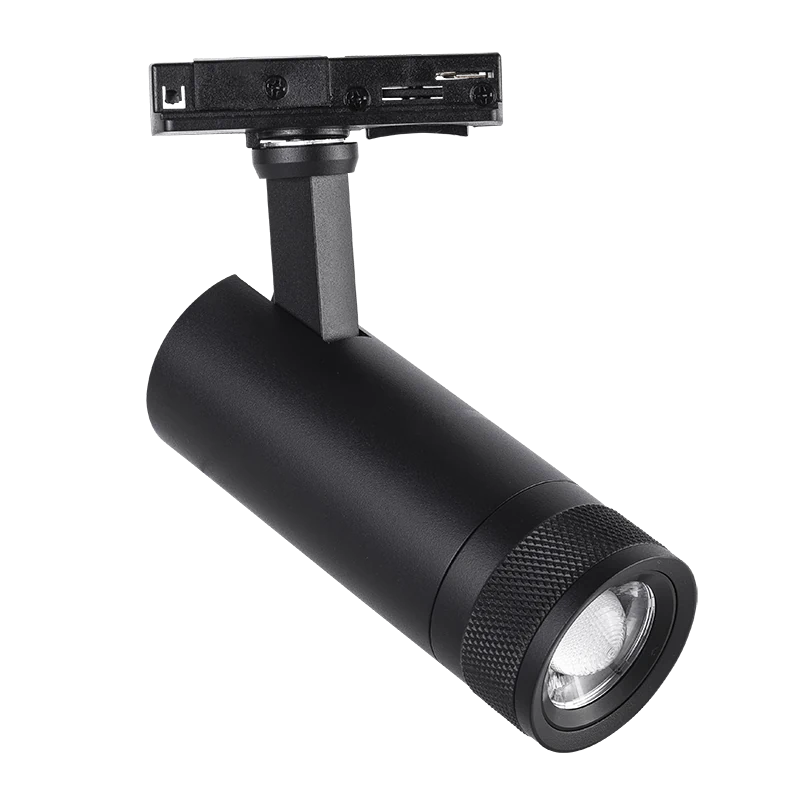
Do Not Fix Beam Angle Before You Fix Output
A narrow beam concentrates the same lumens into a smaller pool, so a 15 degree 20W head can look brighter on the merchandise than a 60 degree 40W head. Decide the lux you need on the display first, then choose the angle, then choose the wattage that delivers it.
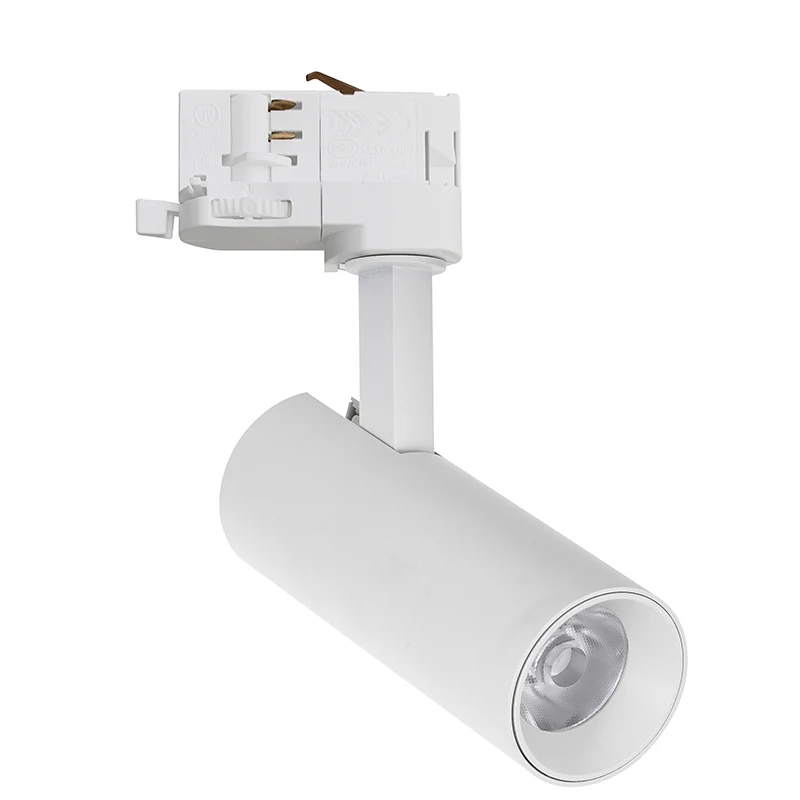
Prove It Before You Order
Send us the reflected ceiling plan and the ceiling heights and we will run a Dialux calculation with our IES files. That converts the whole question into numbers you can put in front of the client before a container is built.
Fixtures Mentioned In This Guide
4 Wire 40W LED Track Light
30W Zoomable LED Track Light
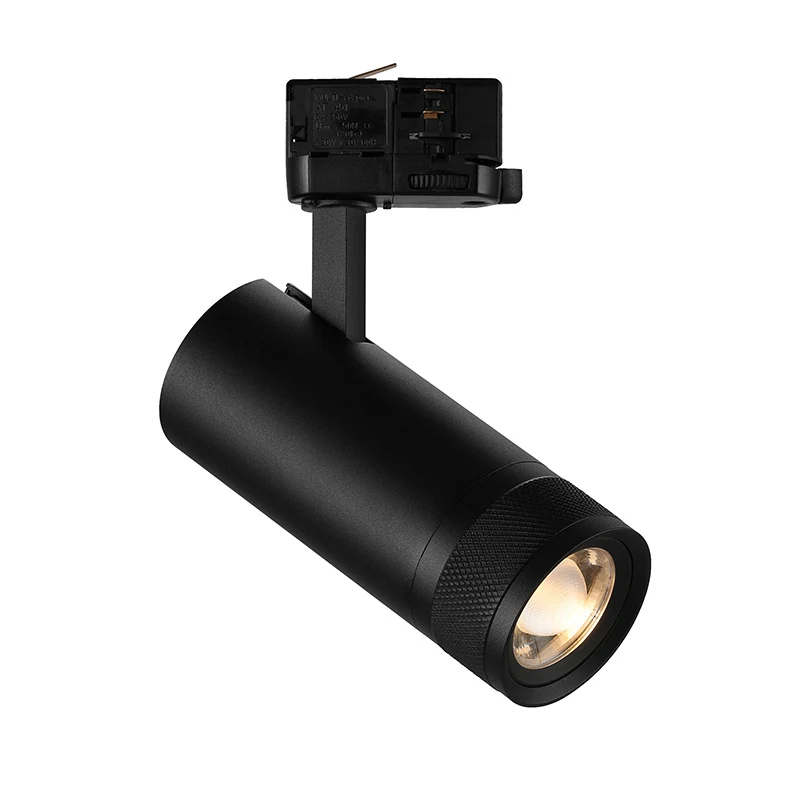
20W Zoomable LED Track Light
Industries And Solutions
Retail Store Lighting
Track and downlight packages for fashion, jewellery and speciality retail where merchandise colour has to survive the lighting.
Showroom And Gallery Lighting
Zoomable and fixed-beam track heads with CRI above 90 for spaces where the display changes and the colour has to be right.
Lighting Design And Photometric Support
IES files and Dialux calculations before you commit to a head count, so the layout is proved on paper first.
Frequently Asked Questions
What beam angle is best for retail?
36 degrees covers most general retail. Drop to 15 or 24 degrees for accent on small high-value items, and go to 45 or 60 degrees to wash a wall bay.
Can I change the beam angle after delivery?
Only on a zoomable head. On a fixed head the optic is set at production.
Which beam angles do you make?
15, 24, 36, 45 and 60 degrees on the fixed heads, and roughly 15 to 60 degrees on the zoomable models.
Can you calculate the beam layout for me?
Yes. Send the ceiling plan and heights and we will return a Dialux calculation.
Send Us The Project And We Will Check The Specification
Ceiling plan, ceiling height, target lux level and what is on display. We will return a fixture schedule with beam angles.