
Reading an Epoxy Resin Grade Table Without Guessing
EEW, colour, viscosity and softening point are the four numbers that decide whether a resin grade fits your process.
Epoxy Equivalent Weight Comes First
EEW is the mass of resin containing one equivalent of epoxy group, and it sets the hardener stoichiometry. Liquid bisphenol A grades such as NPEL-128 sit at 184 to 190 g/eq. Solid grades climb steadily: NPES-901 at 450 to 500, NPES-907 at 1500 to 1800, NPES-909 at 1800 to 2500 g/eq.
Liquid Semi Solid or Solid
Liquid grades are quoted on viscosity at 25 degrees C, typically 12000 to 15000 cPs for standard NPEL-128. Solid grades are quoted on softening point instead, from 64 to 74 degrees C for NPES-901 up to 130 to 150 degrees C for NPES-909. Semi solid grades such as NPEL-134 sit between the two.
Crystallisation Is a Real Problem
Standard liquid bisphenol A resin can crystallise in a cold warehouse and has to be remelted. Low crystallisation grades such as NPEL-128R and non crystallising grades such as NPEL-128S exist specifically to avoid that, and are worth the difference if your storage is unheated.
Electronic Grades Are Not a Marketing Label
NPEL-128E is a standard electronic grade and NPEL-128G carries low total chlorine at 1500 ppm or below. If the resin goes anywhere near fine pitch circuitry, the chlorine limit is the specification that matters.
When to Move Off Bisphenol A
o-Cresol novolac grades such as NPCN-701 to NPCN-704L at 190 to 230 g/eq give higher functionality for composites, coatings and moulding compounds. Bisphenol F and phenolic novolac grades such as NPPN-638S and NPPN-631 are specified where thermal and chemical resistance in laminates and filament winding is the constraint.
Diluted Grades Save a Step
Xylene diluted grades such as NPSN-301X75 and NPSN-134X80 arrive ready to formulate into solventborne coatings, which removes a dissolving step from your process.
Products Covered in This Guide
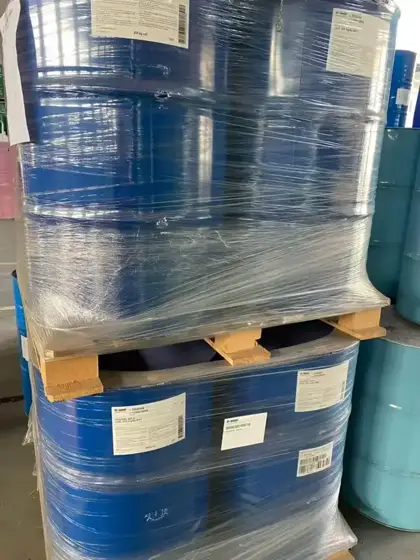
Bisphenol A bisphenol F o-cresol and phenolic modified grades in one table
View Specifications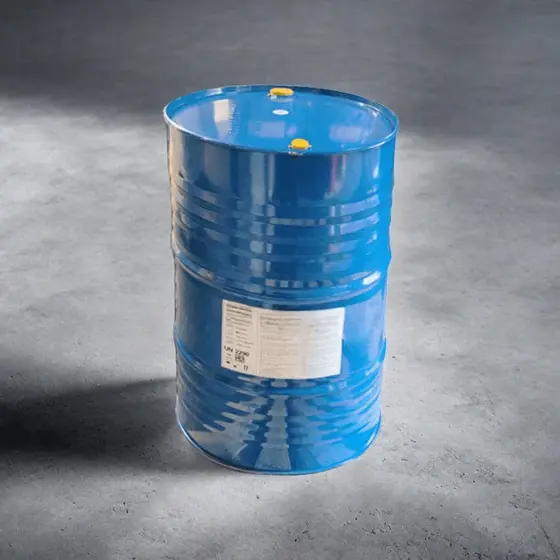
Latent catalysts for one component epoxy with 26 grades by activation temperature
View Specifications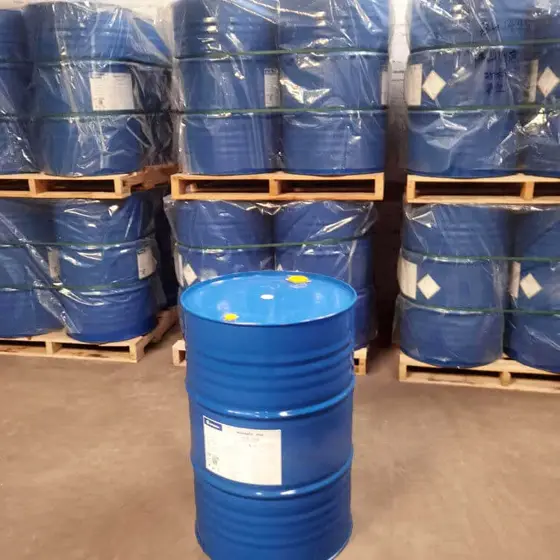
Low viscosity amine hardeners that toughen epoxy without blushing
View SpecificationsRelated Reading
Aromatic isocyanates are faster and cheaper. Aliphatic isocyanates keep their colour. This guide sets out which property actually decides the choice.
Read The Guide
Both are aliphatic HDI derivatives and both give light stable coatings. Their crosslink density, viscosity and flexibility are not the same.
Read The GuideLatency is the whole point. This guide explains what melting point and activation temperature tell you about shelf life and cure schedule.
Read The GuideQuestions About This Guide
Where do the figures in this guide come from?
From the manufacturer grade tables published on our own product pages. Every number quoted here appears on a product page on this site.
Can you help me apply this to my formulation?
Yes. Send us your performance target, processing conditions and the grade you currently use, and we will come back with a recommendation within 24 hours.
Can I get samples of the grades discussed here?
Yes. Samples are free of charge with shipping at your cost, and take about 7 days.
What if my requirement sits between two grades?
That happens often. Ask for both samples and decide on your own line, because pot life and cure behaviour depend on your catalyst, temperature and humidity rather than on a datasheet.
Apply This to Your Own Formulation
Send the constraint and we will name the grade. Samples in about 7 days.