
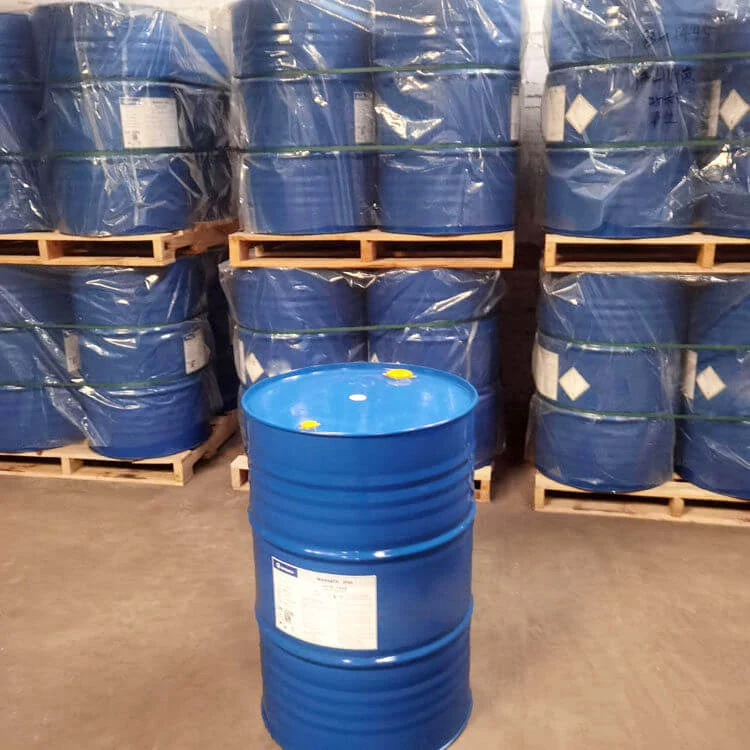
Polyetheramine Curing Agent
Low viscosity amine hardeners that toughen epoxy without blushing
What This Product Is and Who Buys It
Polyetheramine curing agents combine a polyether backbone with terminal amine groups. They give low viscosity, extended pot life and a very low tendency to blush, and they raise the toughness, impact resistance and chemical resistance of cured epoxy systems. Seventeen grades are listed with amine hydrogen equivalent weight, viscosity, density and recommended ratio.
Key Benefits
- Low whitening risk, with minimal surface fogging and high gloss after cure
- Excellent flexibility and toughness from the polyether backbone, reducing cracking
- Extended working time and low viscosity for large area application and complex casting
- Low vapour pressure and low irritation, which changes the site safety picture
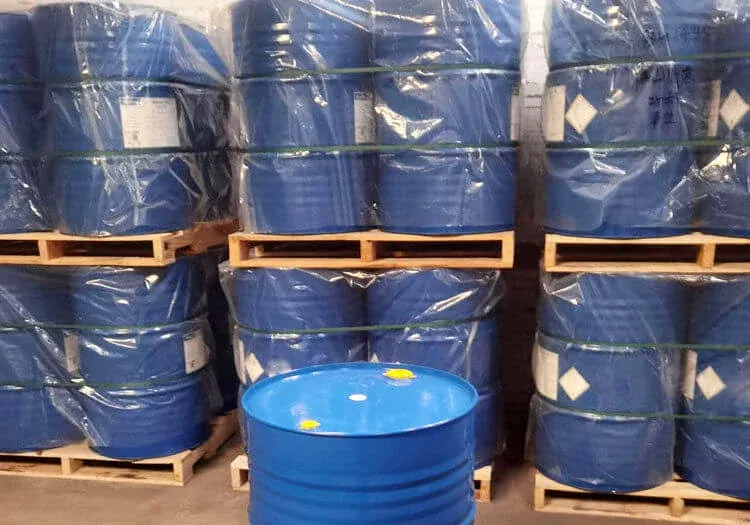
Where This Material Is Used
Who It Is For
- Epoxy flooring contractors and formulators
- Heavy duty anticorrosion coating producers
- Composite manufacturers using pultrusion filament winding or hand layup
- Polyurea and RIM system developers
Problems It Solves
- Surface blush and fogging spoiling a floor finish applied in humid conditions
- Brittle cured systems cracking under impact or substrate movement
- Pot life too short to complete a large area in one pass
- Solvent free and low VOC formulations needing a hardener that is still workable
Technical Features
- D series diamines D-220, D-230, D-400, D-2000 and D-2010
- T series triamines T-403 and T-5000 for higher functionality
- ED series with polyethylene glycol segments for hydrophilicity, ED-410 to ED-2003
- M series monoamines M-600, M-1000 and M-2070, plus fast curing EDR-148
Specifications
These figures are the manufacturer grade data as published for this product family. Anything not listed below has not been confirmed and is marked TBC on request rather than estimated.
| Product Code | Appearance | Color (Pt-Co, max) | Amine Hydrogen Equivalent (g/eq) | Viscosity (Cps at 25°C) | Density (g/ml at 25°C) | Recommended Ratio | Features | Applications |
|---|---|---|---|---|---|---|---|---|
| D-230 | Colorless to slightly yellow | 25 | 60 | 9.5 | 0.948 | 32 | Low viscosity, low color and vapor pressure, fully soluble in most solvents including water, tough clear impact-resistant coatings without surface blushing | Epoxy curing agent, hot melt adhesives with hydroxyls, fast surface bonding with isocyanates |
| D-220 | Colorless to slightly yellow | 25 | 60 | 9.5 | 0.948 | — | Low viscosity, low color and vapor pressure, fully soluble in most solvents including water; coatings free of surface blush | Epoxy curing agent |
| D-400 | Colorless to slightly yellow | 25 | 60 | 9.5 | 0.948 | 55 | Low viscosity, low color and vapor pressure, fully soluble in most solvents including water | Epoxy curing agent with enhanced elasticity, used in polyurethane/polyurea adhesives |
| D-2000 | Colorless to light yellow, slight haze | 25 | 514 | 248 | 0.991 | — | Low viscosity, low color and vapor pressure; high MW polyether backbone enhances flexibility and tear strength | Key component in polyurea and RIM, co-curing agent for epoxy systems |
| D-2010 | Colorless to light yellow, slight haze | 25 | 514 | 248 | 0.991 | — | Combines with hydroxyl groups to improve elastomer properties | Main raw material for amino-terminated polyethers and RIM, epoxy plasticizer |
| T-403 | Colorless to light yellow, no suspended particles | 50 | 81 | 72 | 0.978 | 42 | Light color, low vapor pressure, fully soluble including water, improves flexibility | Epoxy curing agent, anti-settling agent in polyurethane reactions |
| T-5000 | Colorless to light yellow, slight haze | 75 | 952 | 819 | 0.997 | — | Light color, increases toughness and flexibility in epoxy adhesives | Polyurea crosslinker, auxiliary epoxy curing agent for high adhesion/flexibility |
| M-600 | Colorless to light yellow, slight haze | 75 | 291 | — | 0.948 | — | Polyether backbone provides flexibility; terminal amino more reactive than alcohols | Polyurea chain extender, preparation of polyacrylic or similar linear polymers |
| M-1000 | Pale yellow liquid, slight haze | 75 | 489 | — | 0.979 | — | Polyether backbone provides flexibility; terminal amino more reactive than alcohols | Mineral flotation, corrosion inhibitor, agricultural emulsifier, epoxy emulsifier |
| M-2070 | Pale yellow liquid, slight haze | 75 | 1040 | 166 (at 37.8°C) | 1.072 | — | Good surface activity and hydrophilicity modification | Mineral emulsifier, compression glue, active dispersant, corrosion inhibitor |
| ED-410 | Colorless to light yellow, slight haze | 75 Max | 106 | 29 | 1.022 | — | Low viscosity, low color and vapor pressure, fully soluble including water | Polyether amine modification for hydrophilicity, biocompatible articles and coatings |
| ED-600 | Colorless to light yellow, slight haze | 75 | 132 | 72 | 1.035 | — | Polyether backbone for flexibility, polyethylene glycol for hydrophilicity | Polyether amine modification for hydrophilicity, hydrogels with isocyanates |
| ED-900 | Colorless to light yellow, slight haze | 100 | 250 | 119 | 1.065 (38°C) | — | Polyether backbone for flexibility, polyethylene glycol for hydrophilicity | Polyether amine modification for hydrophilicity, biocompatible articles |
| ED-1200 | White waxy solid | 80 | 255 | — | 0.95 | — | Polyether backbone for flexibility, polyethylene glycol for hydrophilicity | Polyether amine modification for hydrophilicity, water-based curing agents |
| ED-2003 | White waxy solid | 75 | 575 | 134 | 1.068 | — | Light color, low vapor pressure, water-soluble, highly reactive terminal amino | Hydrophilic polymers, flux, emulsifiers, epoxy modifiers, water-based coatings |
| EDR-148 | Colorless to light yellow, slight haze | 50 | 37 | 8 | 0.998 | — | Room temperature curing, fast at elevated temperature, excellent impact resistance after cure | Epoxy modification for soft yet tough cured products, room/high-temperature cure |
Grades listed are representative and not exhaustive. Ask for the batch certificate of analysis on the grade you intend to buy.
Packaging Storage and Shelf Life
- Physical Forms
- Liquid grades plus white waxy solid grades ED-1200 and ED-2003
- Storage
- Sealed containers in cool dry conditions away from direct sunlight
- Packaging
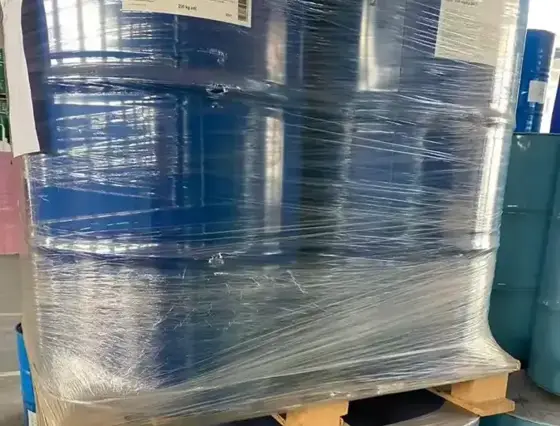
- Contact us for the drum format available on the grade you select
- Certification
- Batch certificate of analysis with amine hydrogen equivalent and colour supplied with shipment
How to Work With This Product
- Work from the amine hydrogen equivalent weight, not from a weight ratio taken off another product
- Where a recommended ratio is listed, such as 32 for D-230 or 55 for D-400, use it as the starting point
- For self levelling floors favour low viscosity grades such as D-230 at 9.5 cPs or EDR-148 at 8 cPs
- For toughness and elongation move up in molecular weight to D-2000 or T-5000
- For waterborne systems use the ED series, which carries polyethylene glycol segments
How It Compares
Within the Epoxy Hardener category this product is positioned by the numbers in the table above rather than by a marketing claim. Compare NCO content, viscosity, equivalent weight or hydroxyl value against the alternative you are considering, and if the two are close, ask us for both samples and decide on your own line.
Quality and Documentation
Quality control runs across incoming raw materials, production and finished product inspection. A batch certificate of analysis is supplied with every shipment. We are a supply and trading company working with named manufacturers and OEM partners, so certification held by the producing plant is provided on request per grade rather than claimed here as ours.
Customisation
Customised grades and packing formats are available through our OEM partners and specialised manufacturing facilities. Tell us the property you need to move and we will say whether it is a grade change, a packaging change or not possible.
Industries Using This Product
Protective coatings are bought on service life. The raw material decisions behind them are about crosslink density, film flexibility and how the system behaves once VOC limits tighten.
See Applications
Adhesive makers live between two constraints: open time long enough to apply the product, and final strength high enough to replace a mechanical fastener.
See ApplicationsWhere This Product Fits In A Wider System
Polyetheramine Questions
Which grade is the general purpose starting point?
D-230, at 60 g/eq amine hydrogen equivalent, 9.5 cPs at 25 degrees C and a recommended ratio of 32. It is fully soluble in most solvents including water and gives tough clear impact resistant coatings without surface blushing.
How do I add flexibility without losing cure?
Blend in a higher molecular weight grade. D-2000 at 514 g/eq and T-5000 at 952 g/eq are both used as co curing agents to raise toughness and flexibility in epoxy adhesives.
What cures fastest at room temperature?
EDR-148 at 37 g/eq and 8 cPs cures at room temperature and accelerates at elevated temperature, giving soft but tough cured products with excellent impact resistance.
Which grades work in waterborne epoxy?
The ED series. ED-2003 is a white waxy solid at 575 g/eq, water soluble with highly reactive terminal amino groups, listed for water based coatings and hydrophilic polymers.
Why does blushing matter so much?
Because it is visible and it is permanent. Surface fogging on a self levelling floor or a clear topcoat means the whole area is rejected. The low whitening behaviour of this family is the main reason formulators pay for it.
Products Often Bought Alongside This One
Bisphenol A bisphenol F o-cresol and phenolic modified grades in one table
View Specifications
Latent catalysts for one component epoxy with 26 grades by activation temperature
View Specifications
Diols triols tetrols and modified grades from 300 to 10000 molecular weight
View SpecificationsGuides That Cover This Product
EEW, colour, viscosity and softening point are the four numbers that decide whether a resin grade fits your process.
Read The Guide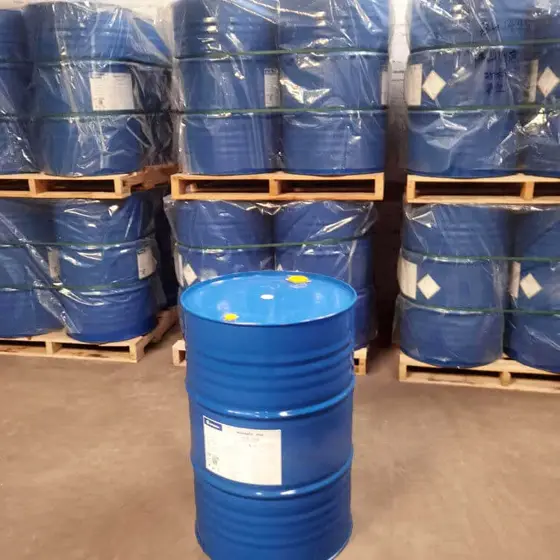
Amine hydrogen equivalent weight and molecular weight explain almost everything about how a polyetheramine will behave in your system.
Read The GuideRequest a Quote or a Sample of Polyetheramine
Samples take about 7 days and are free of charge with shipping at your cost. Production orders ship 20-30 days after the deposit is received.