
How Imidazole Latent Curing Agents Work in One Component Epoxy
Latency is the whole point. This guide explains what melting point and activation temperature tell you about shelf life and cure schedule.
What Latent Means
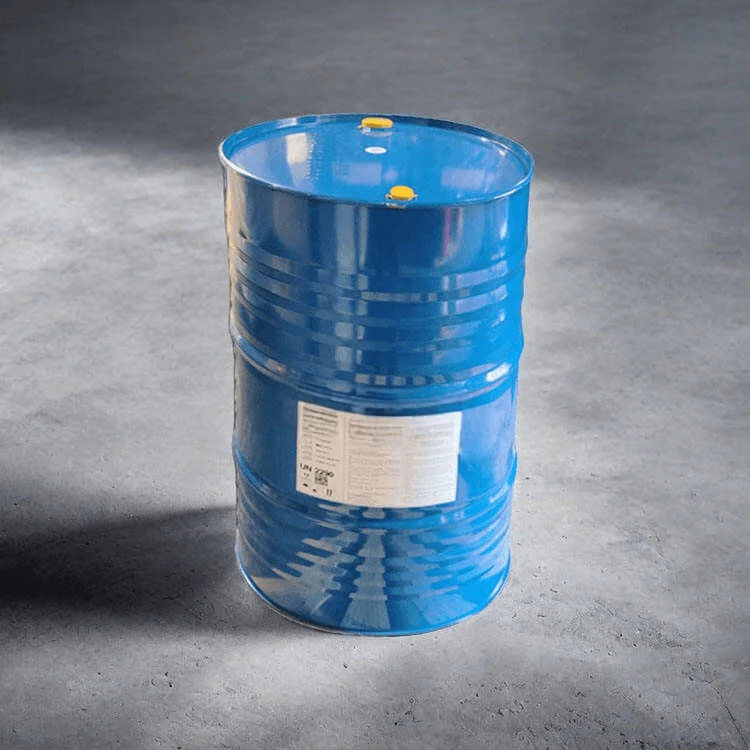
A latent curing agent is effectively inert in the resin at storage temperature and becomes catalytically active above a threshold. That is what makes a genuine one component epoxy possible: the resin and hardener ship in the same drum.
Melting Point and Activation Temperature
These are two different numbers and both are listed for every grade. 2E4MZ melts at 41 degrees C and activates at 105. 2PHZ-PW melts at 248 to 258 degrees C and activates at 158. A high melting powder grade is the one that gives long room temperature storage.
Choosing by Physical Form
Liquid and low melting grades such as 2E4MZ and 1,2DMZ disperse easily but offer less latency. Micronised powders such as 2P4MHZ-PW at roughly 5 micron particle size stay suspended and give the longest usable pot life in a one component system.
Colour Matters in Clear Systems
Non colouring grades such as 2PZ-CNS, 1B2PZ and 2PZL exist for applications where the cured part has to stay clear or light. 2MA-OK additionally offers low moisture absorption, which matters in humid production environments.
Typical Applications
Powder coatings, epoxy adhesives, electronic encapsulation, copper clad laminates, inks and insulating coatings are the main destinations for this family.
A Selection Shortcut
Fix your cure oven temperature first, then pick a grade whose activation temperature sits 10 to 20 degrees below it, then check the melting point is high enough for your warehouse. If those three do not reconcile, the cure schedule has to change, not the hardener.
Products Covered in This Guide
Related Reading
Aromatic isocyanates are faster and cheaper. Aliphatic isocyanates keep their colour. This guide sets out which property actually decides the choice.
Read The Guide
Both are aliphatic HDI derivatives and both give light stable coatings. Their crosslink density, viscosity and flexibility are not the same.
Read The Guide
EEW, colour, viscosity and softening point are the four numbers that decide whether a resin grade fits your process.
Read The GuideQuestions About This Guide
Where do the figures in this guide come from?
From the manufacturer grade tables published on our own product pages. Every number quoted here appears on a product page on this site.
Can you help me apply this to my formulation?
Yes. Send us your performance target, processing conditions and the grade you currently use, and we will come back with a recommendation within 24 hours.
Can I get samples of the grades discussed here?
Yes. Samples are free of charge with shipping at your cost, and take about 7 days.
What if my requirement sits between two grades?
That happens often. Ask for both samples and decide on your own line, because pot life and cure behaviour depend on your catalyst, temperature and humidity rather than on a datasheet.
Apply This to Your Own Formulation
Send the constraint and we will name the grade. Samples in about 7 days.