
Engine Parts
Crankshaft Pulley
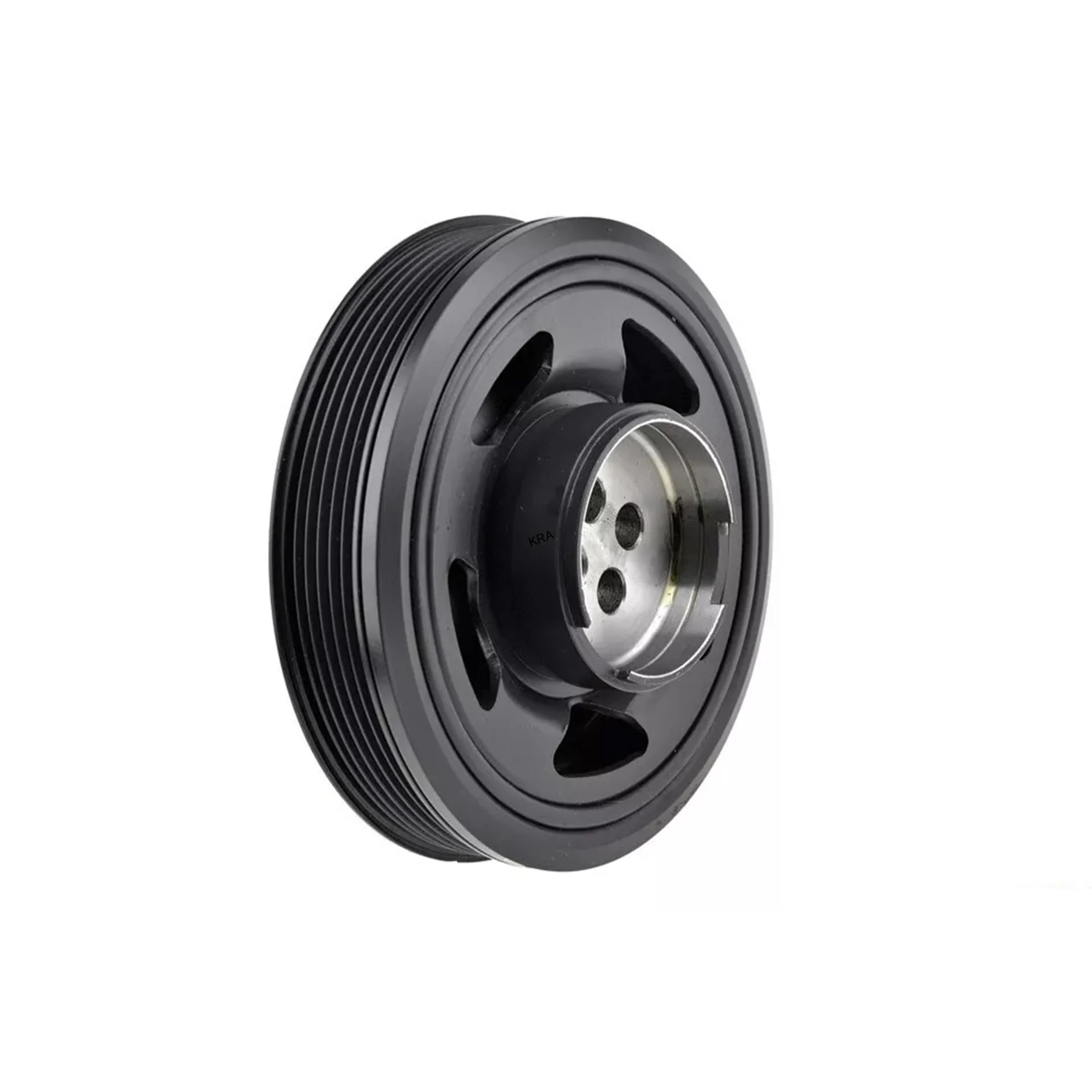
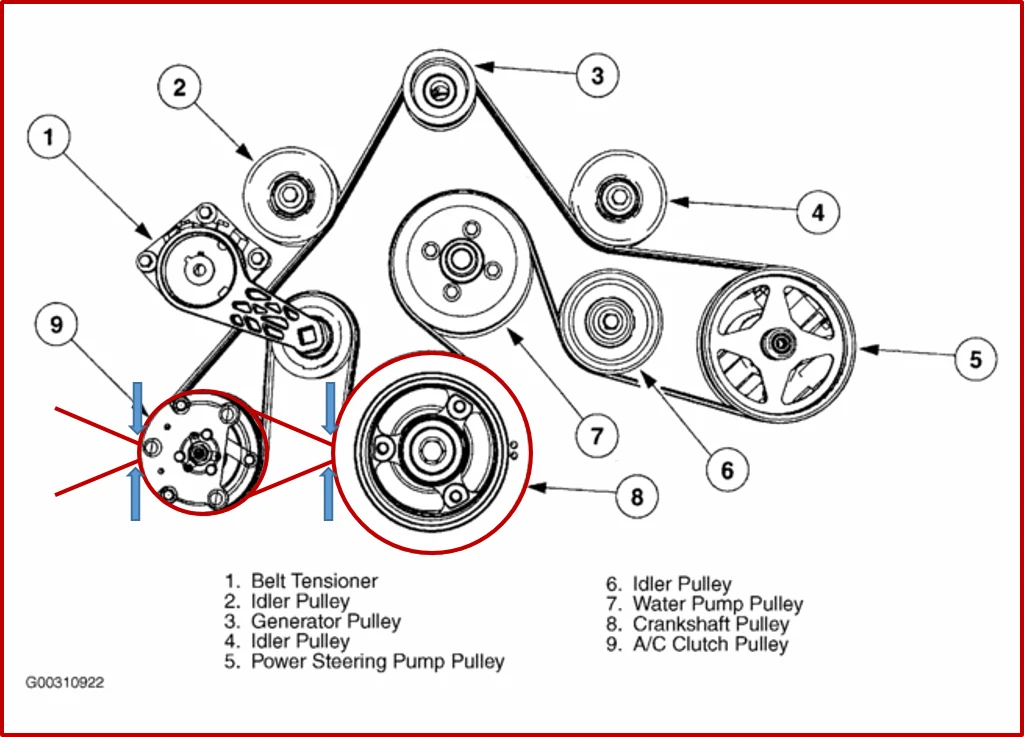
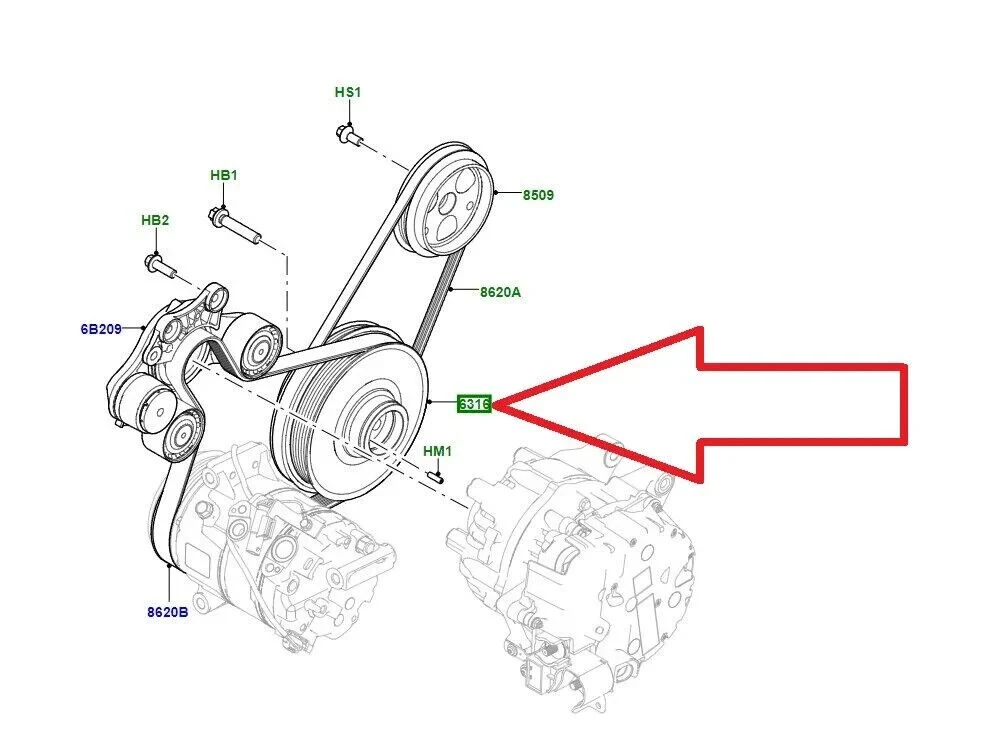
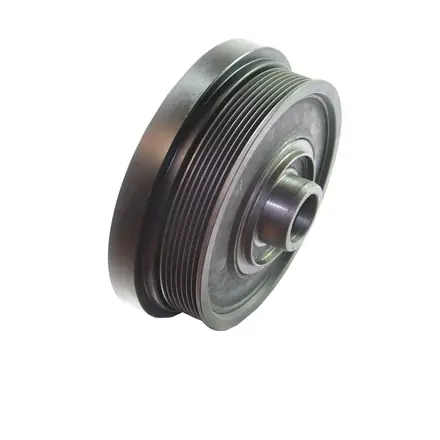
The crankshaft pulley sits at the front of the engine and drives the accessory belt that turns the alternator, the water pump and the air conditioning compressor.
Overview
Crankshaft Pulley
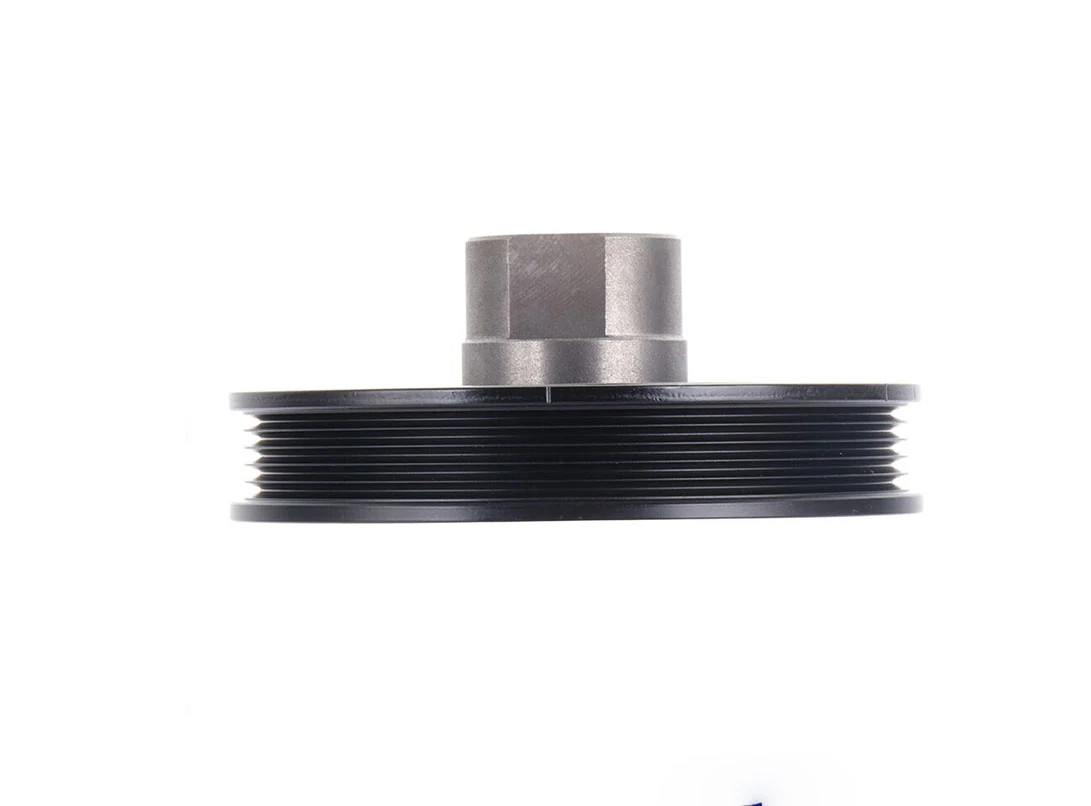
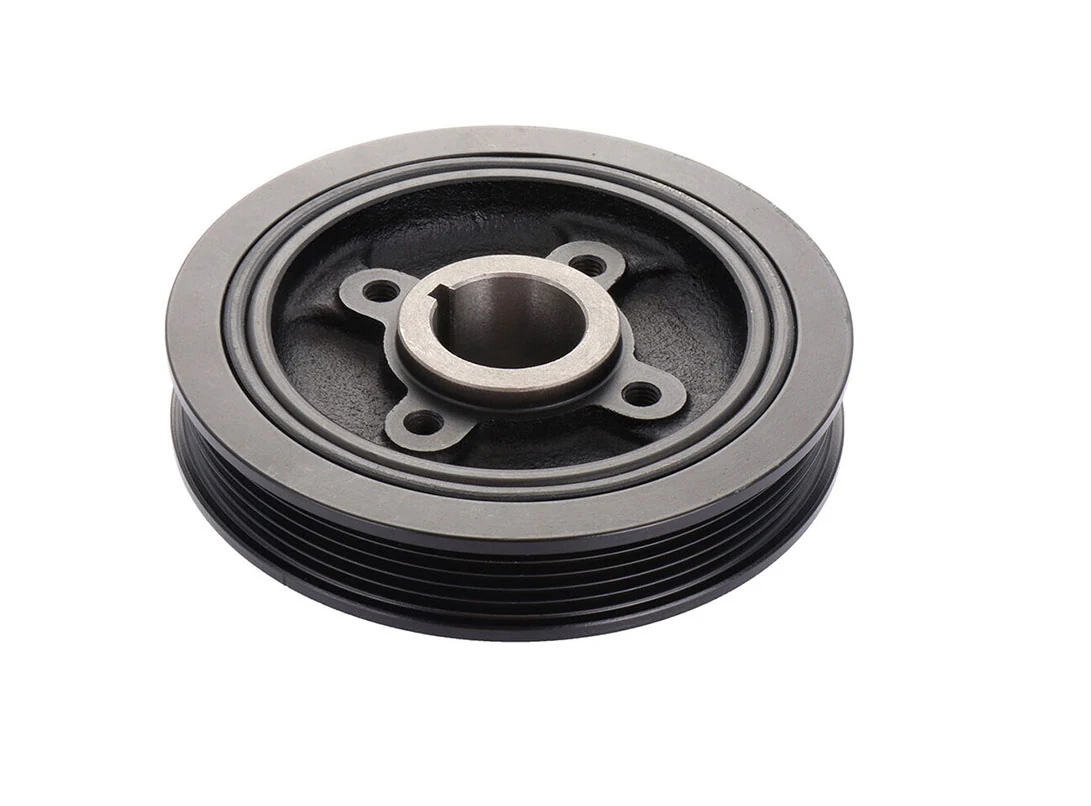
The crankshaft pulley sits at the front of the engine and drives the accessory belt that turns the alternator, the water pump and the air conditioning compressor. It is a rotating part, so a pulley that is out of balance is felt as vibration long before it fails. Our pulleys are finished on a CNC centre and given a 100% dynamic balance test to G16 before packing.
Key Benefits
- 100% dynamic balance test to G16 on every rotating part, so the pulley does not introduce vibration into the belt drive
- Machined on a CNC centre in one setup, which keeps the groove profile and the hub bore concentric
- Matched by OE number against the belt profile and groove count of the original part
- Steel and aluminium options to match what the application originally used
- 1 piece minimum order so a distributor can test a reference before stocking it
Who It Is For
- Engine parts distributors covering belt drive components
- Repair workshops that replace the pulley with the belt rather than after it
- Exporters who want pulleys, timing chain kits and throttle bodies on one order
- Buyers matching a pulley from a printed OE number and nothing else
Problems It Solves
- Worn pulley grooves that chew belts and put the customer back in the workshop
- Aftermarket pulleys that vibrate because nobody balanced them
- Belt profile mismatches that only show up once the engine is running
- Suppliers who will not sell a single pulley to prove the fit
Application Scenarios
- Accessory belt drive repair where the original pulley groove is worn and the belt squeals
- Engine rebuilds where the front end accessories are being refreshed as a set
- Workshop replacement after a belt has shredded and damaged the pulley face
- Distributor stock for common European and Asian engine families
Engineering
Technical Features
- Grooved rim guides the belt and transmits power between rotating shafts
- Wheel or sheave, axle and mounting geometry machined to the original application
- Used in belt driven systems including alternators, water pumps and air conditioning compressors
- Steel or aluminium for heavy duty strength and durability, plastic and composite where the original part is lighter duty
Materials
- Steel or aluminium for heavy duty applications requiring strength and durability
- Plastic where the original part is lightweight and corrosion resistance matters more than load
- Composite materials where the original balances strength, weight and environmental resistance
At a glance
| Matched by | OE number |
|---|---|
| Balance test | 100% dynamic balance to G16 |
| Machining | CNC centre, single setup |
| Materials | Steel, aluminium, composite as per application |
| Minimum order | 1 piece |
| Lead time, regular items | 45 days |
| Groove count and belt profile | Quoted per OE reference, TBC until the number is confirmed |
Values not present in the source part record are marked TBC and confirmed against your OE number before the order is placed.
Manufacturing
How It Is Made and Checked
Blank preparation
CNC machining of the groove profile and hub bore in one setup
100% dynamic balance test to G16
Surface finishing and packing
Quality Control
Accessories are processed by CNC centre in one time so the maximum precision is guaranteed, and every rotating part receives a 100% dynamic balance test based on the G16 standard. The company runs to ISO 9001 and IATF 16949 quality management systems.
Customisation Options
Pulleys can be developed against a sample or an OE number. Continuous development capability runs at 80 to 100 new varieties a year and a newly developed item takes 30 to 45 days.
Comparison
A steel pulley is the default where the original part carries load and heat, and it takes belt tension without deforming. An aluminium pulley is lighter and resists corrosion, which suits performance and some luxury applications. Composite pulleys trade some strength for weight and environmental resistance. Match the original material rather than upgrading blind, because the belt drive was tuned around the original mass.
Use Guide
Step 1
Read the OE number from the old pulley or from the vehicle catalogue
Step 2
Compare groove count and belt width against the new part before fitting
Step 3
Fit the pulley with the crankshaft bolt torqued to the vehicle specification
Step 4
Check belt alignment across the full accessory run before starting the engine
Step 5
Inspect the groove and the axle for wear at each service and lubricate as the vehicle specification requires
Component reference
How a Crankshaft Pulley Works
A pulley is a mechanical device used to change the direction of a force applied to a flexible cable, rope, or belt. It consists of a wheel with a grooved rim through which the cable or belt passes. Pulleys are fundamental components in many mechanical systems, providing a means to transmit power, lift loads, and redirect forces.
Key Characteristics of a Pulley:
- Functionality: Pulleys are used to lift heavy objects with less effort, change the direction of a force, or transmit power between rotating shafts. They can be used individually or combined in systems to create mechanical advantage, allowing for easier movement of loads.
- Components: Wheel (Sheave): The rotating part with a groove around its circumference to guide the cable, rope, or belt. Axle: The central shaft on which the wheel rotates. Frame (Block): The housing that supports the axle and wheel, especially in block and tackle systems.
- Types of Pulleys: Fixed Pulley: Mounted on a fixed axle and used to change the direction of the applied force. It does not provide a mechanical advantage. Movable Pulley: Attached to the load and moves with it, providing a mechanical advantage by reducing the amount of force needed to lift the load. Compound Pulley (Block and Tackle): Combines fixed and movable pulleys to increase mechanical advantage, allowing for significant reductions in the force required to lift heavy loads. Materials: Metal: Steel or aluminum for heavy-duty applications requiring strength and durability. Plastic: Lightweight and corrosion-resistant, suitable for lighter loads and less demanding applications. Composite Materials: Offer a balance of strength, weight, and resistance to environmental factors. Applications: Industrial Machinery: Used in conveyor systems, manufacturing equipment, and lifting mechanisms. Automotive: Found in belt-driven systems like alternators, water pumps, and air conditioning compressors. Construction: Employed in cranes, hoists, and other lifting devices. Home and DIY Projects: Utilized in exercise equipment, clotheslines, and garage doors. Advantages: Efficiency: Pulleys reduce the effort needed to move heavy loads. Versatility: Can be configured in various ways to achieve different mechanical advantages and directions of force. Durability: Well-maintained pulleys can last a long time and operate reliably. Maintenance: Regular inspection for wear and tear, especially on the groove and axle. Lubrication of the axle to ensure smooth rotation. Checking and replacing any frayed or damaged cables, ropes, or belts.
Related products
Often Ordered Together
BMW and MINI Crankshaft Pulley 11238584913
This crankshaft pulley fits the BMW B37 three cylinder diesel, which appears across the 1 Series, the 2 Series Active…
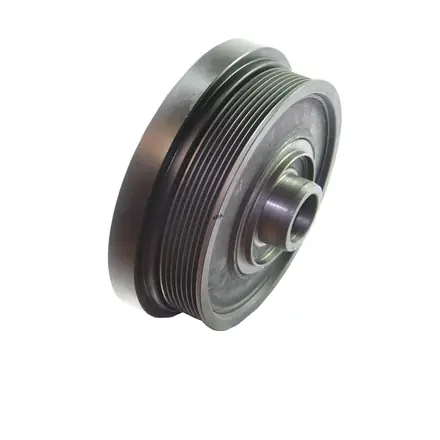
Kia and Hyundai Crankshaft Pulley 23124-23772
This crankshaft pulley covers one of the widest application lists in the range: 65 Kia and Hyundai variants from 2000…
Power Steering Pump Pulley
This is the power steering pump pulley range, cross referenced against 42 Dorman part numbers covering Ford, GM and…
FAQ
Crankshaft Pulley FAQ
How do you confirm a pulley fits before shipping?
We match on the OE number and check groove count and belt profile against the reference. Where a number is not in the range we say so instead of sending an approximate part.
Is every pulley balanced?
Yes. The plant runs a 100% dynamic balance test based on the G16 standard on rotating parts, not a sample check.
Can I order one pulley to test it?
Yes, the minimum order is one piece. That is there so you can prove a reference on a real vehicle before stocking it.
What is the lead time?
45 days for regular items. If the pulley has to be developed, 30 to 45 days.
Do you supply aluminium pulleys as well as steel?
Yes, matched to the original application. We do not swap materials to save cost.
Can pulleys ship with other engine parts?
Yes. Crankshaft pulleys, timing chain kits, throttle bodies and power steering pulleys all sit in the engine parts range and ship on one order.
Next step
Confirm the Fit Before You Order
Send the OE number and the vehicle. We return the interchange references and the applications that number covers, and quote against them.
+86 159 9582 0129
[email protected]
Monday to Friday 08:30-18:00 China Standard Time (GMT+8)