
Knowledge Centre · 2025-05-19
Where Automotive Drive Shaft Development Is Heading
Lightweighting, electrification and higher torque density are changing what a drive shaft has to do. A look at the direction of travel and what it means for replacement parts.
Current State of Drive Shaft Technology Traditionally, drive shafts have been made from steel, providing durability and torque transmission in internal combustion engine (ICE) vehicles. These components connect the transmission to the differential, ensuring smooth power delivery. However, modern drive shafts incorporate advanced materials like aluminum and composite fibers to reduce weight and improve fuel efficiency. In the B2B sector, manufacturers are focusing on precision engineering to meet stringent global standards, such as those from ISO and SAE. This evolution is crucial as it directly impacts vehicle performance and emissions compliance. Key challenges today include vibrations and noise, which affect driver comfort. Innovations like constant velocity (CV) joints and balanced shaft designs have mitigated these issues, enabling better handling in various driving conditions. For foreign trade professionals, understanding these basics is essential when sourcing components from international suppliers, as material quality and manufacturing processes vary by region. Emerging Trends in Drive Shaft Development Shift Towards Lightweight Materials One of the most prominent trends is the adoption of lightweight materials to enhance vehicle efficiency. Carbon fiber reinforced polymers (CFRP) and high-strength alloys are replacing traditional steel, reducing the overall weight of drive shafts by up to 50%. This not only improves fuel economy in ICE vehicles but also extends the range of electric vehicles by minimizing energy loss. B2B buyers in the automotive supply chain should note that these materials offer a higher cost initially but provide long-term savings through better performance and reduced maintenance. As global trade in automotive parts grows, companies are investing in sustainable sourcing. For instance, recycled composites are gaining traction, aligning with environmental regulations like the EU's Green Deal. This trend positions drive shaft manufacturers to capitalize on eco-friendly markets, potentially increasing export opportunities. Integration with Electric and Hybrid Systems The rise of EVs is revolutionizing drive shaft design. In electric powertrains, drive shafts must accommodate high-torque electric motors and regenerative braking systems. Future models may feature modular drive shafts that can be easily reconfigured for different vehicle architectures, such as all-wheel drive (AWD) setups. This adaptability is vital for B2B collaborations, where suppliers need to offer customizable solutions to automakers like Tesla and Volkswagen. Moreover, smart drive shafts embedded with sensors for real-time monitoring are on the horizon. These components can detect wear, vibrations, and alignment issues, sending data to vehicle control systems. This IoT integration enhances safety and predictive maintenance, appealing to foreign trade clients focused on aftermarket services and fleet management. Sustainability and Eco-Friendly Innovations Sustainability is a driving force in drive shaft development. Manufacturers are exploring bio-based composites and recyclable materials to reduce the carbon footprint of production. For example, some companies are using hemp or bamboo fibers in shaft construction, which lowers environmental impact without compromising strength. In the B2B realm, this trend opens doors for trade partnerships with regions rich in sustainable resources, such as Southeast Asia or Europe. Regulatory pressures, including carbon emission targets set by the Paris Agreement, are pushing innovations further. Drive shafts designed for hybrid vehicles must optimize energy transfer, potentially reducing CO2 emissions by 20-30%. Foreign trade experts should monitor these developments, as they influence supply chain dynamics and tariff policies related to green technologies. Advancements in Manufacturing Techniques Automation and additive manufacturing are transforming how drive shafts are produced. 3D printing allows for complex geometries that traditional methods can't achieve, enabling customized designs for niche markets. This precision reduces waste and speeds up prototyping, benefiting B2B exporters who deal with just-in-time inventory systems.
Keep reading
More From the Knowledge Centre
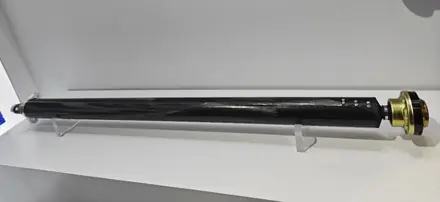
What Makes a Carbon Fibre Drive Shaft Difficult to Build
Carbon fibre shafts are light and strong but hard to produce consistently. Winding tension, resin impregnation, the metal to…
Mercedes-Benz Drive Shaft References Coming Off the Line
A run-down of the Mercedes-Benz drive shaft models produced in a recent batch, and how the references map to the vehicle…
Mitsubishi Pajero Drive Shaft Availability
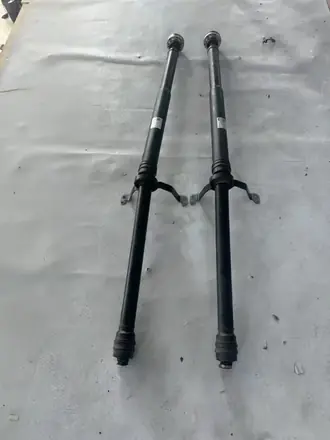
Pajero drive shafts held in stock, with notes on how to confirm the right reference for the four wheel drive…
FAQ
Supply Questions
Can you supply the parts described here?
Yes. Send the OE number and the vehicle and we return the interchange references we hold.
What is the minimum order?
One piece, so a reference can be proven on a vehicle before it is stocked.
How long is the lead time?
45 days for regular items and 30 to 45 days for newly developed references.
Are rotating parts balanced?
Yes, a 100% dynamic balance test based on the G16 standard.
Next step
Turn This Into a Quotation
If this article covers the part you are chasing, send the OE number and the vehicle and we will price it.
+86 159 9582 0129
[email protected]
Monday to Friday 08:30-18:00 China Standard Time (GMT+8)