
How to Choose a Durable Metal Wine Rack for Commercial Use
What to check on a commercial metal wine rack: welded versus bolted frames, powder coat finish, cradle sizing and flat-pack freight. Practical buyer guidance.
What Commercial Use Actually Demands
A wine rack in a shop or restaurant is handled far more often than one at home. Bottles are pulled and replaced dozens of times a day, staff lean on the frame while restocking, and cleaning crews knock the base with mops and trolleys. That changes what matters: joint strength and finish durability matter more than the styling that sells a domestic rack.
Frame Construction Comes First
Look at how the frame is joined rather than how thick the tube is. A welded joint carries high strength, often more than the parent metal, and gives a completely rigid frame that will not rack sideways when it is loaded on one side. Bolted frames loosen with repeated handling and need retightening. Welding also lets different materials be joined and makes later modification or extension of an existing structure straightforward.
Finish Decides How Long It Looks New
Powder coating is the practical choice for a commercial floor. It gives an even film on the whole frame, including the cut edges where rust usually starts, and it resists the scuffing that comes from bottles being slid in and out. Robot spray finishing covers large areas quickly and lays down a smoother, fresher coat than a brush or roller, which matters on a rack the customer stands close to.
Match the Cradle to the Bottle Range
Standard Bordeaux and Burgundy bottles differ enough in shoulder diameter that a cradle sized for one will let the other roll. If the range includes magnums or sparkling wine, the cradle spacing has to be set at design stage. This is the detail most often fixed too late, after the first sample arrives.
Plan for How It Ships
A welded one-piece rack is strongest but ships as an expensive volume of air. A rack designed to knock down into flat panels cuts freight cost per unit substantially and still bolts up rigid if the joints are engineered for it. Decide this before the design is fixed, because it changes the whole frame layout.
Ask What Can Be Customised
Height, cradle count, footprint, finish colour and branding are all normally open. Four-colour UV printed branding lasts over 3 years on metal, so a rack can carry a brand mark that outlives the promotion it was bought for.
Fixtures This Guide Applies To
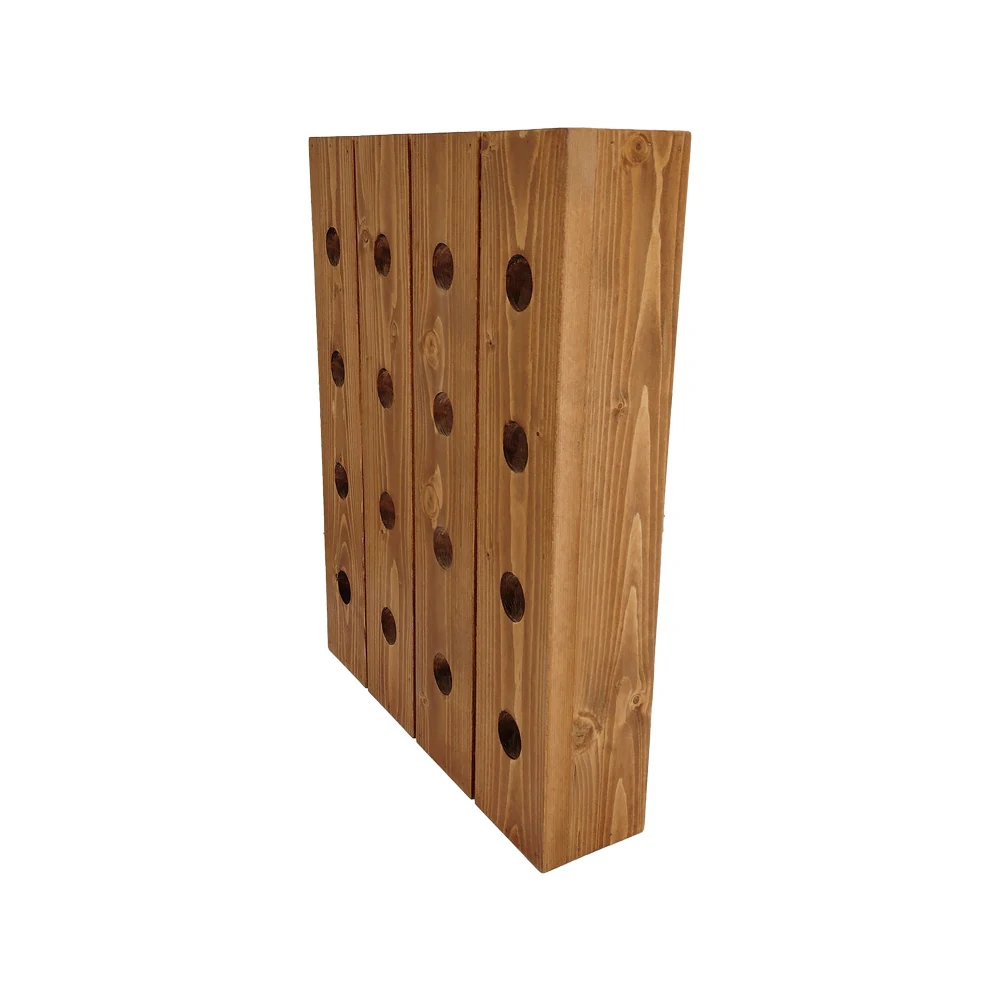
Rustic Solid Wood Wall Wine Rack
A rustic wall-mounted wine rack crafted from solid wood, designed for a cozy, organic retail or home…
View Product →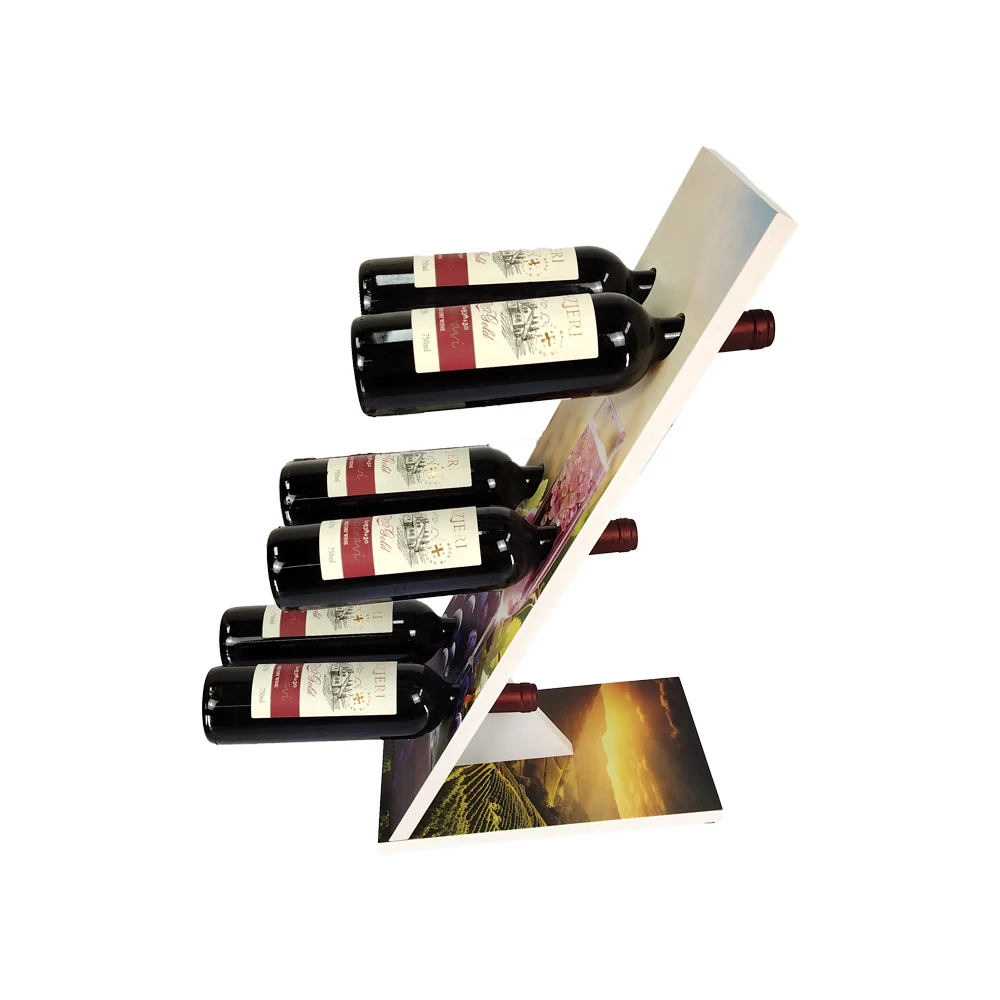
Custom Wine Rack for Retail Display
A wine rack designed for retail and in-store display, built to hold bottles on their sides to maintain…
View Product →Wine Rack with 60 Bottle Capacity
A wine rack with two horizontal boards and ten notches per board, designed to store or display up to 60…
View Product →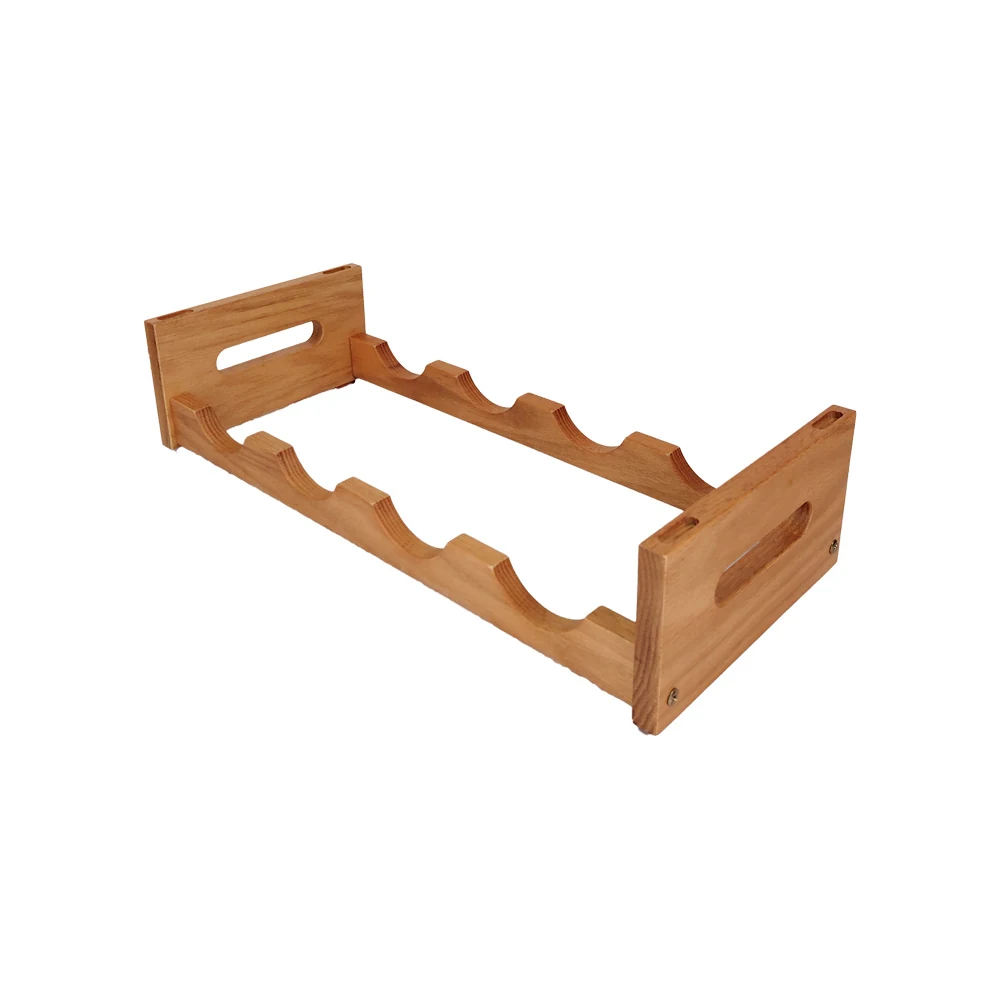
Stackable Acacia Wood Wine Rack
A stackable wooden wine rack designed for home use, built to hold four bottles in a compact, vertically…
View Product →Questions From This Guide
Answers to the questions buyers ask before placing a first order.
Is a welded rack better than a bolted one?
For commercial floors, yes. Welded joints are rigid and often stronger than the parent metal, while bolted joints loosen under repeated handling. Bolted designs win only when flat-pack freight cost is the deciding factor.
What finish lasts longest in a shop?
Powder coating. It covers cut edges where corrosion starts and resists the scuffing from bottles being slid in and out.
Can a metal rack carry our branding?
Yes. Four-colour UV printing is applied to metal display surfaces and holds colour for over 3 years.
What is the lead time on a custom metal rack?
About 25 to 45 days after the 30% deposit or L/C at sight, with a sample in 7 to 20 days before that.
Can you make the rack knock down for shipping?
Yes, if it is designed that way from the start. The frame layout and joint detail have to be planned for it, so raise it at design stage.
Specifying One of These Right Now
Send us the drawing or the reference and the quantity. You get a producible spec and a price rather than a brochure.