
How Toughened Glass Insulators Are Made
From glass batch to marked unit, and what each production stage is there to prevent.
Melting And Pressing
The shell begins as a glass batch melted and pressed into the shed profile the class requires. Profile is not cosmetic. It determines leakage distance, how deposits behave on the surface, and how the unit sheds water, which is why standard, fog and aerodynamic shells are pressed from different tooling rather than trimmed from a common blank.
Thermal Toughening
The pressed shell passes through a toughening process that cools the surface faster than the interior, leaving the surface in compression and the core in tension. This is the step that gives the product its defining property. A toughened shell that fails does not crack, it disintegrates, which is what makes a defective unit visible from the ground.
Thermal Shock Screening
Toughened shells carrying residual stress from an imperfect cycle will eventually fail in service. Thermal cycling in the plant is deliberately aimed at provoking those failures where they cost a shell rather than an outage. A screening step that breaks things is doing its job.
Cap And Pin Cementing
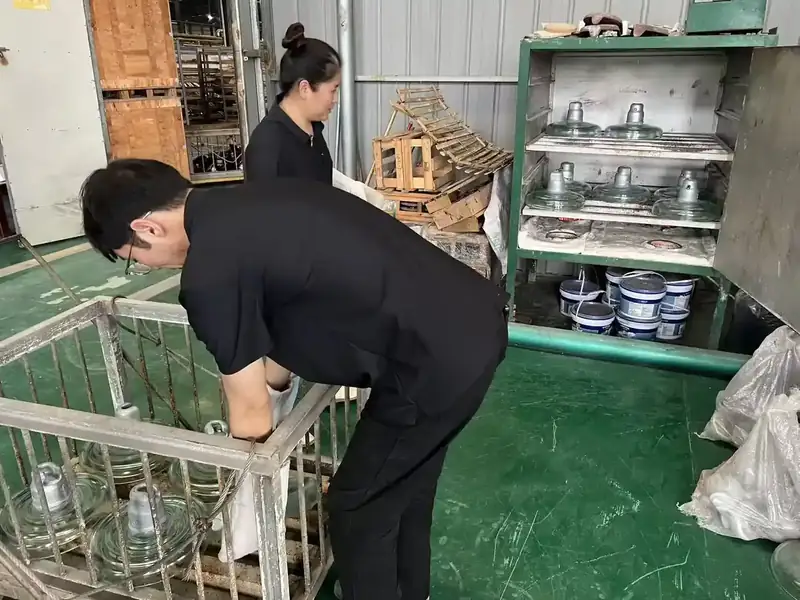
A galvanised malleable iron cap and a forged steel pin are cemented to the shell. The cement transfers the entire mechanical load of the string between metal and glass, so the joint geometry and the cure are what actually determine the unit's strength class, not the glass alone. Assembled units are racked for cure, as shown above.
Routine Mechanical And Electrical Testing
Every unit is proof loaded in tension to the routine value published for its class, from 20 kN to 275 kN across the range. Electrical routine testing checks the unit against the withstand values in the same table. These are per unit tests, not batch samples.
Marking And Packing
Units are marked with class and year, then packed against the destination and transport mode agreed on the order. Production runs under ISO 9001:2015, ISO 14001:2015 and ISO 45001:2018 certified management systems.
Questions On This Topic
Is every unit tested or only a sample?
Mechanical proof loading and electrical routine testing are per unit steps in production. Type testing against a standard is a separate exercise carried out on samples.
Why do some units break during production?
Thermal shock screening is designed to break shells that carry residual stress. Those shells would otherwise fail on a tower, where the cost is an outage rather than a shell.
Can we see the line before ordering?
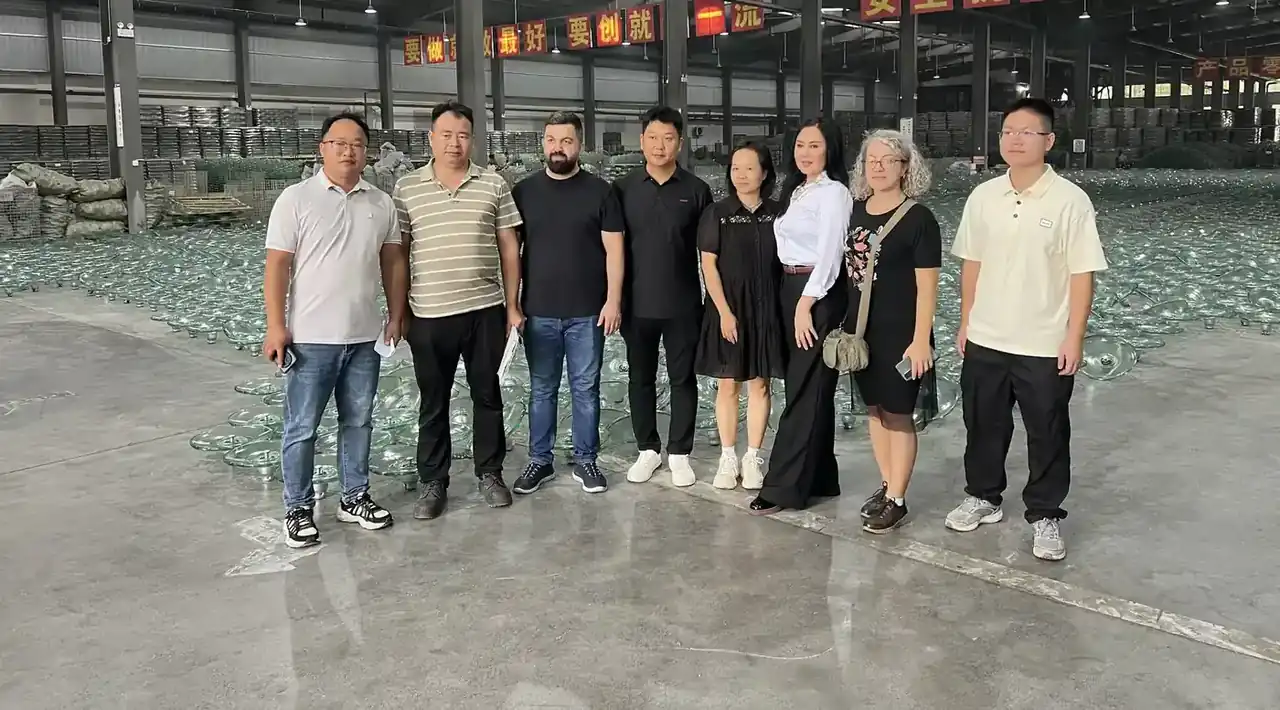
Yes. The plant is at Luxi Industrial Park, Pingxiang, Jiangxi, China and customers are welcome to visit.
Products Referenced In This Guide
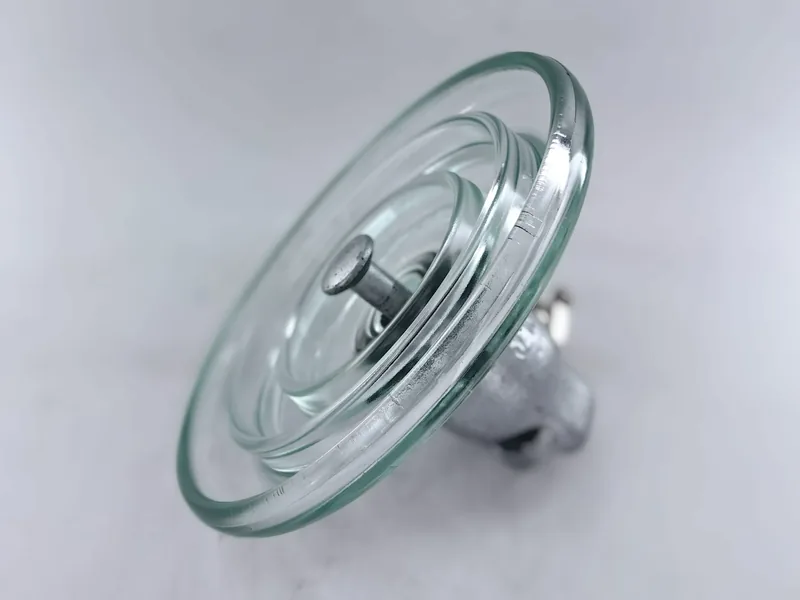
Standard Type LXP40 To LXP1-160
U40B, U70BS, U70BL, U100BL, U120B, U160BS
View Specifications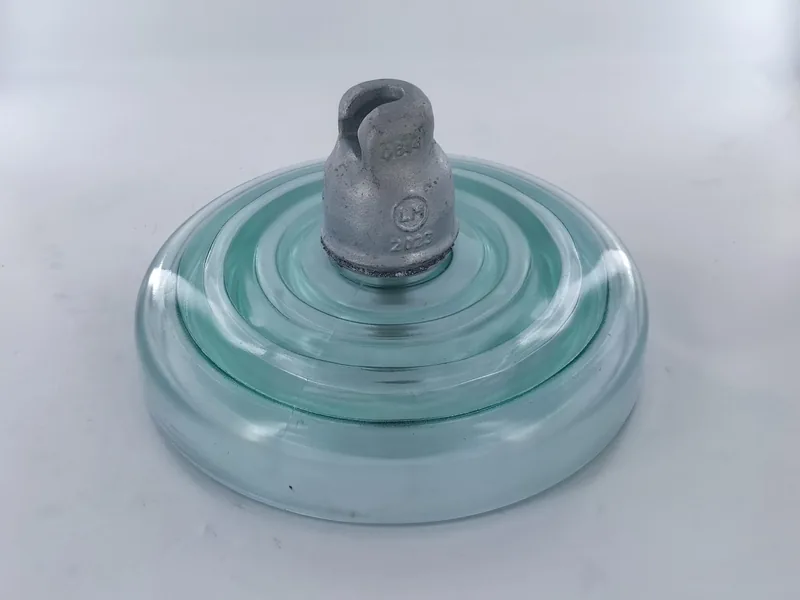
Fog Type LXWP1-70 To LXWP2-120
U70BLP1, U70BLP2, U100BLP1, U120BP1, U120BP2
View Specifications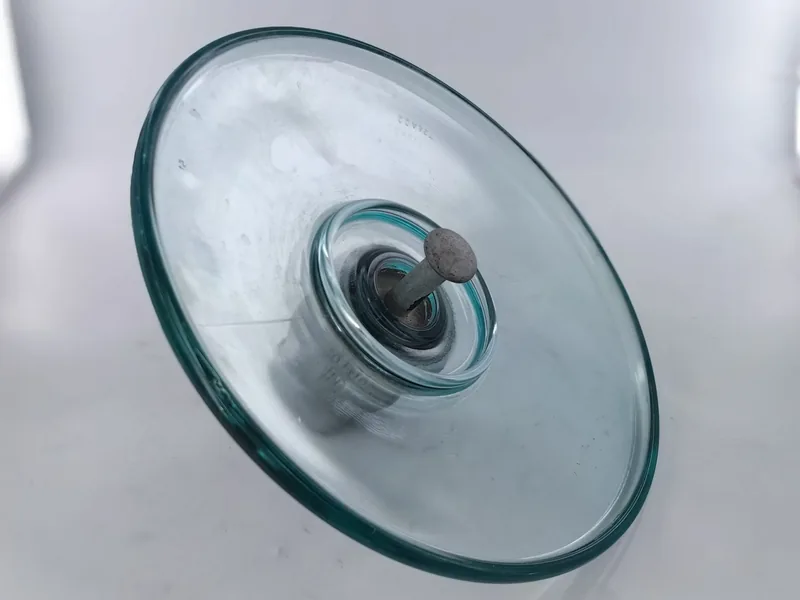
Aerodynamic Type LAXP-70 To LAXP-160
U70BP, U100BP, U120BP, U160BP
View Specifications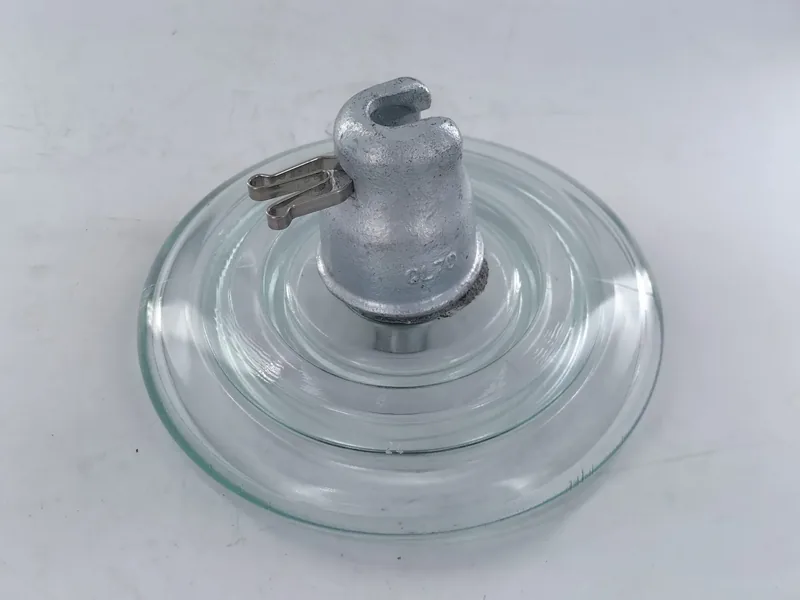
Apply This To Your Own Line
Send the designation, the load case and the pollution assessment. We will confirm which class fits and which of our tables it sits in.