
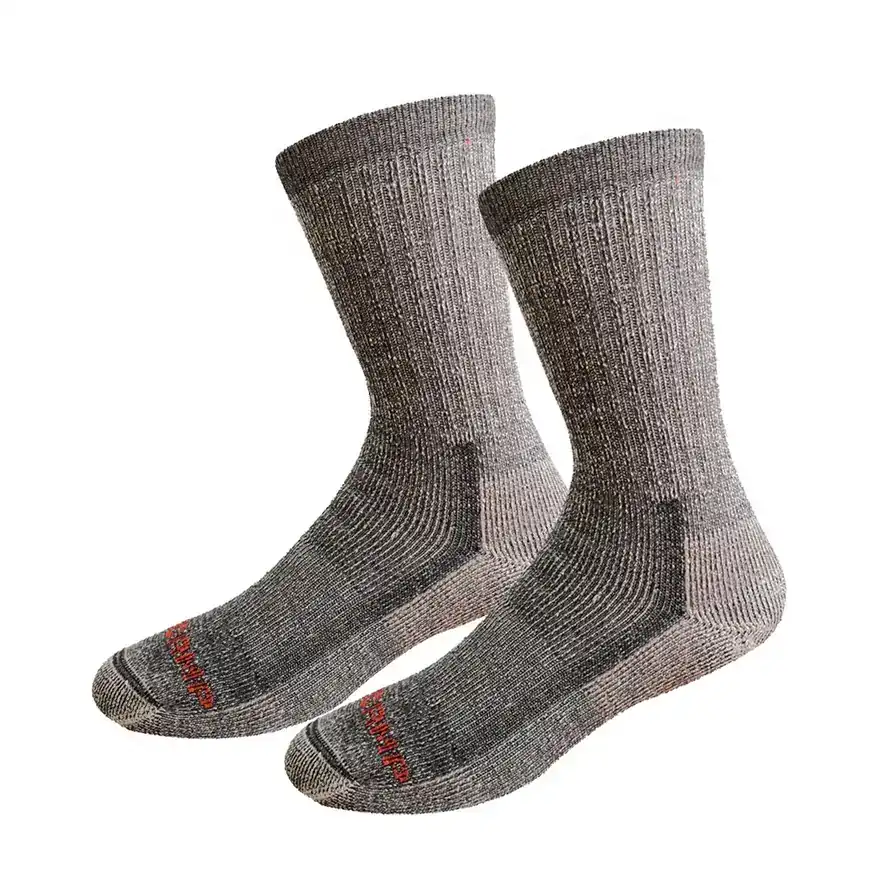
Merino Wool Boot Socks In 75 Percent Merino Blend
Year-round merino boot socks in a 75% merino wool, 23% nylon and 2% elastane blend for men and women.
Merino Wool Socks At A Glance
A high merino content boot sock knitted in 75% merino wool, 23% nylon and 2% elastane, for men and women who wear the same sock on a summer hiking trail and on a winter work site. The merino share is high enough that the sock regulates rather than just insulates, so feet stay warm enough in winter without overheating in summer.
What This Style Delivers
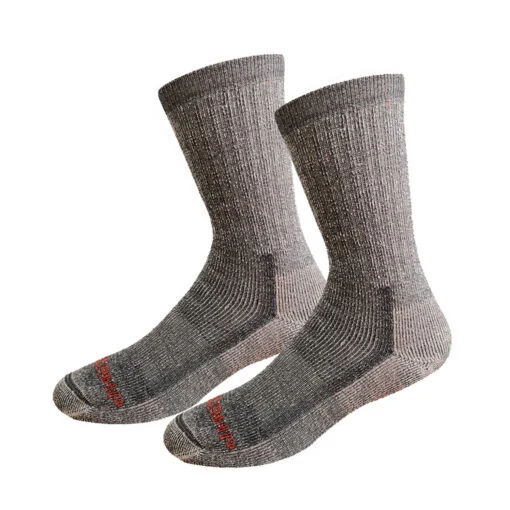
- 75% merino wool content regulates temperature across seasons
- Nylon reinforcement carries abrasion at heel and toe
- Elastane holds cuff and arch shape through repeated washing
- Naturally odour resistant so the sock can be worn longer between washes
- Single sock platform covers hiking, city and work site use
What It Stops Going Wrong
- Needing separate summer and winter socks in a range
- Wool socks that wear through because they carry no synthetic reinforcement
- Odour complaints on multi-day trips
- Wool sourcing that cannot be documented when a retailer asks
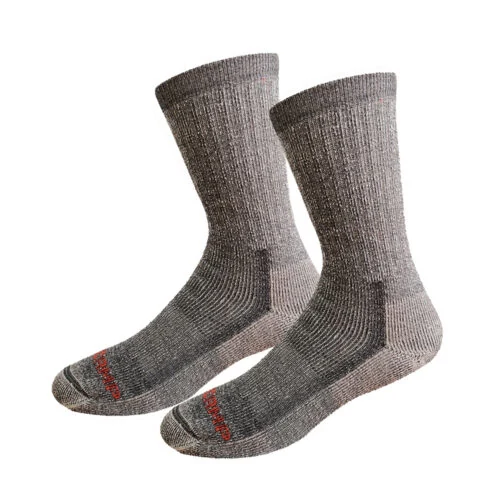
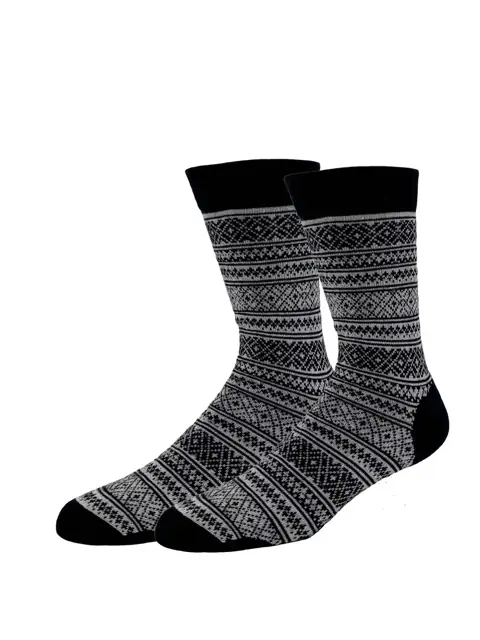
Colourways In Current Production
Buyers This Style Suits
- Hiking and outdoor brands
- Workwear brands
- Sustainability-led retail programs
- Private label buyers building a four-season sock range
How It Is Built
- 75% merino wool face
- 23% nylon for durability
- 2% elastane for recovery
- Boot height cuff
- Cushioned footbed
- Reinforced heel and toe
Merino Wool Socks Specification Table
| Composition | 75% merino wool, 23% nylon, 2% elastane |
|---|---|
| Height | Boot and crew |
| Season | All season |
| Gender | Men and women |
| Reinforcement | Heel and toe |
| Certification Route | RWS 2.2 responsible wool available |
Materials
- Merino wool as the dominant fibre for thermal regulation and odour control
- Nylon for tensile strength and abrasion resistance
- Elastane for elastic recovery in cuff and arch
Customization Options
- Merino percentage within knittable limits
- Crew, boot or quarter height
- Cushion density and placement
- Marl and heather colour effects
- Own label, hangtag and packaging
From Yarn Booking To Final Inspection
Merino yarn selection and blend confirmation
Carried out at a partner factory vetted for this technology, against the approved technical pack.
Computerised knitting to boot or crew height
Carried out at a partner factory vetted for this technology, against the approved technical pack.
Toe linking
Carried out at a partner factory vetted for this technology, against the approved technical pack.
Boarding and shaping
Carried out at a partner factory vetted for this technology, against the approved technical pack.
Mid-term inspection
Carried out at a partner factory vetted for this technology, against the approved technical pack.
Labelling and packing
Carried out at a partner factory vetted for this technology, against the approved technical pack.
Final inspection
Carried out at a partner factory vetted for this technology, against the approved technical pack.
What We Check And When
- Blend percentage checked against the approved technical pack
- Mid-term inspection during production
- Final inspection before shipment
- Wash and recovery checks on production samples
Material And Social Compliance
- RWS 2.2 Intertek scope certificate ITS-TE-00027792-RAF-00038200
- BSCI audited partner factories
The scope certificates published here were issued by Intertek on 2024-11-07 and carry a stated validity date of 2025-11-06. Ask us for the current certificate before you rely on a certified content claim in a retail compliance submission.
How It Compares With The Alternatives
| Pure wool sock | Pure merino has no recovery and poor abrasion resistance. The nylon and elastane share is what makes a 75% merino sock survive a season of hiking. |
|---|---|
| Cotton hiking sock | Cotton absorbs sweat and holds it against the skin. Merino moves moisture outward and keeps insulating when damp. |
| Synthetic performance sock | A synthetic sock needs washing after every wear. Merino is naturally antibacterial and can be worn repeatedly on a multi-day trip. |
Getting The Best Out Of Merino Wool Socks
- Size so the heel pocket sits on the heel, not below it.
- For work boots, choose the boot height so the cuff sits above the boot collar.
- Wash cool and avoid fabric softener, which coats the merino fibre and reduces wicking.
- Dry flat rather than tumble drying to protect the elastane.
FAQ About Merino Wool Socks
What is the exact composition?
75% merino wool, 23% nylon and 2% elastane. That is the blend on the current style rather than a range we quote loosely.
Is this sock warm enough for winter and cool enough for summer?
Merino regulates rather than simply insulates, which is why this sock is specified for hiking and city wear in summer as well as work sites in winter. It is a regulating sock, not a heavyweight winter sock.
Can the wool be RWS certified?
Yes. Our Intertek RWS 2.2 scope certificate ITS-TE-00027792-RAF-00038200 covers socks and hosiery in men's and women's apparel.
Can you raise the merino percentage?
Above 75% the sock starts to lose recovery and abrasion resistance. If you need a higher figure, tell us the use case and we will advise what construction can carry it.
Do you offer this in a recycled blend instead?
Our GRS 4.0 scope certificate covers socks in recycled post-consumer polyester with elastane and nylon, so a recycled version is a development option rather than a stock item.
Related Products And Guides
Related Products
Related Guides
Related Industries
Quote Merino Wool Socks
Send your target blend, construction and volume. We quote against your specification and tell you honestly if something in it will not work.