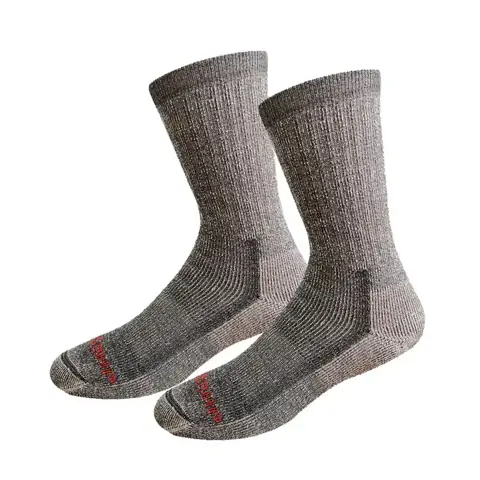
Merino Wool Socks
Merino Wool Socks
Year-round merino boot socks in a 75% merino wool, 23% nylon and 2% elastane blend for men and women.
View Merino Wool Socks
What merino actually does in a sock, why it is always blended, and how to read a composition label.
Merino wool moves moisture as vapour before it becomes sweat, and it keeps insulating when damp. That combination is why a merino sock stays comfortable across a wide temperature band instead of working well only in cold or only in heat. Merino is also naturally antibacterial, which is the real reason a merino sock can be worn for several days on a trip without the odour that forces a synthetic sock into the wash.
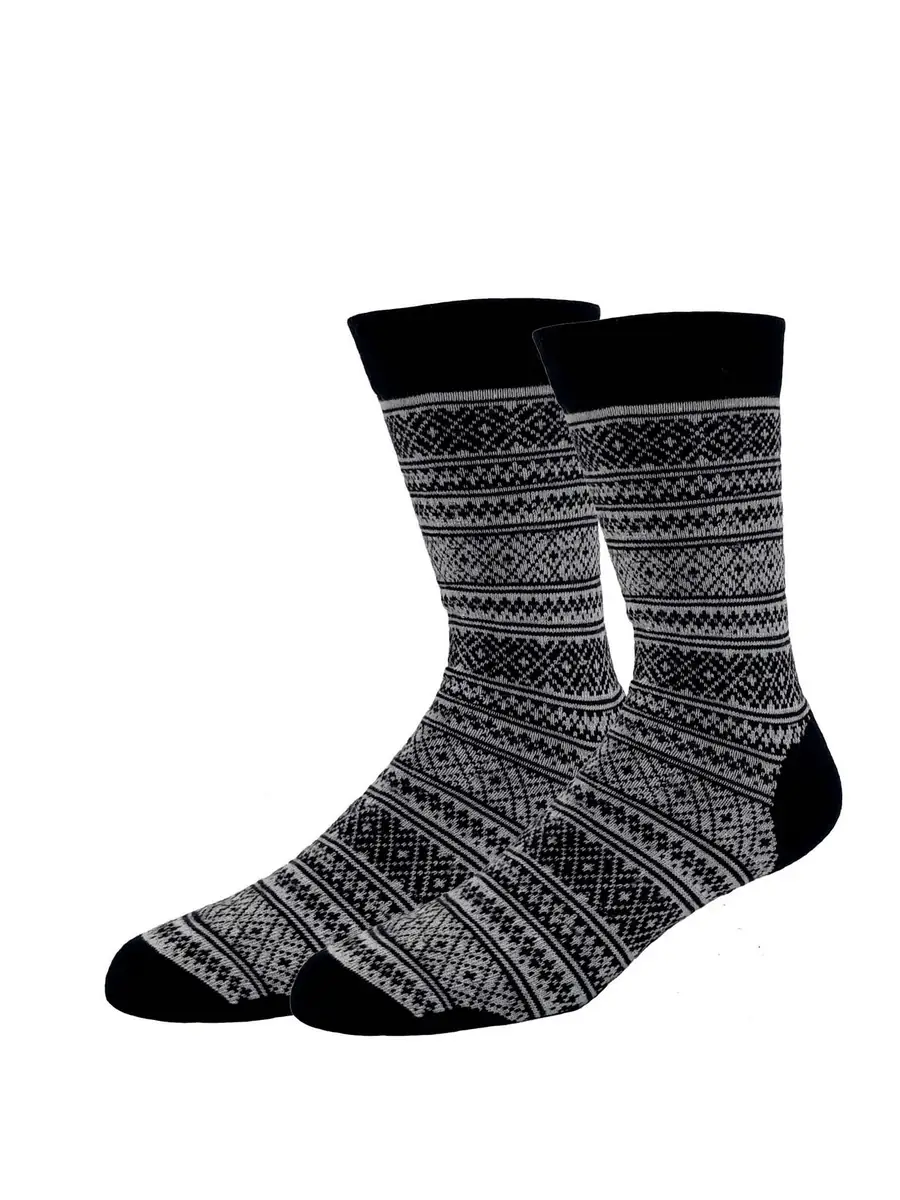
Pure merino has two weaknesses in a sock: it abrades quickly at the heel and toe, and it has no elastic recovery, so the cuff stops holding after a few washes. Every serious merino sock therefore carries nylon or acrylic for abrasion resistance and elastane for recovery. Our boot sock runs 75% merino wool, 23% nylon and 2% elastane. Our kids ski sock runs 35% merino wool, 35% acrylic, 25% nylon and 5% elastane, where the acrylic also carries the jacquard colour.
The percentage tells you what the sock is made of, not where the performance sits. A 35% merino sock with merino on the face yarn and synthetic in the structure can outperform a 50% merino sock where the wool is buried. When you brief a supplier, specify the face yarn and the zone, not just the headline percentage.
Read the full specification for Merino Wool Socks
Responsible Wool Standard certification verifies that the wool is traceable and produced with respect for animal welfare and land management. Shanghai Hicon Industrial Co., Ltd holds Intertek RWS 2.2 scope certificate ITS-TE-00027792-RAF-00038200 covering socks and hosiery, which is what allows an RWS claim to be carried onto a retail hangtag.
Three things decide whether a merino sock survives its second season: reinforcement at heel and toe, elastane content high enough to hold the cuff and arch band, and a wash instruction the end user will actually follow. Cool wash, no fabric softener, dry flat. Softener coats the fibre and kills the wicking that the merino was bought for.
No. Above roughly 75% the sock starts losing abrasion resistance and recovery. What matters more is whether the merino is on the face yarn where it contacts skin.
Untreated wool felts in hot water. Sock merino is machine-wash treated, but cool washing and flat drying still extend the life of both the wool and the elastane.
Yes, where the wool is sourced on a certified route. Our RWS 2.2 scope certificate covers socks and hosiery in men's and women's apparel.
Year-round merino boot socks in a 75% merino wool, 23% nylon and 2% elastane blend for men and women.
View Merino Wool Socks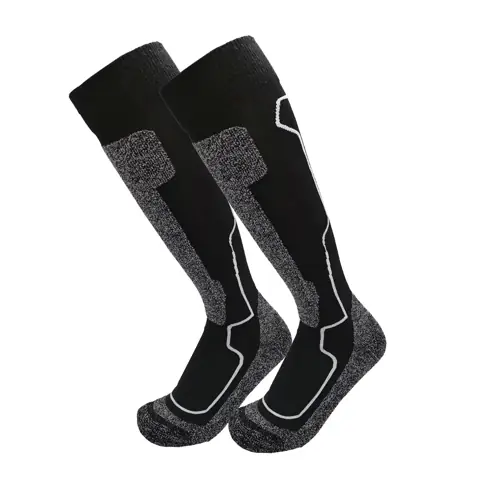
Midweight over-the-calf merino ski socks with cushioning, arch support and reinforced heel and toe.
View Merino Wool Ski SocksSend us the draft and we will tell you what will knit as written, what will not, and what it will cost at your volume.