
Dunnage Air Bags for Container Cargo Protection
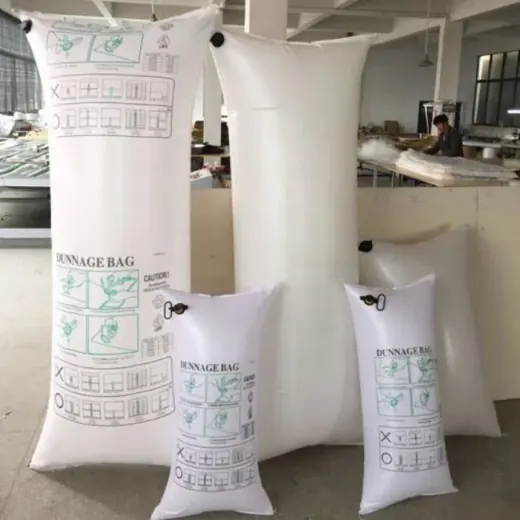
Dunnage air bags for container cargo protection are multi-layered inflatable bags made from kraft paper and PE film, designed to secure goods during long-haul transport by preventing shifting, impact damage, and load collapse in trucks, trailers, and overseas containers. Each bag is heat-sealed with a reusable valve and can be inflated on site to fit the exact void, eliminating over-packaging and reducing freight costs. The inner layer is PA film to maintain air pressure, and the outer layer is high-strength kraft paper for durability during handling.
- Prevents load collapse and shifting in FCL and LCL container shipments
- Reusable and recyclable, reducing packaging waste per shipment
- Inflated on site to match the exact void size, avoiding over-packaging
- Multi-layer construction with PA film inner layer maintains air pressure
Include the carton size and the monthly volume and the reply will contain a format recommendation, not just a price.
Key Benefits
- Prevents load collapse and shifting in FCL and LCL container shipments
- Reusable and recyclable, reducing packaging waste per shipment
- Inflated on site to match the exact void size, avoiding over-packaging
- Multi-layer construction with PA film inner layer maintains air pressure
- Reusable valve allows multiple inflation cycles without seal degradation
- Lightweight when deflated, so storage and transport costs are low
Where It Is Used
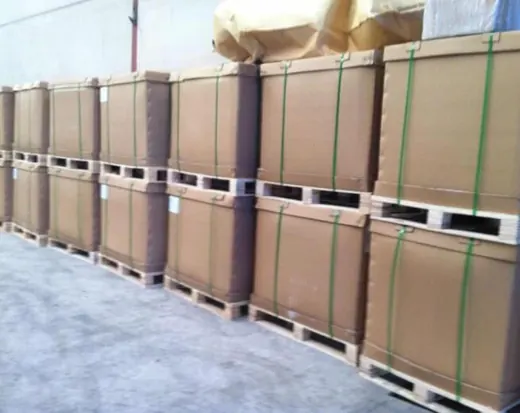
- Stabilizing palletized goods during long-distance truck and rail transport
- Protecting stacked cartons of electronics or automotive parts from impact
- Filling irregular voids in trailers where cargo does not conform to standard shapes
- Reducing damage claims from shifting loads during ocean freight
Who It Is For
- Exporters shipping high-value or heavy goods in FCL and LCL containers
- Third-party logistics providers managing containerized freight with variable load sizes
- Manufacturers of industrial equipment, automotive parts, and machinery
- Freight forwarders seeking reusable, low-waste cargo securing solutions
- Warehouses preparing goods for long-haul transport where load stability is critical
Problems It Solves
- Cargo shifting during transit leads to damage and claims
- Over-packaging with rigid foam or wood blocks increases freight costs
- Single-use void fill creates waste and increases disposal costs
- Manual packing of void fill is slow and inconsistent across shifts
- Lack of adaptability in standard dunnage solutions for irregular load shapes
Technical Features
- Multi-layer construction: kraft paper outer layer, PE film intermediate, PA film inner layer
- Reusable heat seal valve for multiple inflation cycles
- Working pressure limited to 0.2 bar (20 kPa / 2.8 PSI) to prevent over-inflation
- Inflated bags withstand loads up to 20 tons depending on size and inflation
- Void fill range from 100 mm to 600 mm, matching the space between cargo
- Available in sizes from 500 mm to 1200 mm width and 1000 mm to 2400 mm length
Published Data for Dunnage Air Bags for Container Cargo Protection
Only values published on our own datasheets appear here. If a figure you need is missing, ask for it and we will confirm it in writing.
| Product | Dunnage air bag for container cargo protection |
|---|---|
| Material | Kraft paper + PE film + PA film |
| Color | Brown, White |
| Layer | Multi layer |
| Sealing Type | Heat seal with reusable valve |
| Max Working Pressure | 0.2 bar / 20 kPa / 2.8 PSI |
| Max Load Capacity | Up to 20 tons |
| Inflation Method | Manual or mechanical inflator |
| Reusability | Reusable with proper handling and valve care |
| Recyclability | Recyclable after use |
Materials
- High-strength kraft paper for outer layer, resistant to tearing during handling
- PE film as intermediate layer for moisture and puncture resistance
- PA film as inner layer to prevent air loss and maintain pressure
- Reinforced heat seal valve made for multiple inflation cycles
- No recycled content in the film layers; material sourced as virgin
How It Is Made
Kraft paper and film layers laminated using heat and pressure
PA film layer applied to the inner surface for air retention
Chambers formed and heat sealed to create the pillow pattern
Reusable valve installed and tested for air retention
Final bag cut to size and inspected for seal integrity
Packed flat and shipped in cartons with handling instructions
How It Is Checked
Incoming kraft paper and film checked for thickness and strength before lamination
Seal strength tested on sample bags to ensure no air leakage
Valve tested for reusability and air retention after multiple inflation cycles
Final bags inflated and held under pressure to confirm no leaks
Cartons inspected at container loading against packing list
Customisation Options
- Custom sizes available to match specific container or load dimensions
- Custom valve type or placement on request
- Logo or marking printed on the kraft paper surface
- Alternative film grades available on request for specific environments
How It Compares With the Alternatives
Where another material is the better answer we say so, because a returned shipment costs more than a lost order.
| Wooden dunnage blocks | Lighter, reusable, and easier to store; no risk of splinters or damage to cargo |
|---|---|
| Foam inserts | Reusable and recyclable; no off-gassing or degradation over time |
| Paper void fill | Higher load-bearing strength and better impact protection |
| Plastic air bags without PA film | PA film inner layer improves air retention and reduces leakage over time |
How to Use It
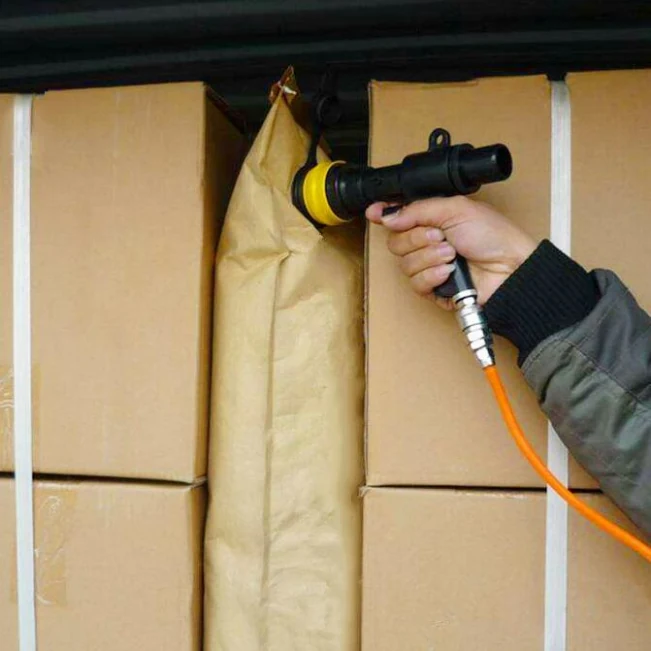
Unroll the dunnage bag and position it in the void space between cargo
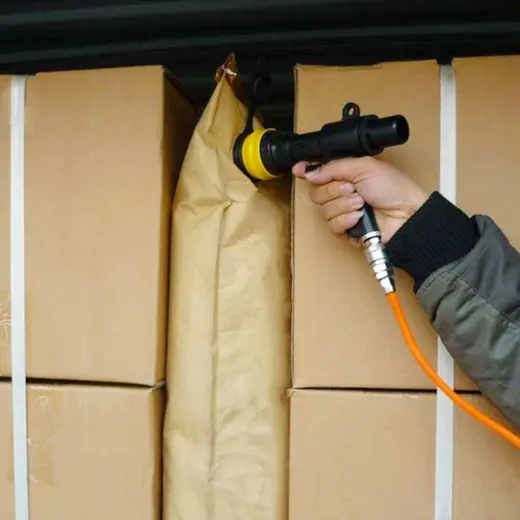
Attach the inflator to the reusable valve and inflate to the required pressure
Do not exceed 0.2 bar (20 kPa / 2.8 PSI) to prevent over-inflation and damage
Check that the bag fills the space evenly and does not bulge or shift
After shipment, deflate and store flat for reuse in future loads
Dunnage Air Bags for Container Cargo Protection in Detail
Photographs of the actual product as supplied, not renders.
Dunnage Air Bags for Container Cargo Protection Questions
What is the maximum load capacity of these dunnage air bags
Each bag can support up to 20 tons depending on size and inflation level. The exact strength is listed in the product table for each model.
Can these bags be reused after one shipment
Yes, the reusable valve allows multiple inflation cycles. Proper deflation and storage are required for reuse.
What is the maximum working pressure
Do not exceed 0.2 bar (20 kPa / 2.8 PSI). Exceeding this may damage the seal or cause rupture.
Are the bags recyclable
Yes, the kraft paper and film layers are recyclable after use. Check local recycling guidelines for mixed material disposal.
How do I inflate the bags
Use a standard air inflator with a compatible valve. The reusable valve is designed for easy connection and disconnection.
Can you make custom sizes
Yes, custom sizes are available. Send the required dimensions and usage context via WhatsApp or email and we will confirm feasibility.
Other Air Dunnage Bag Items
Same production line, different format. Compare before you settle the specification.
PP woven dunnage air bag is a reusable, multi-layered bag made from kraft paper and PE film with an inner PA film layer, designed to secure cargo in trucks…
View Product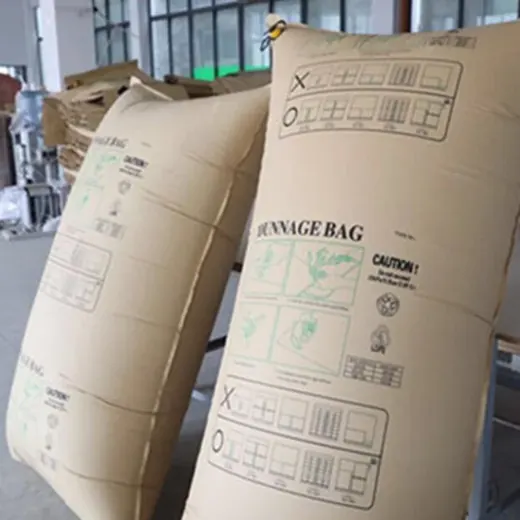
Inflatable cargo air bags are multi-layered dunnage bags made from kraft paper and sealed with PE and PA films. They inflate on site to fill voids in containers and…
View Product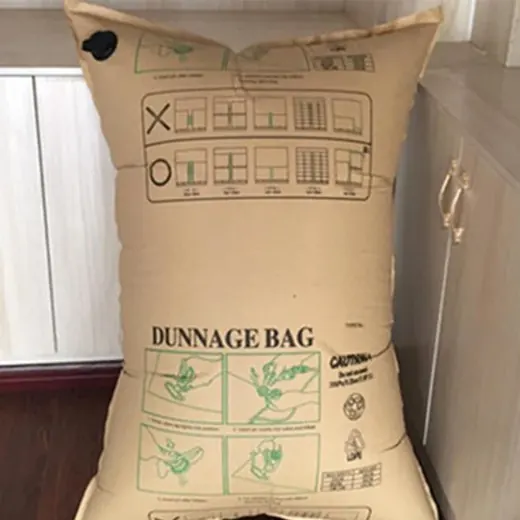
Air dunnage bag is a multi-layered inflatable bag made from kraft paper and PE film, designed to secure cargo in trucks, trailers, and overseas containers. It…
View Product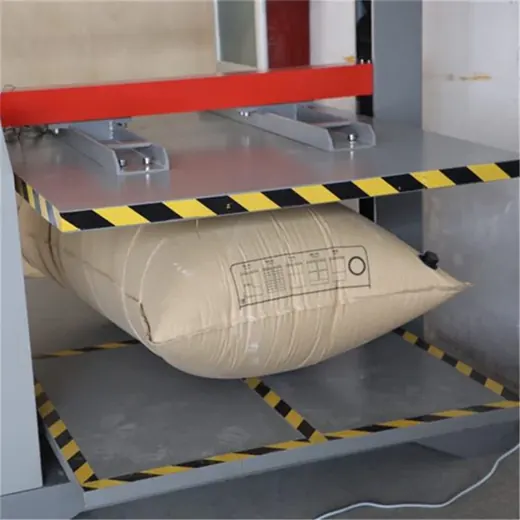
Air dunnage bags are multi-layered, reusable bags made from kraft paper and PE film that inflate on site to secure cargo in trucks, trailers, and overseas…
View Product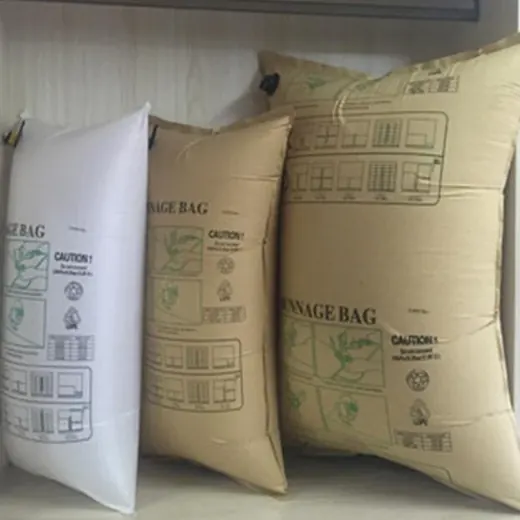
Cargo air dunnage bags are multi-layered, reusable bags made from kraft paper and PE film that inflate on site to secure cargo in trucks, trailers, and overseas…
View Product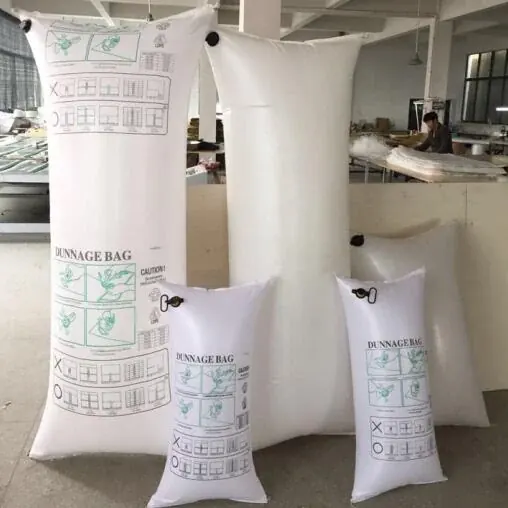
PP woven dunnage bag is a reusable, multi-layered air bag made from kraft paper and PE film with an inner PA film layer, designed to secure cargo in trucks…
View ProductWhere This Fits Next
Quote Dunnage Air Bags for Container Cargo Protection for Your Next Shipment
Tell us the quantity, the destination port and the specification you need. We will confirm what runs, what is stock and what fits in a container.