
Specification
Pericarp residue: the number behind "no chewy hulls"
Ask someone why they stopped buying a corn and they rarely say "the pericarp was too thick." They say it was chewy, or that bits stayed in their teeth. Those are the same complaint, and there is a measurement for it.
What the pericarp is
Each kernel is wrapped in a thin transparent skin — the pericarp. It protects the kernel on the plant and is the part that does not dissolve when you chew. When it is thick, it survives as a hull after the soft interior is gone. When it is thin enough, it breaks with the kernel and is never noticed.
How residue rate is expressed
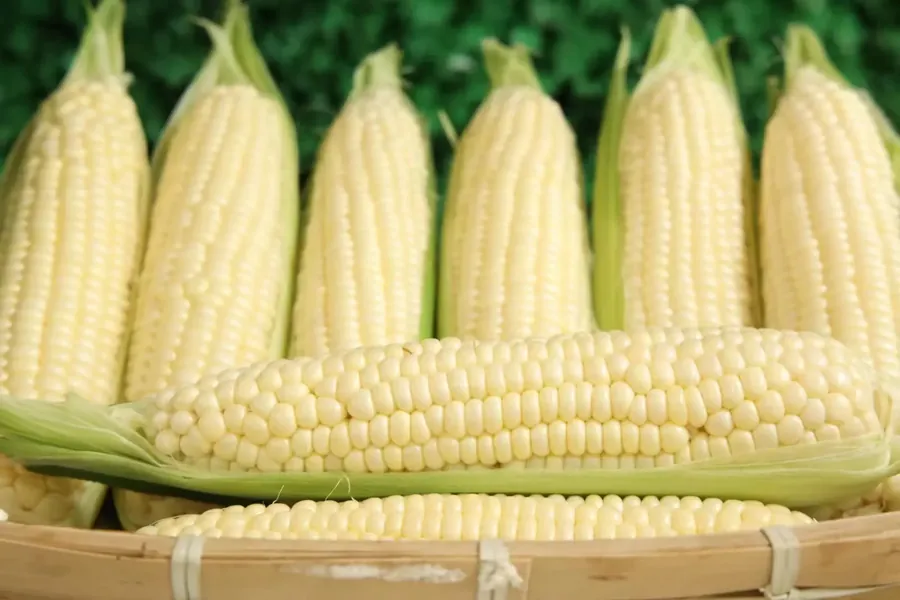
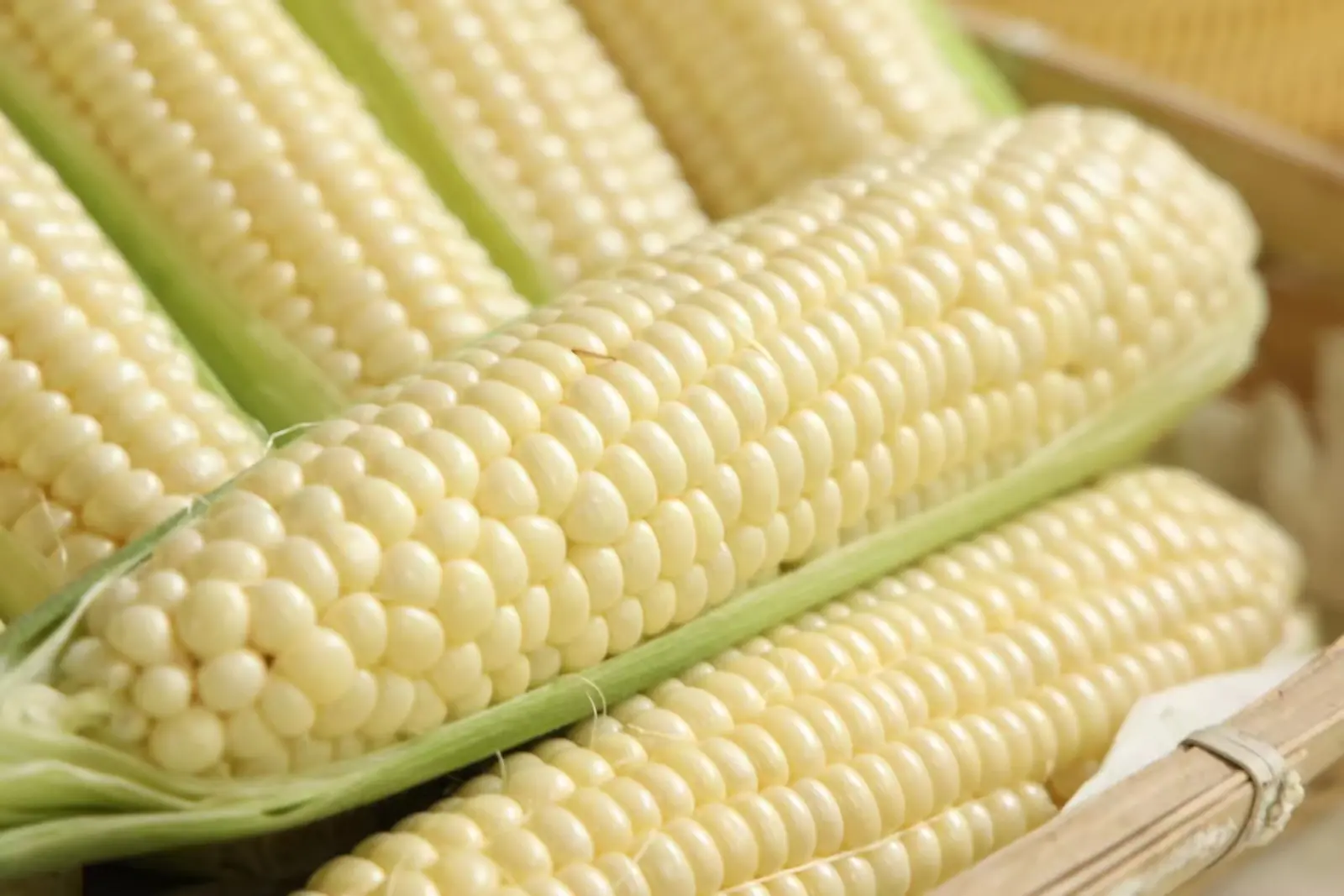
Pericarp residue rate describes how much skin remains after chewing, expressed as a percentage. It is a direct proxy for the complaint a consumer actually has. Pearl White is characterised with a pericarp residue rate as low as 4.08% — the reason the variety is described as breaking under the teeth rather than resisting them.
Why it is not interchangeable with sweetness
Sugar and skin are separate traits and are inherited separately. A very sweet corn with a firm pericarp still eats badly raw, which is why high Brix alone is a weak specification. Standardized taste evaluation — Pearl White scores 85 / 100 — folds both into a single judgement made by people, which is closer to what a shopper is doing.
What it means once the corn is processed
Pericarp thickness follows the kernel into every format. In IQF kernels it decides whether a mouthful is clean or hull-heavy. On a cob section it decides whether kernels break cleanly off the cob. Nothing downstream can thin a pericarp — it is a variety decision, made before the seed goes in the ground.
Frequently asked
Can cooking soften a thick pericarp?
Cooking softens the kernel interior more than the skin, which is why hull-heavy corn is usually still hull-heavy cooked. It is also why cooking is how ordinary sweet corn is made palatable, while a thin-pericarp variety is comfortable to eat raw.
Should we specify pericarp residue when we buy?
If raw eating quality or a premium positioning is part of your pitch, yes — it is the trait your customer will judge you on. Pair it with Brix rather than relying on either alone.
Ready to source from Yuyuan?
Tell us your market and specification — we'll reply with samples, lead times and a quote.