
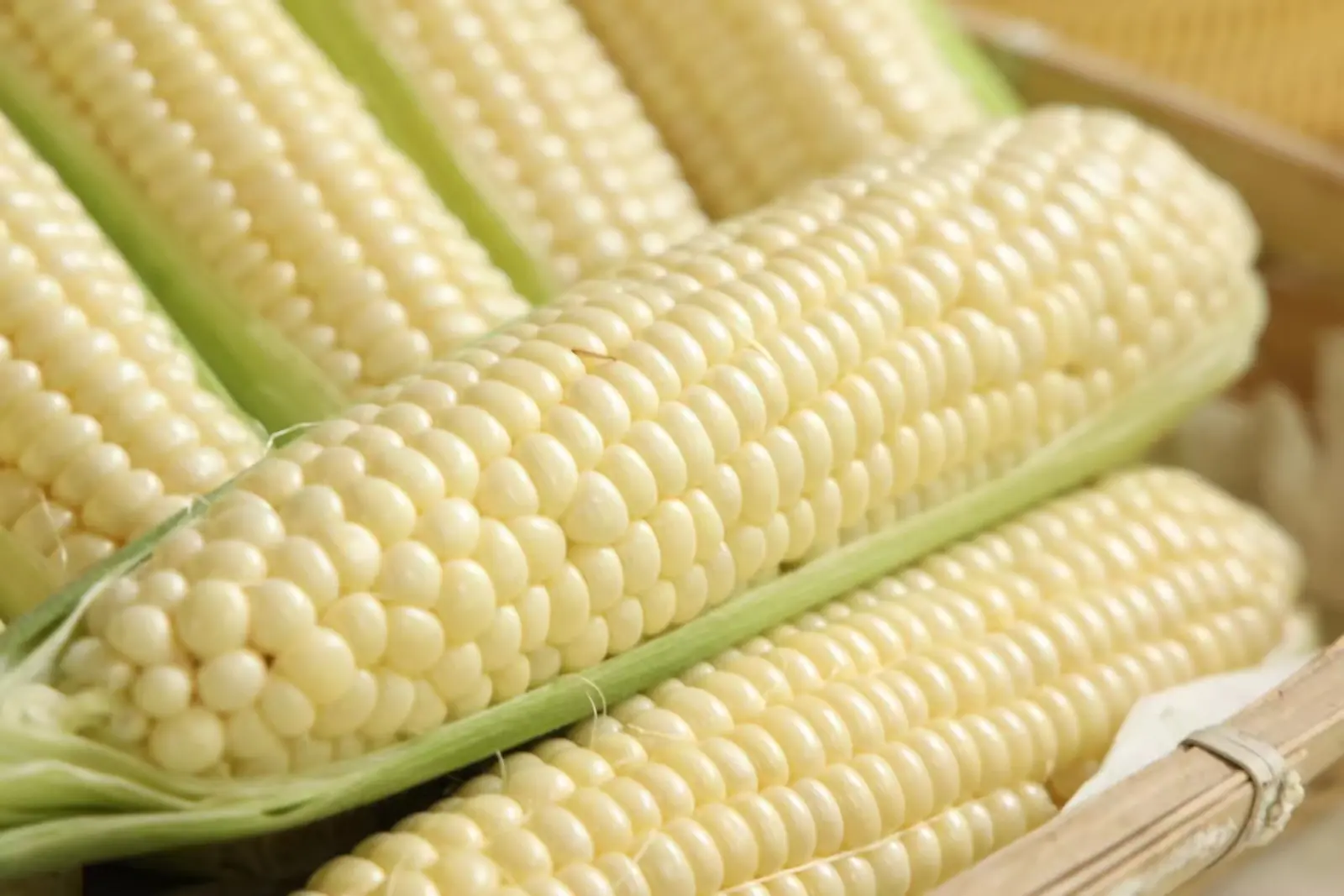
Free-flowing, individually frozen
IQF Whole Kernel Sweet Corn
Kernels are the format that gets used, not admired. They go into a mix, a sauce, a ready meal, a salad bar — which means the only…
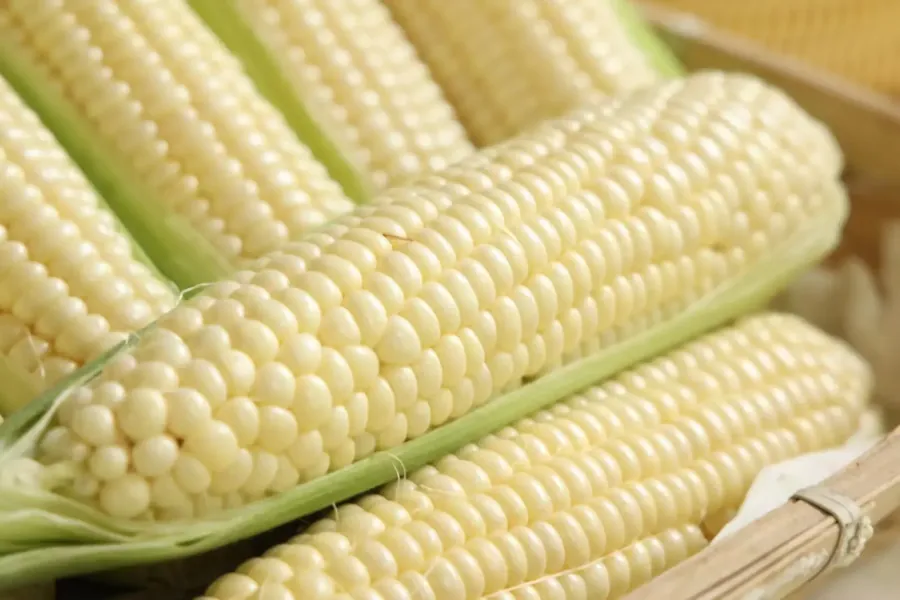
Frozen sweet corn earned its bad reputation honestly. Most of it is frozen slowly, and slow freezing does measurable structural damage to the kernel before it ever reaches a freezer aisle.
When corn freezes slowly below 0°C, water inside the kernel migrates and gathers into a small number of large ice crystals. Those crystals grow against the cell walls and tear them. The damage is invisible while the product stays frozen — and becomes obvious on thawing, when the ruptured cells leak their contents. The kernel goes soft, releases water into the dish, and loses colour and flavour along with it.
Dropping the temperature to −35 to −40°C in moving air freezes the water almost instantly, as countless tiny ice nuclei — each under 100 microns — formed evenly throughout the tissue rather than as a few large crystals in a few places. Nothing grows large enough to rupture a cell wall. Thaw the kernel and it keeps its shape, its juice, its colour and its snap.
Freezing technology only preserves what arrives. Sugar in sweet corn begins converting as soon as the ear is cut, so a fast freezer at the end of a slow collection chain locks in corn that has already faded. Corn destined for IQF here is harvested and flash-frozen within hours of picking, which is only practical because the field and the process belong to the same operation.
A few large crystals grow against the cell walls and tear them. On thawing the ruptured cells leak water and flavour — the corn turns soft, watery and dull.
Countless tiny nuclei form at once, evenly through the tissue. Nothing grows large enough to rupture a cell wall, so shape, juice, colour and snap survive the thaw.
Ears are picked at the green-ear stage, when sugar and tenderness are highest.
Husked, washed, graded and cut — kernels off the cob, or cobs cut to length.
Product passes through moving air at −35 to −40°C and freezes in moments rather than hours.
Free-flowing pieces are packed and held at −18°C through an unbroken cold chain.
Not necessarily. IQF means each piece is frozen individually rather than as a block, and the value comes from how fast the freeze happens. A pack marked quick-frozen tells you the intent; the crystal size tells you the result.
Final storage temperature keeps the product frozen. Crystal size, set during the freeze itself, decides whether the cell walls survived to be kept frozen in the first place.
Kernels are the format that gets used, not admired. They go into a mix, a sauce, a ready meal, a salad bar — which means the only…
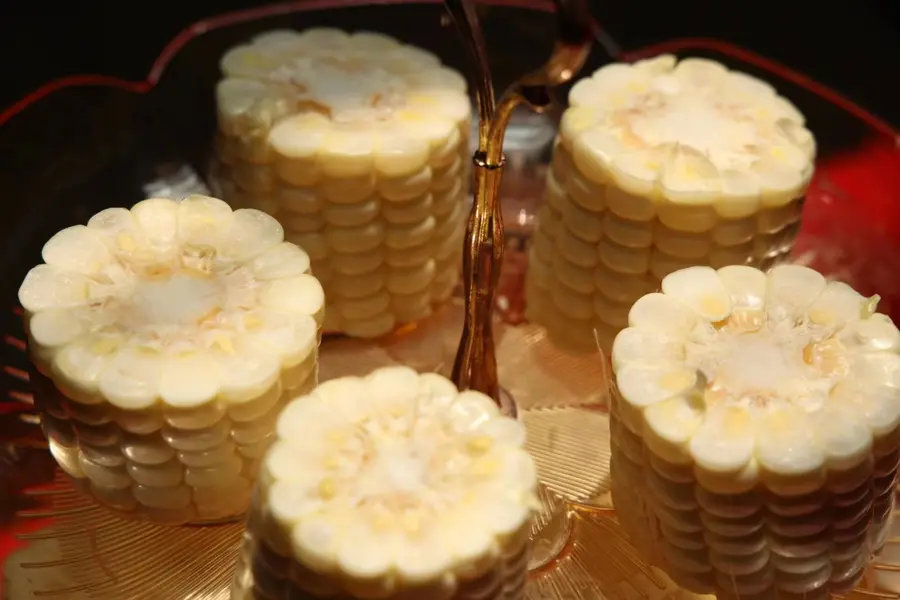
Corn on the cob sells because it looks like corn on the cob. Cut into rounds it keeps that recognisability while becoming…
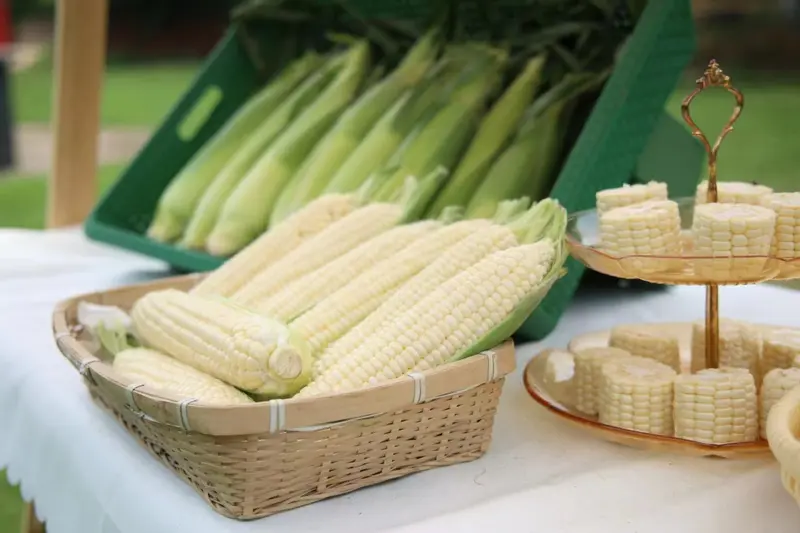
The mini-cob exists for a specific commercial reason: it puts recognisable corn on the cob into a pack size and a price point…
Tell us your market and specification — we'll reply with samples, lead times and a quote.