
How to Source Steel Frame Furniture From China Without Getting Burned
The eight questions that separate a factory that will still be producing your model in year three from one that will not.
Start with the frame not the photo
Every steel-frame furniture product is a frame with something on top of it. The photo shows the top. The returns come from the frame.
Before you discuss price, ask three questions about the frame: what tube or sheet gauge the model uses, where the joints are, and whether the frame is welded or bolted. A factory that answers those three immediately has the drawing in front of it. A factory that has to check has probably subcontracted the frame.
Ask what is already tooled
New tooling is the single biggest cost surprise in furniture development. A frame that is 40 mm away from an existing frame may cost nothing extra; a frame that is 40 mm away in the wrong direction may need a new bending die.
Ask the factory which of your target sizes sit on tooling they already have. It is usually cheaper to move your specification 20 mm than to pay for a die you will use for one season.
Separate the sample from the specification
A hand-made sample proves the product can exist. A pre-production sample built on production tooling proves it can be repeated. Only the second one is worth approving.
Whatever you approve becomes the reference for every later run, so it is worth waiting for the version that came off the real line.
Fix the carton before you fix the price
Carton size drives CBM, CBM drives freight, and freight decides whether the programme works. A unit price quoted before the carton drawing is agreed is a guess.
Agree carton dimensions, board grade, internal protection and the container loading plan in writing. Then recalculate the landed cost.
Understand what MOQ actually covers
A 100-piece MOQ per model usually means per model per colour. A mixed-colour order of the same model may be three separate coating batches, and the factory will price it that way.
Ask explicitly: is the MOQ per model, per colour, or per carton specification?
Ask what the factory will not tell you unprompted
Certificates, test reports and audit status change with scheme and scope. A catalogue that lists a certificate logo on every page is telling you less than a factory that says "tell us your market and we will confirm in writing what we can supply".
Get the confirmation in writing, per model and per destination market, before you list the product.
Check that spares will exist
For contract and hospitality orders this is the whole question. If the frame parts are produced to a fixed drawing, a replacement rail ordered in year four will fit the bed you bought in year one.
If the factory cannot confirm that, you are buying disposable furniture at contract prices.
Products This Guide Applies To
 Living Room Furniture
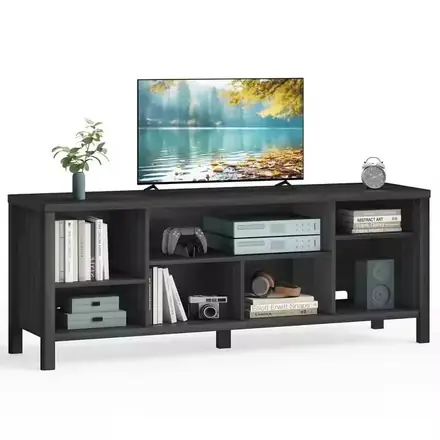
Living Room Bedroom Modern Nordic Minimalist Wooden TV Cabinet with Seven Small Open Shelves
View model
Living Room Furniture
Living Room Bedroom Modern Nordic Minimalist Wooden TV Cabinet with Seven Small Open Shelves
View model
 Living Room Furniture
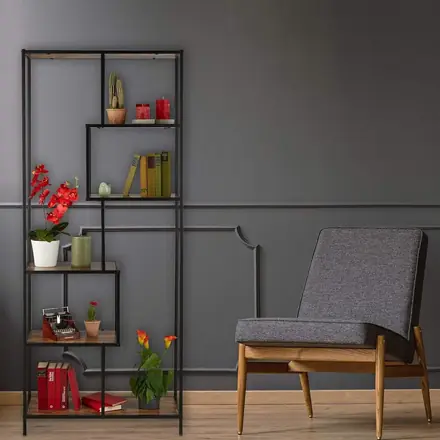
Cheap Factory Direct Stable Iron Wood Bookcase Library Bookcase Bookshelves Wooden Library Bookcase Modern Design Bookshelf
View model
Living Room Furniture
Cheap Factory Direct Stable Iron Wood Bookcase Library Bookcase Bookshelves Wooden Library Bookcase Modern Design Bookshelf
View model
 Bar Set
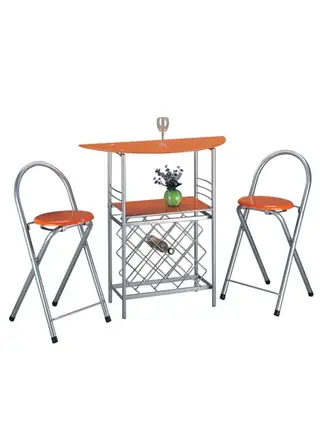
G60007
View model
Bar Set
G60007
View model
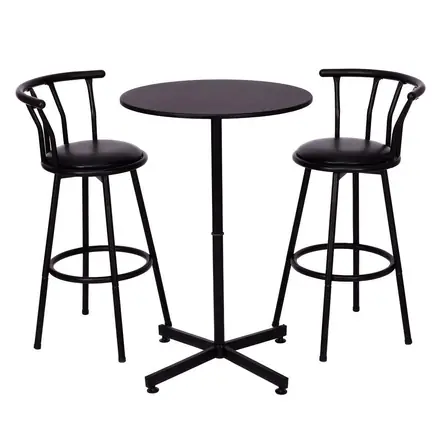 Bar Set
G60034
View model
Bar Set
G60034
View model
 Chairs
B60110
View model
Chairs
B60110
View model
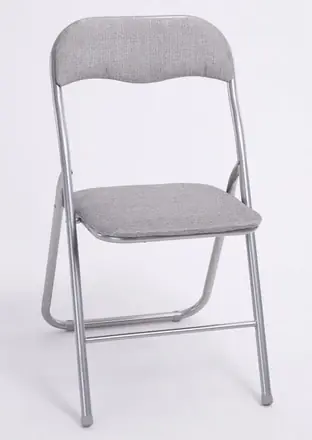 Chairs
B60012
View model
Chairs
B60012
View model Other Guides in the Knowledge Centre
Powder Coating Explained for Furniture Buyers
What powder coating does, what it does not do, and the three questions to ask before you call a product outdoor-suitable.
Material GuideMDF Melamine and Tempered Glass Tops Compared
Choosing the surface that sits on the frame, and what each one costs you in freight and returns.
Process GuideFlat-Pack Carton Design and Why It Drives Your Damage Rate
The carton is not packaging. On a flat-pack furniture programme it is half the product.
Questions on This Topic
How long does furniture development usually take?
It depends entirely on how far the product sits from an existing frame. A variant of a tooled model is much faster than a new frame, which is why the tooling question comes first.
Should I pay for a sample?
Yes. A free sample is usually a shelf product, not your product. Paying for a pre-production sample buys you a specification you can hold the factory to.
Have a Question This Guide Did Not Answer
Send it with the product and the market you are working on. You get a straight answer, including where the answer is that we cannot confirm it yet.