
MDF Melamine and Tempered Glass Tops Compared
Choosing the surface that sits on the frame, and what each one costs you in freight and returns.
The three surfaces that cover most of the market
Almost every steel-frame table, desk and shelf in a volume range uses one of three surfaces: raw or finished MDF, melamine-faced board, or tempered glass. Each one changes the price, the weight and the failure mode.
MDF
MDF is dense, machines cleanly and takes a painted or foil finish well. It is the default for shaped edges and for anything that needs a profiled detail.
Its weakness is moisture. An MDF edge that sits in a kitchen or bathroom needs a finished edge, and the market it ships to matters.
Melamine-faced board
Melamine gives a hard, wipe-clean surface in a huge range of decors at a lower cost than a painted MDF finish. It is the workhorse of home-office and shelving ranges.
Its weakness is the edge and the chip. Edge banding quality decides how the product looks after six months, and a chipped melamine edge cannot be touched up.
Tempered glass
Glass reads as premium at a low material cost and does not mark from a water glass. On a coffee table it carries the whole product.
Its weaknesses are weight, breakage in transit, and the fact that glass shows every weld and every fingerprint underneath it. A glass top raises your packing specification immediately.
How to choose
Pick melamine when the product is bought for function and has to be cheap and clean. Pick MDF when the shape or the finish carries the design. Pick glass when the product is bought for how it looks in a living room and you can afford the packing.
Then confirm the specific thickness and decor per model at quotation, because those are not catalogue values.
Products This Guide Applies To
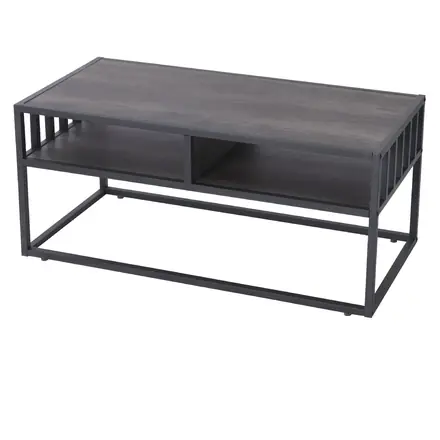 Coffee Table
A60181
View model
Coffee Table
A60181
View model
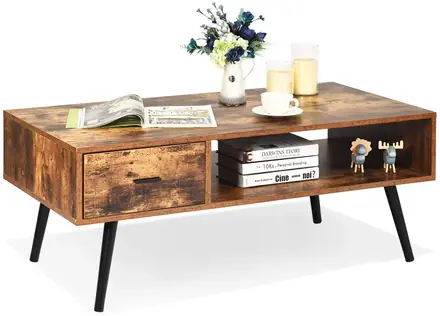 Coffee Table
A60193
View model
Coffee Table
A60193
View model
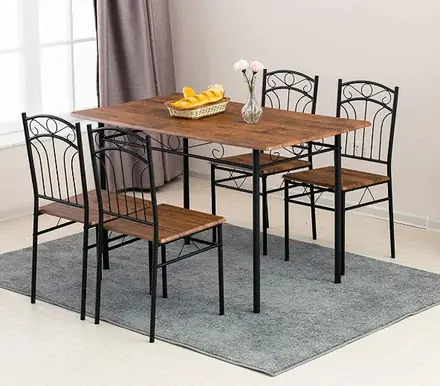 Dining Set
F60108
View model
Dining Set
F60108
View model
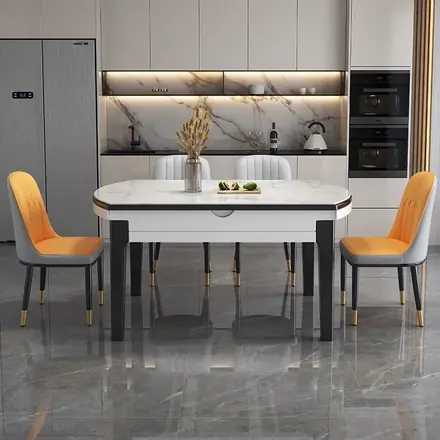 Dining Set
Modern Style MDF Dining Room Furniture Set Dining Table With 6 Wooden Chairs Home Kitchen Restaurant
View model
Dining Set
Modern Style MDF Dining Room Furniture Set Dining Table With 6 Wooden Chairs Home Kitchen Restaurant
View model
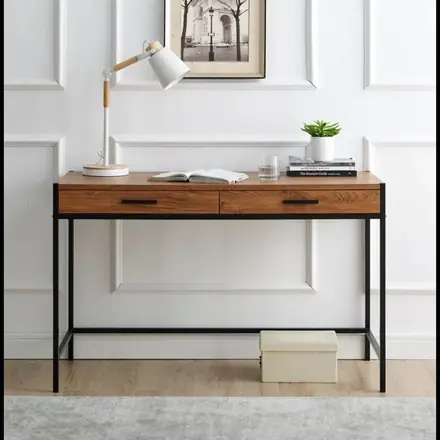 Office Furniture
Latest Wholesale Bedroom Home Modern Design Office Use Stand up Desk Top Metal Frame Mdf Computer PC With Drawer
View model
Office Furniture
Latest Wholesale Bedroom Home Modern Design Office Use Stand up Desk Top Metal Frame Mdf Computer PC With Drawer
View model
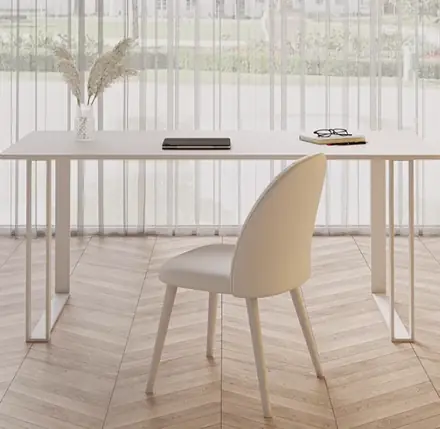 Office Furniture
Home Office Desk Furniture Living Room Style Furniture Office Folding Desk Table Home Computer Glass Study Desk With Bookshelf
View model
Office Furniture
Home Office Desk Furniture Living Room Style Furniture Office Folding Desk Table Home Computer Glass Study Desk With Bookshelf
View model Other Guides in the Knowledge Centre
Flat-Pack Carton Design and Why It Drives Your Damage Rate
The carton is not packaging. On a flat-pack furniture programme it is half the product.
Buying GuideMOQ Tooling and Sample Costs Explained
Why a 100-piece MOQ is not one number, and how to read a quote that has tooling hidden in the unit price.
Buying GuideChoosing Bed Frames for Hotel and Dormitory Projects
What separates a contract bed from a retail bed, and the four specification points a tender should name.
Questions on This Topic
Which surface is best for a kitchen?
Melamine for wipe-clean function; glass where the look matters and the packing budget allows it. Raw MDF edges and steam are a bad combination.
Does glass always need a separate carton compartment?
On most models yes. The packing drawing for a glass-top product is not the same as for a panel-top product.
Have a Question This Guide Did Not Answer
Send it with the product and the market you are working on. You get a straight answer, including where the answer is that we cannot confirm it yet.