

Hot Rolled vs Cold Drawn Special Profiles
The two routes differ in surface, tolerance and maximum size. This is how to decide which one your part needs.
Where the two routes part company
Hot rolling forms the section at temperature, cold drawing pulls it through a die cold. That single difference sets the surface, the tolerance and the size limit for everything that follows.
Surface and tolerance
Hot rolled profiles come out at Ra below 40 um with defects up to 0.3 mm and size tolerances up to 0.5 mm. Cold drawn profiles come out at Ra below 2.5 um with size tolerances below 0.05 mm. If your part is assembled without further machining, that is the deciding number.
Straightness and twisting
Hot rolled straightness is 1.0 mm/m as standard and 0.3 mm/m on request. Cold drawn straightness is below 0.1 mm/m, with twisting below 0.25 deg/m. Long parts that feed automatic machines usually need the drawn figures.
Size and length
Hot rolling reaches 7000 mm2 of cross section and bars up to 12 m. Cold drawing reaches 3800 mm2 and bars up to 6 m. Large sections therefore settle the question on their own.
Decarburisation
Cold drawn profiles hold decarburisation below 0.1 mm, which matters when the part is hardened afterwards and the surface has to carry the hardness.
Related Products
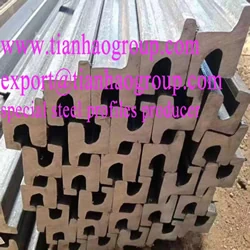
Hot Rolled Special Profiles
Near net shape sections rolled from your drawing in cross sections up to 7000 mm2
View detailsCold Drawn Special Profiles
Drawn sections held below 0.05 mm on size with a Ra under 2.5 um surface
View details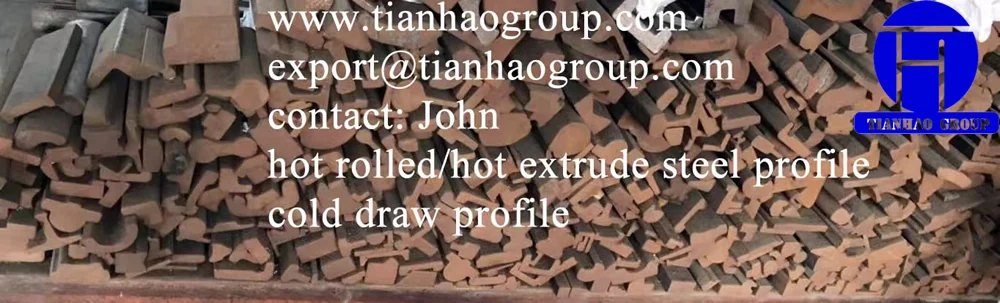
Custom Tailored Special Profiles
One cross section developed with our engineers from drawing to volume production
View detailsQuestions About This Topic
Which route gives the tighter tolerance?
Cold drawing, at below 0.05 mm on size against up to 0.5 mm for hot rolling.
Which route allows the larger cross section?
Hot rolling, up to 7000 mm2 against 3800 mm2 for cold drawing.
Apply This To Your Own Part
Email the drawing and we will apply the guidance above to your component and quote the route we recommend.