
Open Die Forging Explained
What open die forging does to the steel, which shapes suit it, and where rolled rings take over.
What the process does
The billet is worked between dies that do not enclose it, so the shape comes from the sequence of blows rather than from a closed cavity. The grain follows the shape of the part instead of being cut through by machining.
Which shapes suit it
Shafts, blocks, discs, blanks, hollows and rings. Hubs and tooled forgings sit at the near net end of the same process.
Where ring rolling takes over
Once the part is a ring of any real diameter, rolling gives a seamless ring with circumferential grain flow, which is what gear teeth and flanged joints need.
What comes after forging
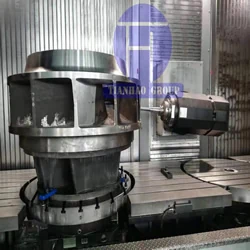
Heat treatment sets the condition: forged, normalised, rough machined, quenched or tempered. Machining follows, and for large parts that means a 5-axis machining centre able to take big components.
Why the sequence matters
Machining before the final heat treatment leaves a part that moves afterwards. Scheduling forging, heat treatment and machining as one job is what prevents that.
Related Products
Open Die Forgings
Rings discs blocks and shafts forged in carbon alloy tool and stainless steels
View details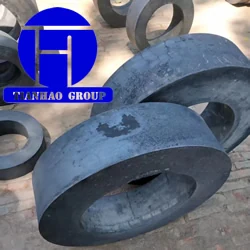
Seamless Rolled Rings
Rolled rings for gears bearings flanges and tooling in alloy and stainless grades
View details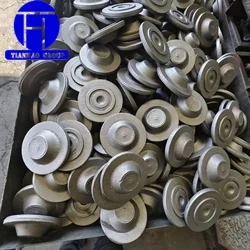
Forged Blocks and Discs
Blocks discs blanks and forged hollows for tooling and equipment builders
View detailsQuestions About This Topic
Which is better, open die or closed die forging?
Open die suits one-off, medium volume and very large parts. Closed die becomes economic once the volume justifies the die cost.
Why forge rather than machine from plate?
Because forging gives grain flow that follows the part shape, which plate cut blanks cannot provide.
Apply This To Your Own Part
Email the drawing and we will apply the guidance above to your component and quote the route we recommend.