Cast Copper Sculpture

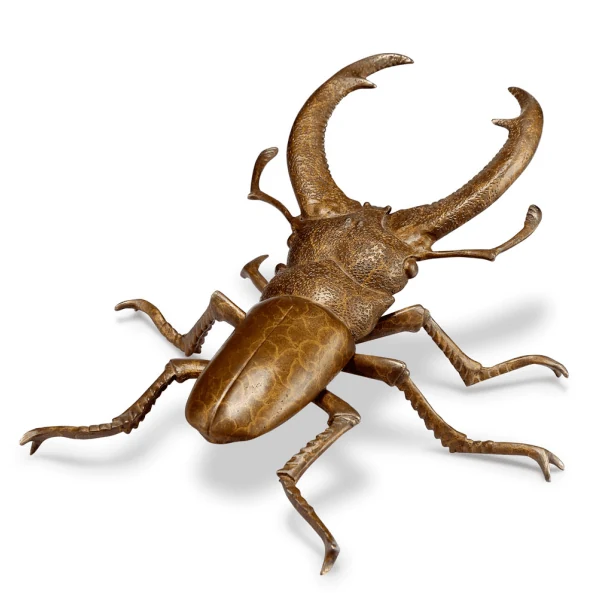
Copper Beetle

Copper and brass cast beetles are precision insect crafts made from solid metal using traditional casting methods. Each beetle is formed from a detailed mould to capture fine surface details such as wing cases, leg joints and body segments. They are produced in small batches to match a design drawing, so the size, pose and surface texture are consistent across a group. The cast body is then finished by hand to enhance the naturalistic appearance of the insect.

Copper Beetle specifications
MaterialCast copper and brass
FormingPrecision casting from a detailed mould
Standard FinishNatural metal surface, hand finished
Alternative FinishesNone
Typical UseArt exhibitions, interior decoration, museum displays
SizesBuilt to the buyer design drawing
CategoryCast Copper Sculpture
Made InPingshan District, Shenzhen, China

Key Benefits

  • Solid copper and brass casting preserves fine surface details like wing textures and leg joints without the need for assembly
  • Cast metal bodies resist cracking and warping under indoor lighting and temperature changes
  • Surface texture and finish are consistent across a group, which supports a coordinated design across a display or installation
  • No painted or coated finishes are needed to achieve a natural metal appearance, so there is no risk of chipping or fading
  • Each beetle is built to a design drawing, so sizes and poses can be adjusted to fit a layout without standard catalogue limitations

Application Scenarios

  • Art exhibition displays where a group of beetles is arranged to suggest movement across a surface
  • Hotel lobby or reception area where a cluster of beetles adds a naturalistic detail to a feature wall or floor
  • Interior design installations in high-end residential spaces where a small group of beetles is used as a focal point
  • Museum or science gallery displays that require accurate representation of insect forms in durable material
  • Public art installations in covered plazas where a group of beetles is placed on a low platform or wall surface

Who It Is For

  • Art consultants and curators sourcing insect-themed sculptures for gallery or exhibition displays
  • Interior designers specifying decorative metal objects for hotel lobbies and high-end residential interiors
  • Museum and educational facility buyers needing durable insect models for display
  • Public art commissioners requiring small-scale, detailed metal figures for indoor installations
  • Designers working on themed spaces that require a naturalistic yet permanent metal element

Problems It Solves

  • Painted or coated insect models fade or chip under indoor lighting and cleaning, while solid cast metal retains its surface
  • Pre-fabricated insect models from plastic or resin lack structural integrity and can break under handling
  • Standard catalogue insects do not match a specific pose or size required by a design layout
  • Assembled insect models from multiple parts are inconsistent in finish and joint quality
  • Replicating a natural insect form in metal is difficult without a dedicated casting process, which this factory provides

Technical Features

  • Body cast from copper or brass using a precision mould to capture fine surface details
  • Cast body finished by hand to enhance texture and remove casting marks
  • No painted or coated finishes applied; the natural metal surface is the final appearance
  • Each beetle is built to a design drawing, so size and pose can be adjusted per project
  • Surface texture and finish are consistent across a group to support a coordinated design

Materials

  • Copper and brass ingots used for casting
  • Mould material matched to the casting metal to ensure dimensional accuracy and surface detail

Quality Control

  • Mould checked for dimensional accuracy before casting
  • Cast body inspected for shrinkage, porosity or surface defects
  • Surface texture verified against the original drawing for consistency
  • Hand finishing checked for uniformity across a group
  • Final piece inspected under light for surface flaws before packing

Customization Options

  • Any size, pose or surface detail to match a design drawing
  • Group size and arrangement built to the layout rather than a fixed catalogue
  • Surface texture and finish adjusted by hand to enhance realism
  • Sample piece produced for approval before a full group is cast
  • Design drawing used as the basis for all production, with no deviation without confirmation

Use Guide

  • Send the design drawing with size, pose and surface detail requirements marked
  • Confirm whether the beetles will be displayed on a flat surface, wall, or platform, as this affects the base detail
  • Leave protective film on until the final installation is complete
  • Clean with a soft cloth and mild water if needed; avoid abrasive cleaners on the metal surface
  • If a piece is damaged during handling, it can be re-finished rather than replaced
Manufacturing Process

How This Piece Is Made

  1. Review of the design drawing to confirm size, pose and surface detail requirements
  2. Mould made from the drawing to capture the insect's form with high fidelity
  3. Copper or brass poured into the mould and cooled to form the solid body
  4. Cast body removed and cleaned of flash and casting residue
  5. Hand finishing of surface to enhance texture and remove imperfections
  6. Final inspection and packing for export
01Drawing02Forming03Welding04Grinding05Finish06Crating

Every stage happens in the same workshop in Pingshan, Shenzhen, which is why a set of pieces arrives matching.

Comparison

How It Compares With the Alternatives

Compared with Plastic insect modelsPlastic is lighter and cheaper but lacks structural integrity and cannot hold fine surface detail at this scale
Compared with Resin insect modelsResin can capture detail but is brittle and may crack under handling or temperature change
Compared with Painted metal insectsPainted finishes chip or fade over time, while solid cast metal retains its appearance
Compared with Assembled metal insectsMultiple parts increase risk of joint inconsistency and require additional finishing
Related

More From Cast Copper Sculpture

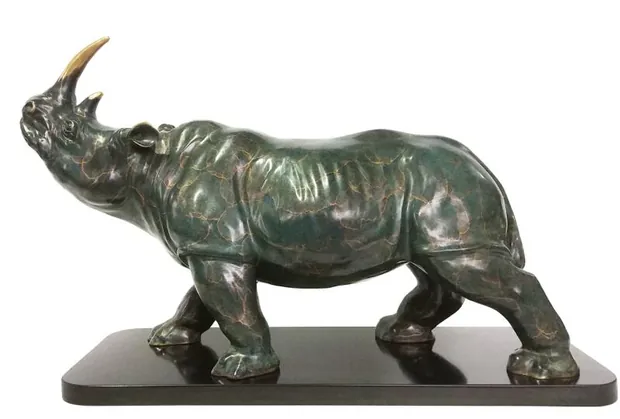
Brass rhinoceros sculpture standing on a plinth in a modern interior space

Copper Rhino

A rhinoceros sculpture cast in brass, designed as a standalone art ornament or feature piece for interior or exterior...

View Details
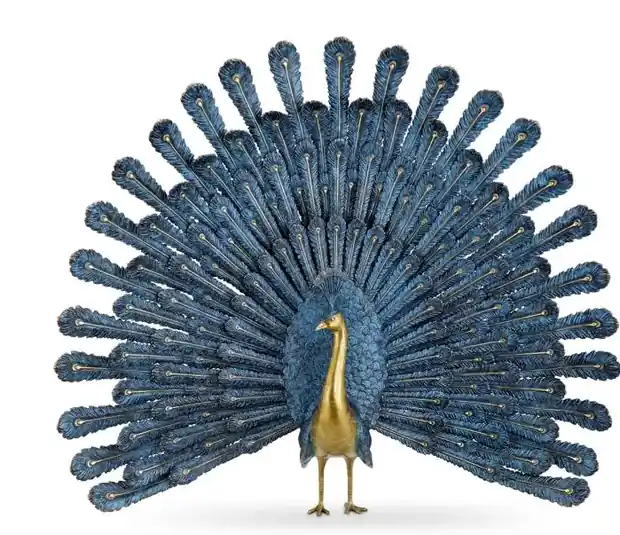
Brass cast peacock screen with detailed feather forms on a wall

The Peacock

The peacock is cast in brass and designed as a screen piece, with detailed feather forms and a vivid surface finish....

View Details
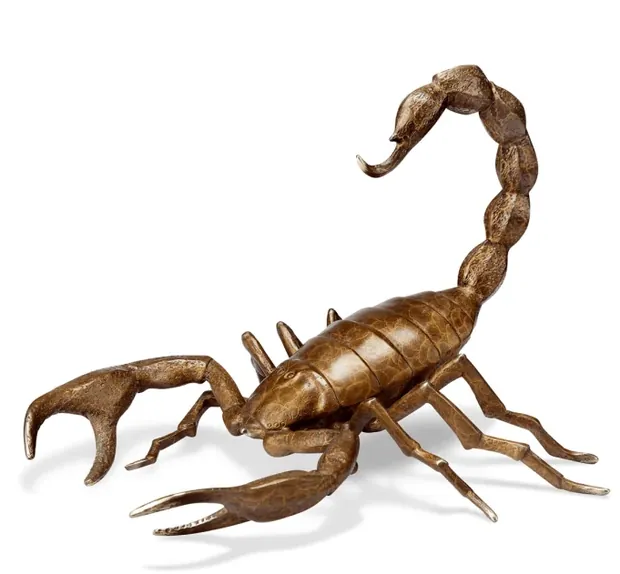
Brass cast scorpion sculpture on a wooden display table

Copper Scorpion

Scorpio sculptures are cast from brass in detailed insect form, capturing the segmented body, curved tail and clawed...

View Details
FAQ

Copper Beetle Questions

What materials are used for the beetles?

They are cast from solid copper or brass using a precision mould. Both materials are used because they hold fine surface detail and are durable.

Can you make them in the sizes and poses on our drawing?

Yes. The cast body is made from a mould based on your drawing, so size, pose and surface detail follow your design exactly.

Are the beetles painted or coated?

No. The natural metal surface is the final finish. There are no paints or coatings applied, so there is no risk of chipping or fading.

Can you make a group of beetles to match a layout?

Yes. The group is built to your layout drawing, so sizes and positions can vary to match your design intent.

How are the beetles packed for export?

Each beetle is wrapped in protective film and crated. Tell us the destination port and we will confirm the packing method.

Can we see a sample before the full group is cast?

Yes. One piece can be produced for approval before the full group goes into production.

How do we get a price?

Send the design drawing or a sketch with size and quantity by email or WhatsApp and we will quote against it.

Quote Copper Beetle at Your Size

Tell us the size, the quantity and where it will be installed. A drawing or a reference photograph is enough to start.