
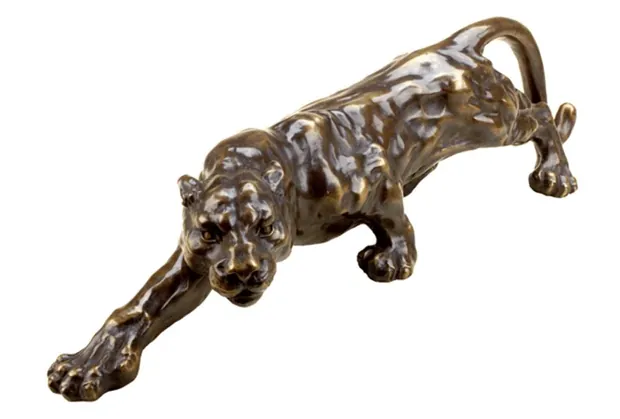
The Cheetah
Brass cast cheetahs are sculptural animal ornaments made from cast copper and brass, designed for placement on...
View Details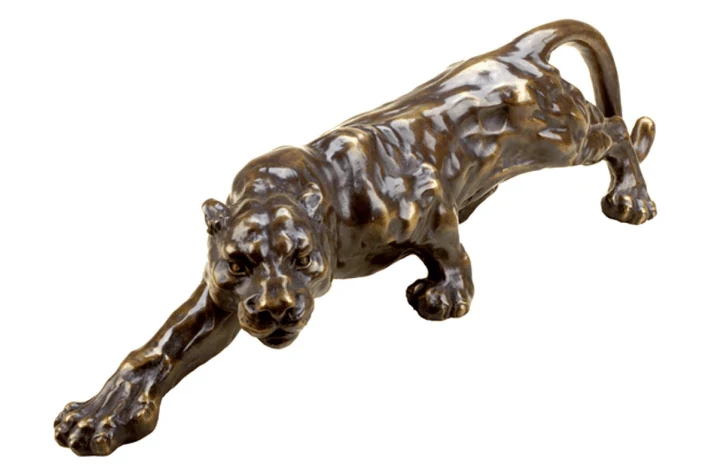
The decision starts with the project's visual and functional needs. Forged stainless steel is built from plate, formed, welded hollow and polished, making it ideal for large, lightweight, reflective pieces. Cast copper or brass is poured in a mould, which captures fine detail and gives a warm, evolving surface that develops a patina over time.
Cast copper and brass can hold intricate detail such as facial features, fur, feathers, and complex textures. Forged stainless steel is limited by the formability of the plate and is better suited to abstract shapes, clean lines, and smooth curves. The surface of cast pieces is naturally textured; forged steel can be mirror polished or brushed to a consistent finish.
Forged stainless steel pieces are hollow, which keeps weight low for their size. Cast copper and brass pieces are solid and heavier. This affects the mounting method, especially on plasterboard or stud walls, and influences whether a structural pattress is needed before the wall is closed.
Both materials are suitable for outdoor use. Forged 304 stainless steel resists corrosion and maintains its appearance without change. Cast copper and brass develop a natural patina over time, which alters the surface colour and texture. This is not a defect but a characteristic of the material.
A damaged forged stainless steel piece can be repaired by welding and re-polishing. A cast copper or brass piece can be re-cast or repaired by soldering, but the surface patina will not match exactly. Repairs to cast pieces may require re-finishing to match the original tone.
Brass cast cheetahs are sculptural animal ornaments made from cast copper and brass, designed for placement on...
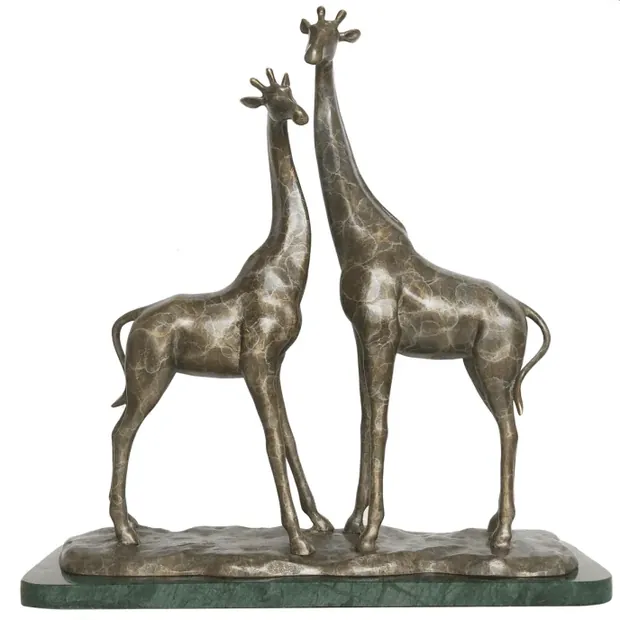
View DetailsA giraffe sculpture cast in brass or bronze, designed for indoor decorative use. The form is detailed and vivid, with...
View Details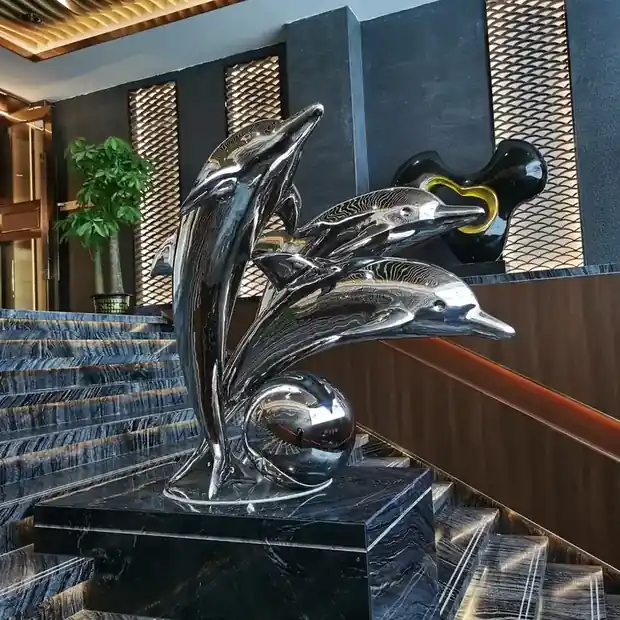
Stainless steel dolphins are forged from 304 stainless steel plate into dynamic swimming forms and polished to a...
View DetailsBoth forged stainless steel and cast copper or brass are suitable for outdoor use. Stainless steel maintains its finish; cast copper develops a patina over time.
Yes. Casting captures fine detail well, making it ideal for portrait heads, animal features, and textured surfaces.
Yes. Forged stainless steel is built hollow from plate, which keeps weight low. Cast copper and brass are solid and heavier for the same size.
Yes. It can be repaired by soldering or re-casting, but the patina will not match exactly. Re-finishing may be needed.
Yes. Cast copper and brass develop a natural patina when exposed to the elements, which alters the surface colour and texture over time.
Send the drawing or the reference images and we will tell you what the material and finish choice means for your piece.