
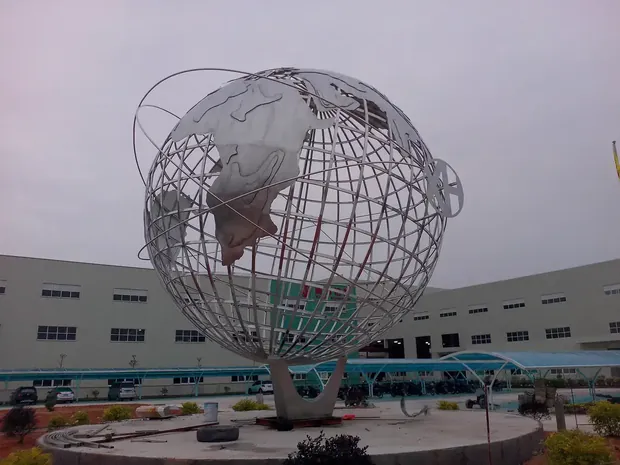
6M Globe
A 6M diameter globe constructed from a tubular frame of 304 stainless steel, forming a longitude and latitude grid....
View Details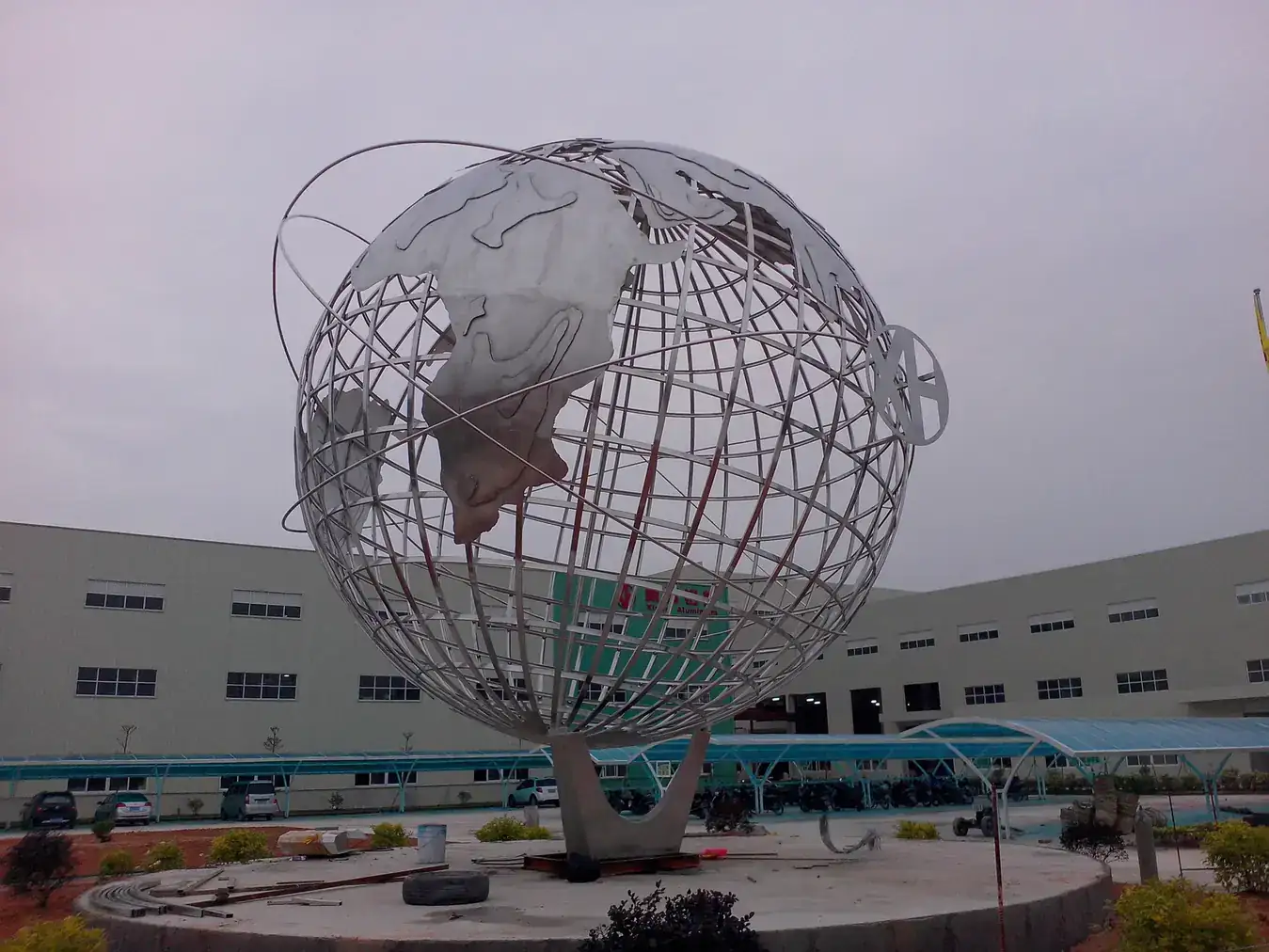
A sculpture in a public plaza must be readable from a distance and visible from multiple angles. Rounded closed forms like pebbles or spheres have no sharp edges and are safer in areas used by children. Open or angular forms may create blind spots or unsafe protrusions. The shape must be legible at the intended viewing distance, and the design should not rely on fine detail that disappears beyond 10 meters.
A 6 meter globe is visible from across a plaza, but a detailed figure needs to be larger to be read clearly. The form must be simplified at scale so that the silhouette and major features remain distinct. A design that works at 1 meter in a gallery fails at 10 meters. The workshop uses the drawing to assess whether the form can be read from the intended sight lines.
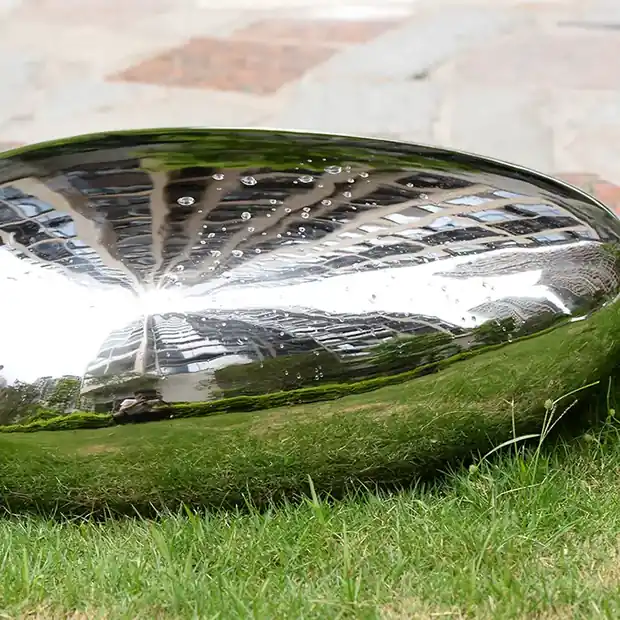
A mirror polished surface reflects light, traffic, and nearby glass facades. This can create glare or unintended visual interference. The finish may make the sculpture appear to move or change with the sun. If the plaza is near a busy road or reflective buildings, the workshop can advise on whether a brushed finish or a matte coating would reduce visual impact.
A large sculpture is sectioned into parts that fit within standard transport dimensions. The workshop plans the joints and assembly points during design, ensuring the pieces can be reassembled on site. The sectioning must not compromise the visual continuity of the form. The buyer must confirm the site access and lifting points early, as this affects how the work is split.
To quote, the workshop needs the full drawing or 3D model, the finished size, the material (304 stainless steel, cast copper, or brass), the finish (mirror polish, brushed, electroplated, or lacquered), the base condition (level ground, concrete pad, or embedded), and the site access details. A photograph of the site with the intended location marked helps confirm the assembly plan.
A 6M diameter globe constructed from a tubular frame of 304 stainless steel, forming a longitude and latitude grid....
View DetailsStainless steel pebbles are forged from 304 stainless steel into smooth rounded forms and polished to a mirror...
View Details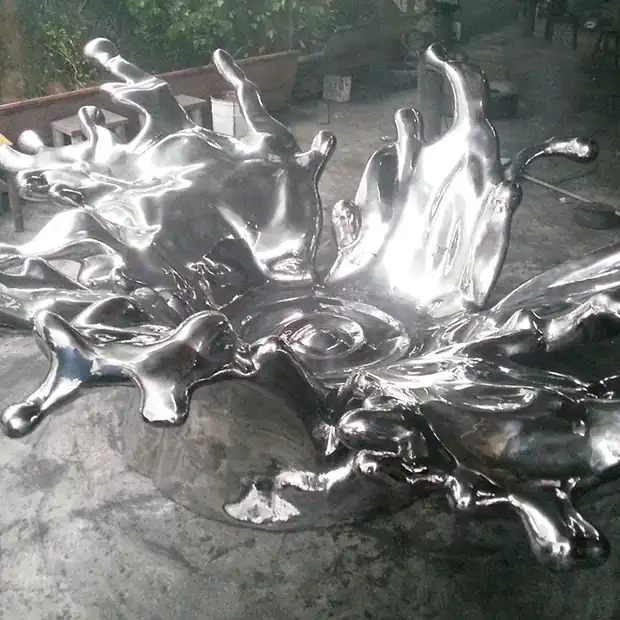
A stainless steel water splashing sculpture formed from 304 stainless steel plate, designed to create a continuous...
View DetailsYes. Large sculptures are split into parts that can be shipped and assembled on site. The workshop plans the joints and assembly method during design to maintain visual continuity.
No. Rounded closed forms such as pebbles are used to avoid sharp edges. The design must be safe for public use, especially in areas with children.
A mirror finish reflects surrounding light, traffic, and buildings. It may create glare or unintended visual effects. The workshop can suggest alternatives like brushed or matte finishes if needed.
Send the drawing or 3D model, the finished size, the material, the finish, the base condition, and a photograph of the site with the intended location marked. Access details for lifting and assembly are also required.
Yes, but the base must be levelled. The workshop can design a custom base or support structure to match the site condition. Confirm the ground condition early in the process.
Send the drawing or the reference images and we will tell you what the material and finish choice means for your piece.