
Theoretical Lumens Versus Effective Lumens
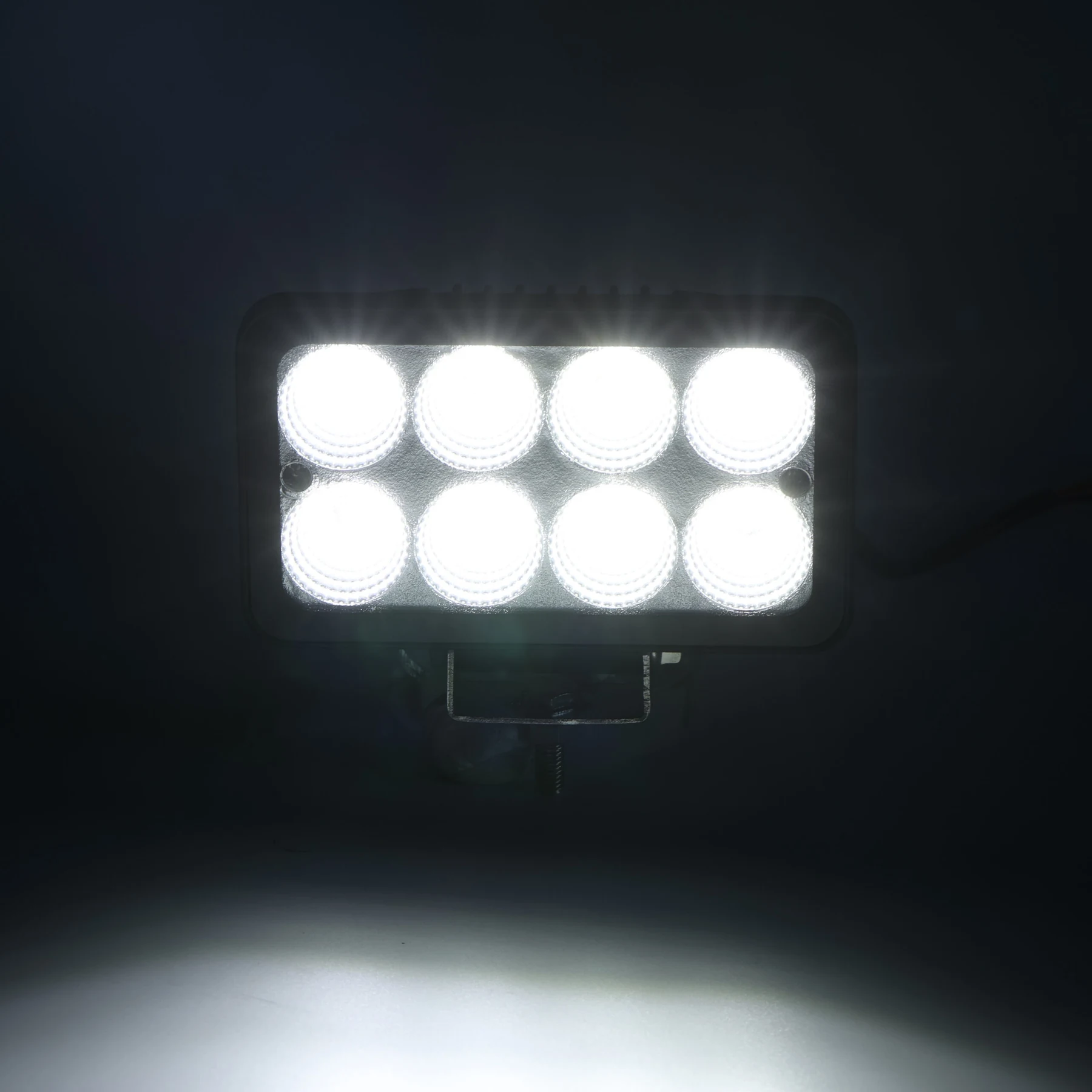
Two Lumen Figures on the Same Data Sheet
SUNLITEC product pages often carry two output numbers. The first number is what the emitters would produce on their own. The second is what actually leaves the lamp after the lens, the reflector and the driver have taken their share. When two quotations look far apart, the gap is usually that one supplier quoted the first number and the other quoted the second.
Where the Difference Goes
Light is lost in three places. The polycarbonate lens absorbs and reflects part of the output. The optic redirects light into the beam pattern and some falls outside the useful cone. The driver runs the emitters below their laboratory rating so the junction temperature stays inside the operating window, which on these lamps runs from -40 to +60 degrees Celsius. A lamp built to survive that window will always publish a lower effective figure than its emitter total.
Why Real Power Matters Too
The same page lists a maximum power of 45W and a real power draw of 31W. The maximum is the rating of the assembly, the real figure is what the lamp pulls in service. A buyer comparing lamps should line up real power against effective lumens, not headline wattage against theoretical lumens.
Comparing Two Quotations Fairly
Ask every supplier for the same three numbers: effective lumens, real power draw and the beam pattern. If a quotation only offers a theoretical figure, ask what the lamp measures on an integrating sphere. SUNLITEC tests output in house on an integrating sphere, so the effective figure on a data sheet is a measured value rather than a calculation from the emitter datasheet.
Matching Output to the Job
More lumens is not automatically better. A driving light with the same output pushed into a narrow spot pattern reaches much further ahead but leaves the machine edges dark. Decide the beam pattern first, then compare effective lumens between lamps that share that pattern.
What to Put in Your Purchase Specification
A specification that survives a change of supplier names the effective lumen figure, the real power draw, the beam pattern, the sealing rating and the operating temperature window. Every SUNLITEC product page lists those fields where the original specification provides them, which makes it straightforward to copy them into a purchase order or a tender document.
Questions on This Topic
Which lumen figure should I put in my catalogue
Use the effective lumen figure and label it clearly. It is the number a customer can verify with a meter, and it protects you from a complaint that the lamp underperforms its printed rating.
Why is real power lower than the rated wattage
The driver runs the emitters below their laboratory maximum so the lamp stays inside its operating temperature window. The rated wattage describes the assembly, the real figure describes normal service.
How is effective output measured
Output is measured in an integrating sphere, which is one of the test machines SUNLITEC lists as in house equipment alongside vibration, salt spray and temperature humidity chambers.
Can you supply the measured figures for a specific model
Yes. Ask for the model by part number over WhatsApp or email and the figures held for that model can be sent to you.
Apply This to Your Own Specification
Send the machine and the duty cycle. We will point at the models that match what you have just read.