
Wheel Bore Hub and Bearing Guide
The two measurements that decide whether a correctly sized wheel actually goes onto your axle — and why almost nobody publishes them.
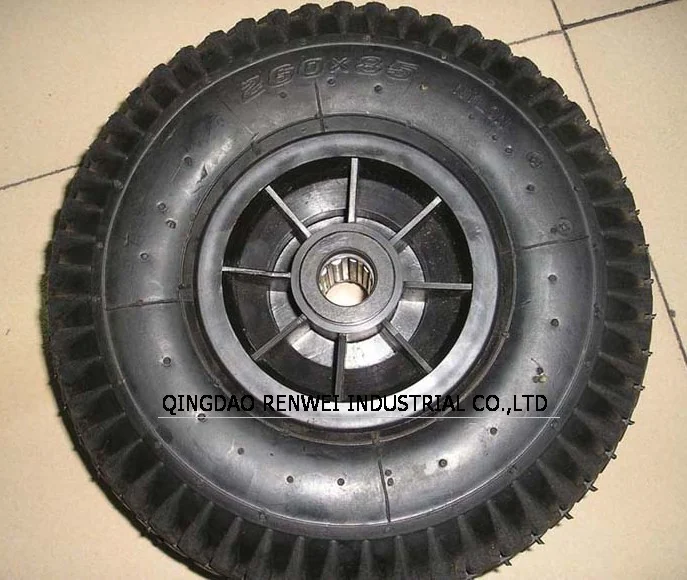
A wheel can be the right diameter, the right section and the right rim, and still be useless. What stops it fitting is the hub: the hole through the middle and the width across the bearing faces.
These are the dimensions that turn a catalogue match into a working replacement, and they are the ones most often left out of an enquiry.
Bore Diameter
The bore is the hole through the centre of the wheel that the axle passes through. It is measured in millimetres or inches depending on the market, and common cart wheel bores cluster around 16mm, 20mm and 25mm.
A bore that is too small will not go on. A bore that is too large lets the wheel move on the axle, which wears both. Measure the axle, not the old hole, because a worn hub reads larger than it was.
Hub Length
Hub length is the width of the wheel hub across the faces the bearings or spacers sit against. It has to match the gap in the fork or the frame.
A hub that is too long will not go between the frame legs. A hub that is too short leaves the wheel able to wander sideways, and the fixings take the load instead of the bearings.
Plain Bearings, Roller Bearings and Ball Bearings
A plain bush is the simplest and cheapest option. It is entirely adequate for a wheelbarrow used a few hours a week and it tolerates dirt well.
Roller and ball bearings reduce rolling resistance and last far longer under high duty cycles. For equipment in daily commercial use, or anything pushed long distances, the difference is noticeable to the operator.
The source catalogue behind this site does not publish bearing type per model, so ask against the model number if it matters to your application.
Measuring Before You Order
Take four measurements: axle diameter with a caliper, the gap between the frame legs, the existing hub length, and the overall wheel diameter. Photograph the wheel next to a tape measure.
Send all four figures with the model number you are interested in. This one step removes the most common cause of a wrong delivery on wheel orders.
| Measurement | Where to take it | Why it matters |
|---|---|---|
| Axle diameter | Across the axle with a caliper | Sets the bore you need |
| Frame gap | Between the inside faces of the fork | Sets the maximum hub length |
| Hub length | Across the wheel hub faces | Must match the frame gap |
| Overall diameter | Across the assembled wheel | Sets clearance and ride height |
Key Takeaways
- Bore and hub length decide fitment, not tyre size
- Measure the axle rather than a worn hub
- Bearing type affects rolling effort and service life on high-duty equipment
- Four measurements and a photograph prevent most wrong deliveries
Products Mentioned in This Guide
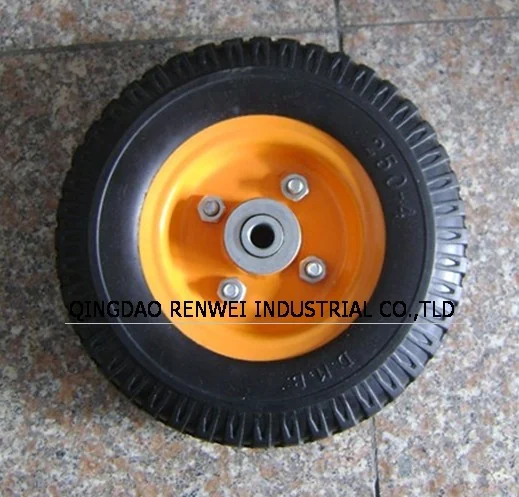
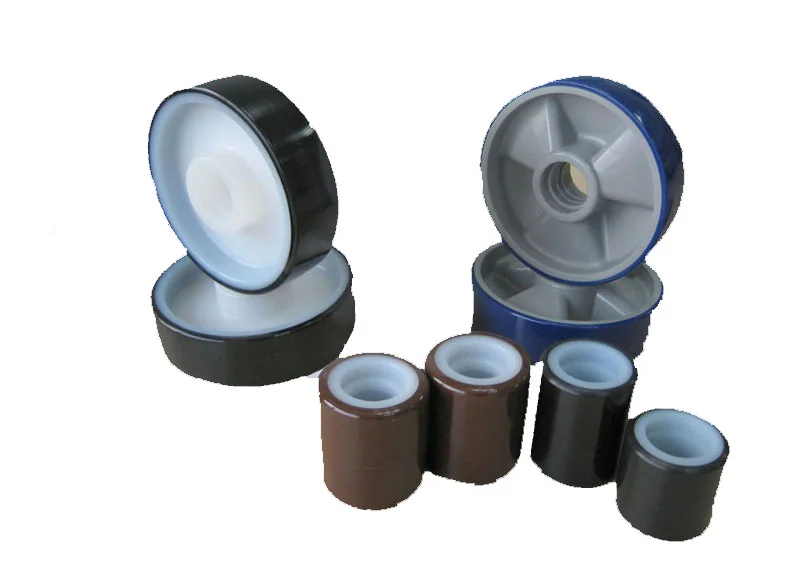
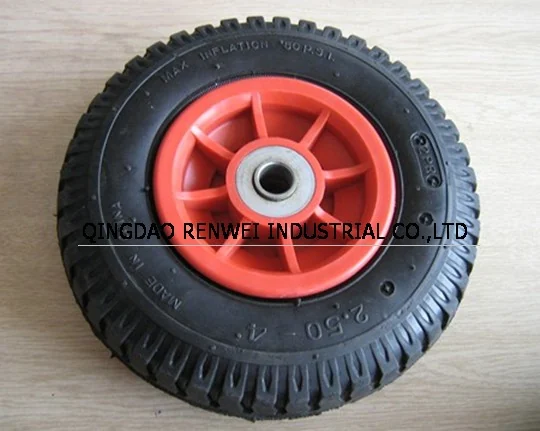
Where to Go Next in the Catalogue
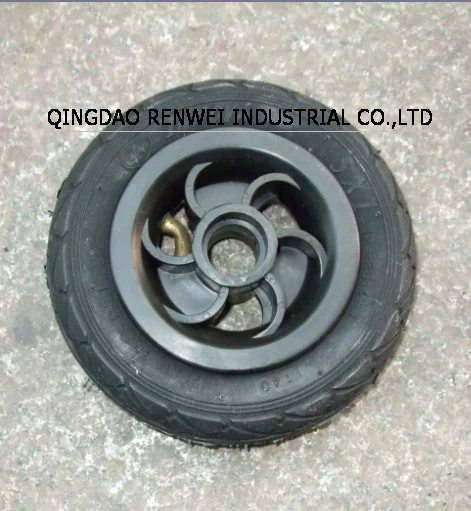
Rubber Wheel
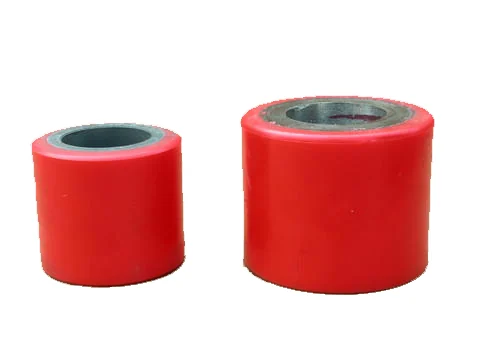
PU Wheel
Caster Wheel
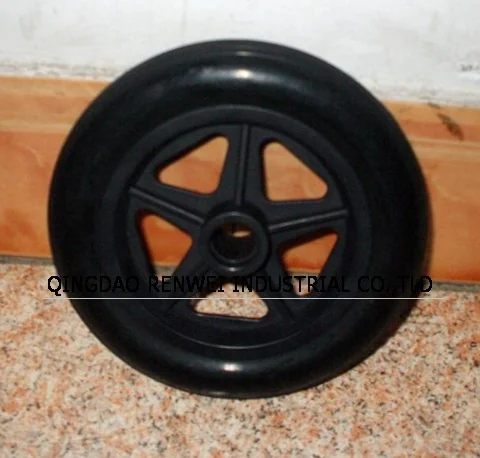
EVA Wheel
Questions About This Guide
What bore do your wheels have?
Bore and hub length are not published in the source catalogue for most models. Send your axle diameter and frame gap and ask for confirmation before ordering.
Can I fit a wheel with a larger bore using a spacer?
A bushing or spacer can work as a repair, but it is not a substitute for the right bore on new equipment. The wheel will wear the spacer and then the axle.
Does bearing type matter on a wheelbarrow?
For occasional use, a plain bush is fine. For daily commercial use or long pushes, a bearing makes a clear difference to effort and service life.
Continue Reading
Rubber Products and Moulding Basics
OEM and Private Label Checklist
Container Loading for Bulky Goods
Apply This to Your Own Specification
Send the measurements, loads and surfaces described in this guide and the sales desk will come back with model numbers rather than a brochure.