
Pneumatic vs Solid vs Foam Wheels
Air rides best, solid never punctures, foam sits between them. Which one belongs under your product depends on who fixes it when it fails.
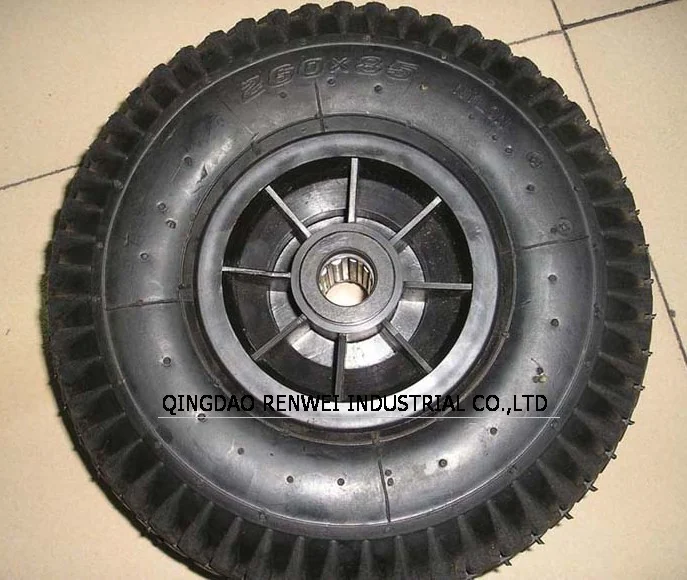
There are three ways to build a cart wheel and each of them is right somewhere. The decision is not really about performance — it is about who is standing next to the equipment when something goes wrong.
A hire fleet, a retail buyer and a site contractor will reach three different answers from the same engineering facts.
Pneumatic: Best Ride, Highest Maintenance
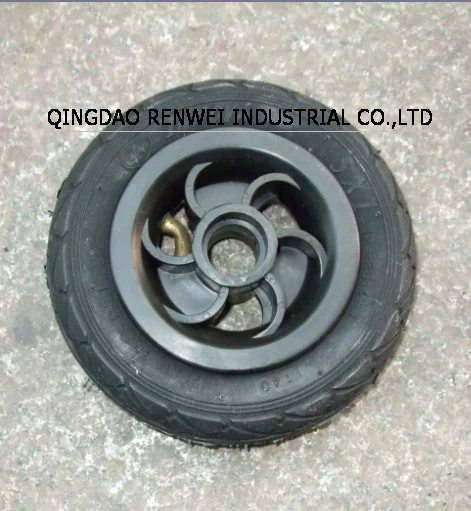
A pneumatic wheel is an air-filled tyre on a rim, usually with an inner tube. It has the largest contact patch for its size, absorbs the most shock, and floats on soft ground better than anything else at the same diameter.
It also punctures, loses pressure over time, and arrives flat after a winter in a shed. On a building site full of screws, that is a daily cost. On a beach trolley crossing dry sand, it is the only thing that works.
Solid Rubber: No Maintenance, Hard Ride
A solid rubber wheel cannot puncture and needs nothing done to it. It is the right answer on hard, smooth surfaces where nobody wants to think about the wheel again.
The penalty is ride quality. A solid wheel transmits every joint and kerb into the load and the operator, and under a sustained static load a soft solid wheel can take a flat spot.
PU Foam: The Middle Ground
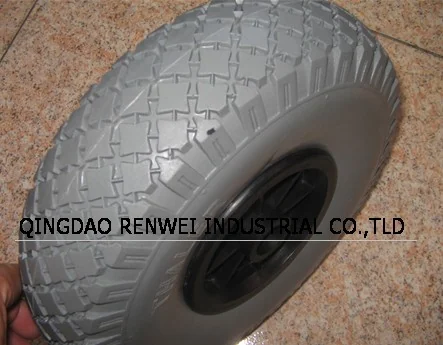
A polyurethane foam wheel has the shape and much of the cushioning of a pneumatic tyre, but it is filled solid. Nothing to inflate, nothing to puncture, no pressure to check.
It is heavier than the air wheel it replaces and slightly firmer, but for hire fleets and consumer products that combination is usually worth it. Removing the flat-tyre failure removes the most common warranty complaint on a garden range.
EVA Foam: Light Duty Volume
EVA foam is the lightest and cheapest of the flat-free options. It runs quietly, costs less than PU foam and suits light consumer loads — kids wagons, small garden carts, light trolleys.
It carries less than PU foam of the same size, so it is a volume consumer choice rather than a site choice.
Choosing By Who Fixes It
If a trained person with a puncture kit is standing next to the equipment, pneumatic is fine and gives the best result. If the person next to it is a customer, a hire client or nobody at all, choose flat-free.
That single question settles most of these decisions faster than any performance comparison.
| Type | Ride | Maintenance | Best for |
|---|---|---|---|
| Pneumatic | Best | Pressure checks, punctures | Soft ground, rough sites with on-site support |
| PU foam | Good | None | Hire fleets, consumer garden ranges, sites with fixings |
| EVA foam | Fair | None | Light consumer carts and wagons |
| Solid rubber | Firm | None | Hard smooth surfaces, indoor use |
Key Takeaways
- Pneumatic gives the best ride on soft or rough ground but needs support
- PU foam removes punctures at the cost of some weight and a slightly firmer ride
- EVA foam is the light, quiet, low-cost consumer option
- Solid rubber suits hard smooth surfaces where nothing should need attention
Products Mentioned in This Guide
Where to Go Next in the Catalogue
Rubber Wheel
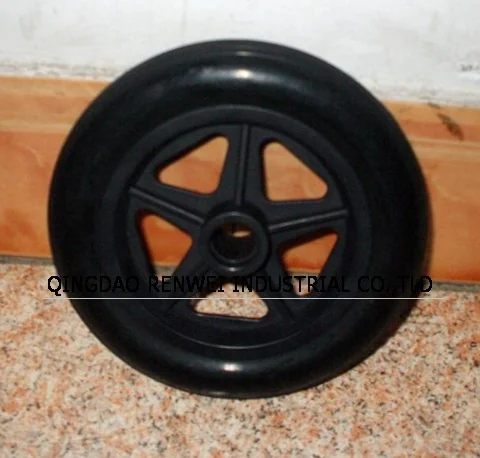
PU Wheel
EVA Wheel
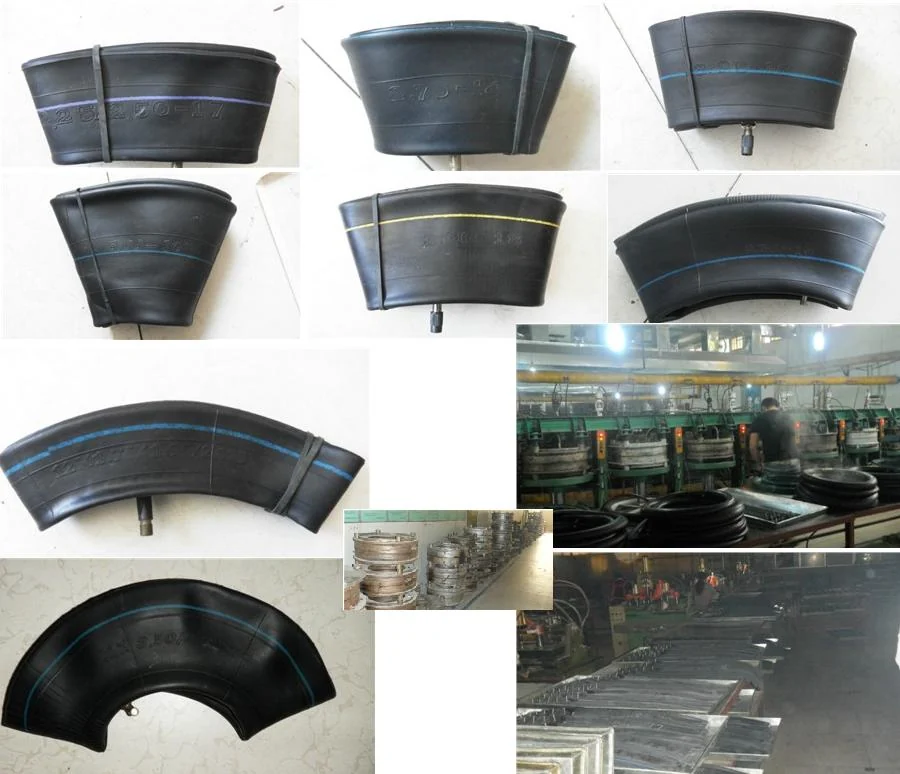
Tire Tube
Questions About This Guide
Can I swap a pneumatic wheel for a foam wheel?
Usually yes, provided diameter, section, rim size, bore and hub length all match. Send those measurements and ask for confirmation.
Do foam wheels ever go flat?
No. They are solid throughout, so there is no air to lose and nothing to puncture.
Which wheel is best for dry sand?
A wide pneumatic wheel. Width matters more than diameter on soft sand, and air pressure lets the tyre spread across the surface.
Continue Reading
Rubber Products and Moulding Basics
OEM and Private Label Checklist
Container Loading for Bulky Goods
Apply This to Your Own Specification
Send the measurements, loads and surfaces described in this guide and the sales desk will come back with model numbers rather than a brochure.