
Caster Load Ratings Explained
Dividing the load by four is the most expensive arithmetic mistake in material handling. Here is why it should be three.
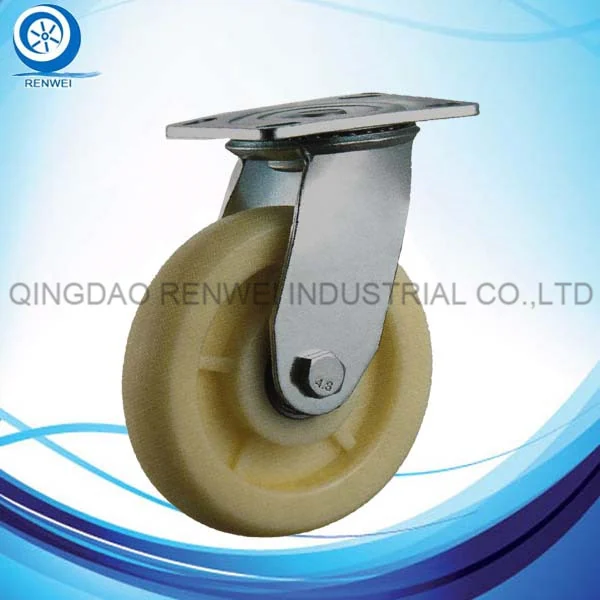
Caster failure is nearly always a specification failure rather than a manufacturing one. The equipment was rated against an assumption about how the load spreads, and the assumption was wrong.
The correction is one line of arithmetic, and it costs nothing to apply.
Why Divide By Three
A four-caster trolley on a perfectly flat floor puts a quarter of the load on each wheel. Real floors are not flat. At any given moment on a real floor, three casters are carrying the load and the fourth is hovering or barely loaded.
So the working assumption should be that each caster may need to carry one third of the total, not one quarter. On a 600kg trolley that is 200kg per caster rather than 150kg — a difference that moves you into a different caster family.
Add a Margin for Shock
Published capacities are static ratings. Rolling a loaded trolley over a floor joint, a dock plate or a door threshold produces a shock load well above the static figure.
For equipment that crosses thresholds regularly, add a margin on top of the divide-by-three figure. Exactly how much depends on speed and floor condition, but specifying at the very edge of the rating is how casters end up bent.
Capacity Changes With Wheel Diameter
Within one caster family the capacity rises with wheel diameter. A catalogue entry that lists diameters as 100/125/150/200 alongside capacities of 200/280/350/450 is telling you four separate things, read in parallel.
The headline number quoted in marketing is almost always the largest wheel. If you are buying the 100mm version, your rating is 200kg, not 450kg.
| Example family | 100mm | 125mm | 150mm | 200mm |
|---|---|---|---|---|
| Capacity per caster | 200kg | 280kg | 350kg | 450kg |
| Trolley total at divide-by-three | 600kg | 840kg | 1050kg | 1350kg |
Diameter Does More Than Material
When a trolley is hard to push, the instinct is to specify a harder wheel. Usually the better answer is a larger one. A bigger wheel bridges floor joints and damage instead of dropping into them, and rolling resistance falls with diameter.
Going harder solves rolling resistance on a perfect floor and makes everything worse on a real one — more noise, more shock into the load, and marks on finished surfaces.
Do Not Forget Fitted Height
Overall height is published per wheel diameter for a reason. Replacing a 125mm caster with a 150mm one raises the equipment by roughly 25mm, which can take a bench out of ergonomic range or stop a trolley passing under a conveyor.
Match overall height when replacing, or check the clearance before you change diameter.
Key Takeaways
- Divide the total load by three, not four
- Add a margin for shock loading over thresholds and joints
- Read capacity against the specific wheel diameter you are buying
- Increase diameter before increasing hardness
- Check fitted height when changing caster size
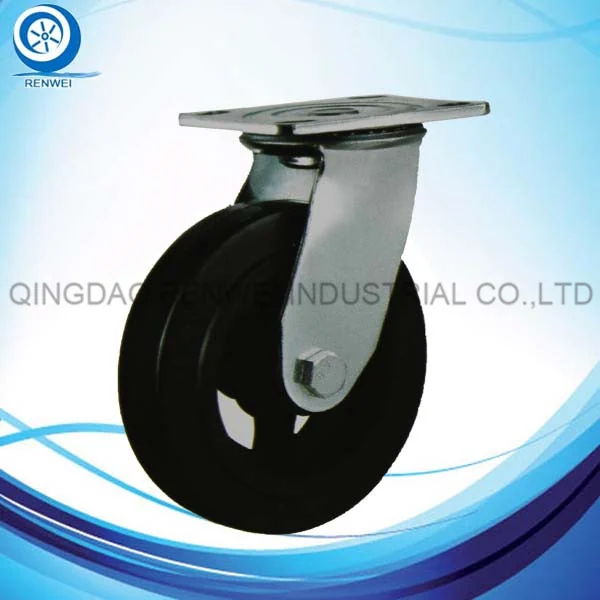
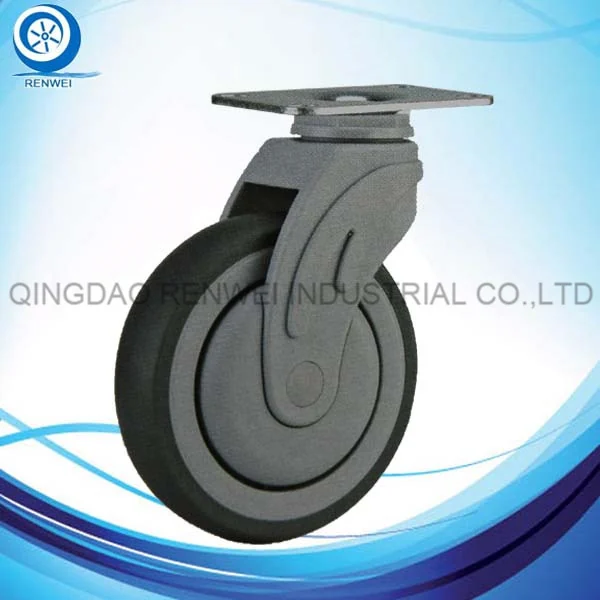
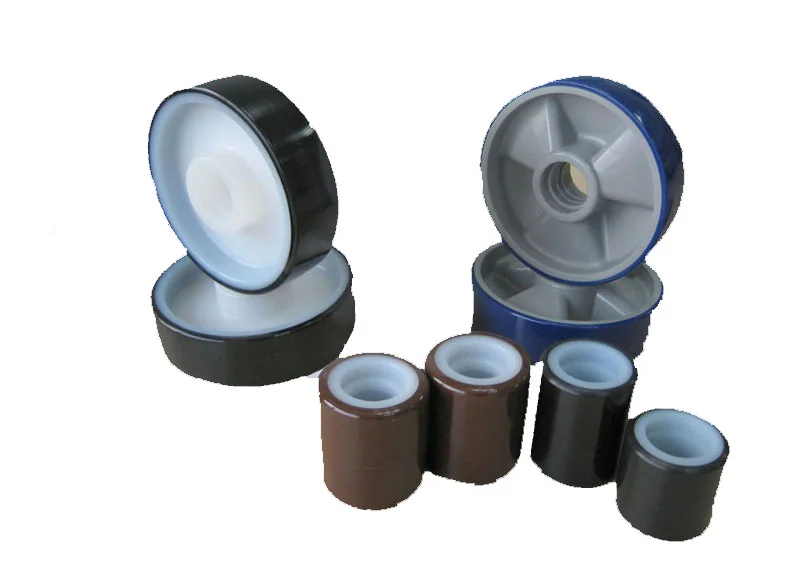
Where to Go Next in the Catalogue
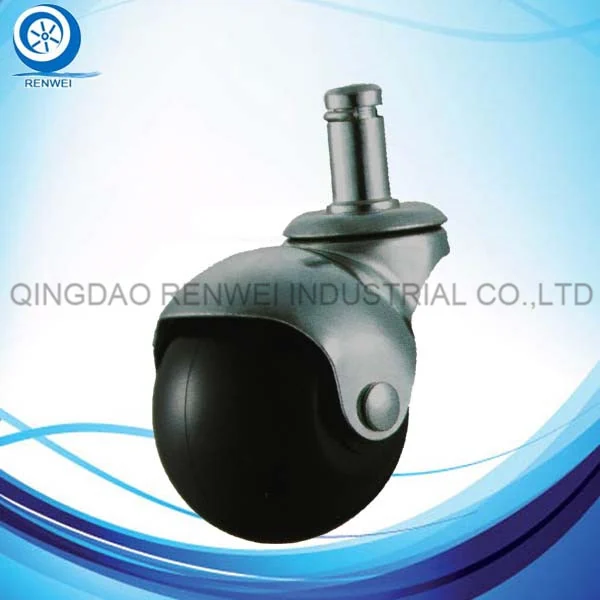
Light Heavy Caster
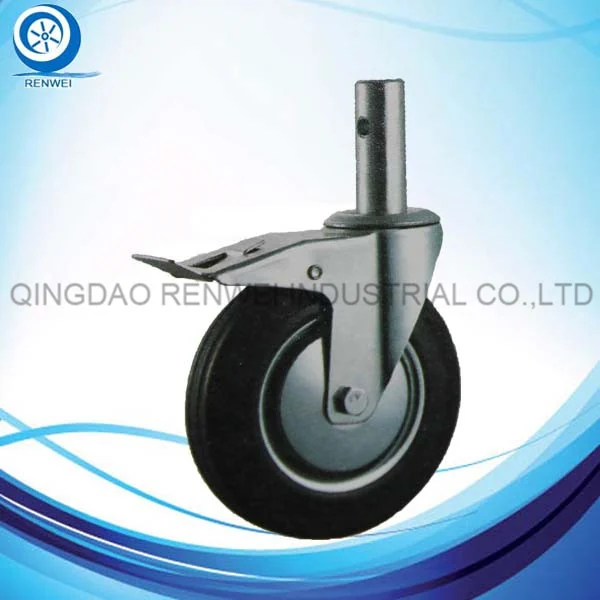
Heavy Caster
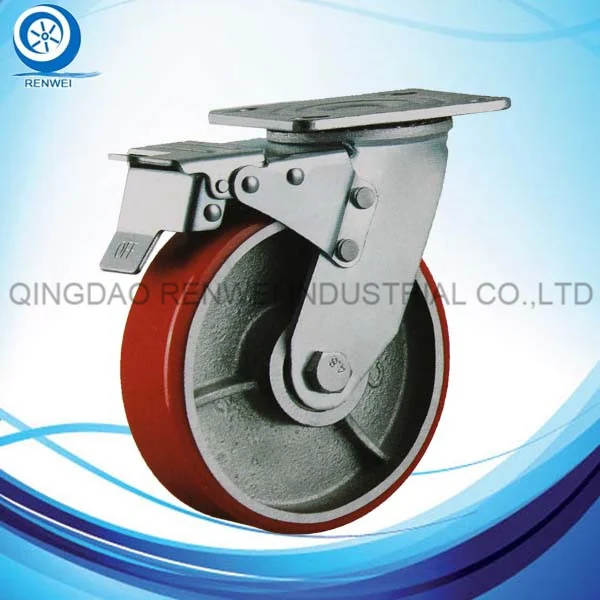
Big Heavy Caster
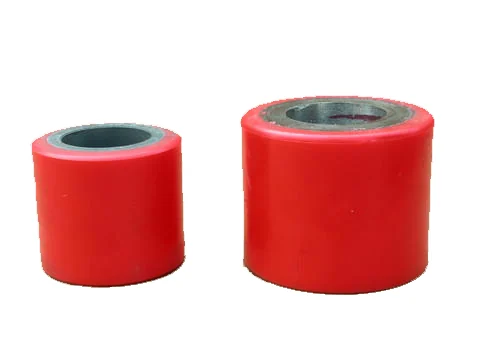
Caster Wheel
Questions About This Guide
How many casters carry the load on a four-wheel trolley?
Assume three. Floors are never flat enough for all four to share the load equally at any given moment.
Does the published capacity include shock loading?
No. Published figures are static ratings. Add a margin if the equipment crosses joints, thresholds or dock plates.
Should I choose a harder wheel if the trolley is hard to push?
Usually not. A larger wheel reduces rolling resistance more effectively and handles floor damage far better than a harder one.
Continue Reading
Rubber Products and Moulding Basics
OEM and Private Label Checklist
Container Loading for Bulky Goods
Apply This to Your Own Specification
Send the measurements, loads and surfaces described in this guide and the sales desk will come back with model numbers rather than a brochure.