Why the plug is the first decision
A cord set is specified from the wall inwards. The plug pattern is fixed by the destination country, and everything else — cable, connector, approval — follows from it. Getting it wrong is not a performance problem, it is a customs and retail compliance problem.
The main patterns
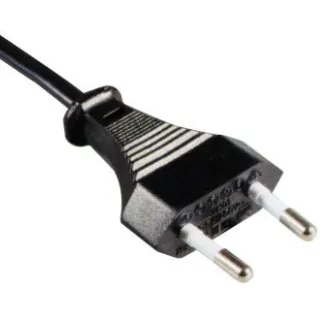
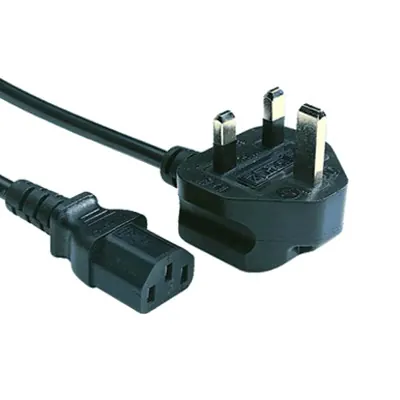
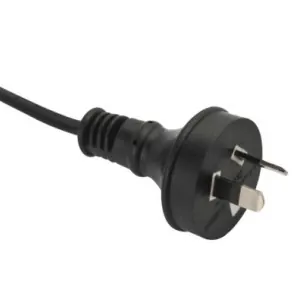
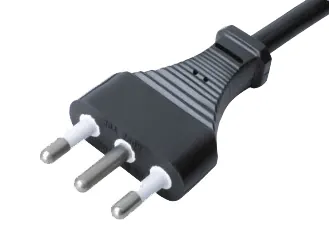
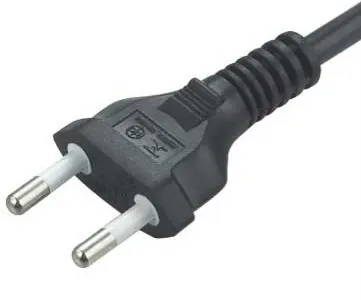
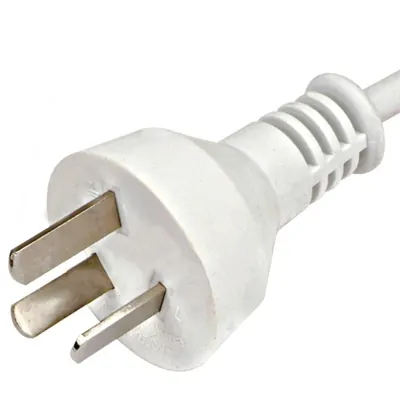
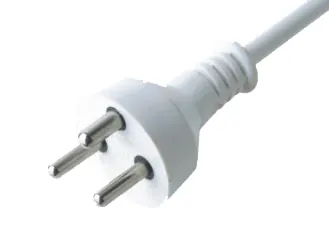
North America uses the NEMA family: 1-15P two blade, 5-15P and 5-20P grounded at 125 V, 6-15P and 6-20P at 250 V, and the 30 A and 50 A patterns for ranges, dryers and equipment feeds. Continental Europe uses the CEE 7 family, with the CEE 7/7 hybrid covering both German Schuko and French sockets and the flat CEE 7/16 Europlug serving Class II products up to 2.5 A. The UK and Ireland use the fused BS 1363 plug. Australia and New Zealand share AS/NZS 3112. Switzerland uses SEV 1011, Italy uses CEI 23-50, Denmark uses Afsnit 107-2-D1, Israel uses SI 32, Brazil uses NBR 14136 and Argentina uses IRAM 2073.
The pairs that catch people out
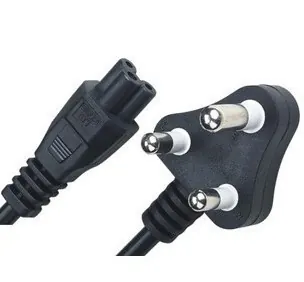
The Argentine IRAM 2073 plug looks very like the Australian AS/NZS 3112 plug but line and neutral are reversed, so they must never be substituted. A European CEE 7/7 plug will enter many Danish sockets but will not make the earth connection. Italy has both 10 A and 16 A plugs with different pin diameters. Brazil has 10 A and 20 A versions in the same way. South Africa is mid-transition between a large round pin plug and a compact new one.
A practical shortcut
If a product is going to several markets, fit an IEC 60320 inlet and let the detachable cord change per country. One appliance design, one inventory of cords.