
Comparison Guide
Hard Enamel vs Soft Enamel Pins How To Choose
Hard and soft enamel pins start identically.
The One Difference That Drives Everything Else
Hard and soft enamel pins start identically. A steel die is cut from your artwork, the blank is struck, and the recesses between the raised metal lines are filled with enamel. The processes part company at the next step. A hard enamel pin is fired and then ground and polished back until the colour sits exactly level with the metal, giving a face you can run a fingernail across without catching. A soft enamel pin skips the grinding, so the colour stays below the metal lines and the surface keeps a texture you can feel. Every other difference in cost, durability and appearance follows from that single step.
How Each One Wears
The flat face of a hard enamel pin is its main practical advantage. There are no recesses for dirt to settle into and nothing standing proud to catch on fabric, so a badge worn on a uniform every day still looks presentable after years. Soft enamel is not fragile, but its recessed wells do collect grime over time, and the raised metal lines take the abrasion first, which shows as brightening along the edges. For a pin worn a handful of times, that difference never becomes visible. For a badge issued to staff who wear it daily, it does.
What It Does To Your Artwork
Both processes need a metal line between adjacent colours, because the line is the wall that holds the enamel in place. Neither can reproduce a gradient or a photograph. Where they differ is tolerance for busy artwork. Soft enamel copes better with a large number of small colour areas, because nothing has to be ground flat afterwards without disturbing the neighbouring fill. If your design has many small compartments, soft enamel usually reproduces it more faithfully and more cheaply.
The Cost Difference And Where It Comes From
Hard enamel costs more per piece at the same size and colour count, and the reason is labour rather than materials. Firing, grinding and polishing are extra operations performed on every single piece, and each one is a chance to reject a piece and start again. Soft enamel reaches a finished state several steps earlier. When a budget is fixed and the quantity is large, that gap decides the process more often than any aesthetic argument does.
Epoxy Coating Is Not The Same As Hard Enamel
A common misunderstanding is that a soft enamel pin with a clear epoxy dome is equivalent to hard enamel. It is not. The epoxy is a transparent resin sitting on top of the whole pin, including the metal lines, so the surface is smooth but slightly domed and the metal is under a layer rather than exposed. It protects the colour well and costs far less than hard enamel, but it does not have the same flat jewellery-like appearance, and heavy epoxy can yellow with prolonged sun exposure.
A Straightforward Way To Choose
If the pin represents an award, a membership or a milestone that someone is expected to keep and wear regularly, choose hard enamel. If the pin is decorative, illustrative, produced in volume, or aimed at a price point, choose soft enamel, and add an epoxy dome if it will be carried on a bag. If you genuinely cannot decide, order the sample in both. Samples generally take 3-5 days, which is far cheaper than discovering the answer after a full run.
See Also
Products In This Guide
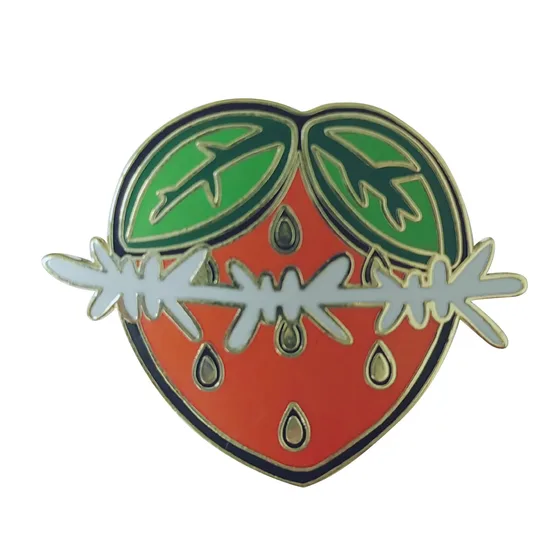
Hard Enamel Pins
Hard Enamel Lapel Pin
Polished flat face resists scratching, so a daily-worn pin still reads as new after years
View Product →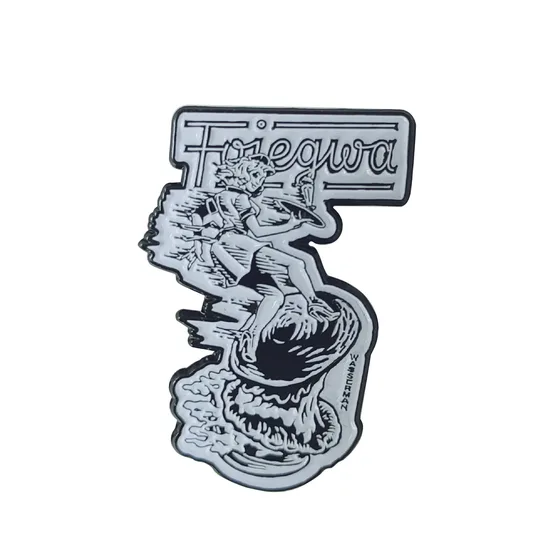
Soft Enamel Pins
Soft Enamel Lapel Pin
Costs less per piece than hard enamel at the same size and colour count
View Product →
Soft Enamel Pins
Glitter Lapel Pin
Metallic flake makes a small pin visible across a crowded room or trade stand
View Product →Related Applications
Frequently Asked Questions
Which one lasts longer?
Hard enamel, because the polished flat face has no recesses to collect dirt and nothing raised to catch on clothing.
Which one is cheaper?
Soft enamel, because firing, grinding and polishing are skipped.
Can either reproduce a photograph?
No. Both need a metal line between colours. Photographs and gradients need offset printing instead.
Is epoxy coated soft enamel the same as hard enamel?
No. Epoxy is a clear layer over the whole pin. Hard enamel is the colour itself, ground level with the metal.
Can I sample both before deciding?
Yes, and it is the sensible route. Samples generally take 3-5 days.
Still Not Sure Which Process You Need
Send the artwork and we will tell you which process holds your design best and what it costs.