
Design Guide
Artwork Guide For Custom Pins What To Send Your Factory
Adobe Illustrator files are the ideal, because the die is cut from outlines and a vector file already is outlines.
Send Vector If You Possibly Can
Adobe Illustrator files are the ideal, because the die is cut from outlines and a vector file already is outlines. JPG, PNG and PDF are accepted and get redrawn, but redrawing is interpretation, and interpretation is where small differences creep in between what you imagined and what arrives. If your design came from a designer, ask them for the original file rather than the export. If it came from a badge made twenty years ago, send the badge itself.
Line Weight Is The Constraint Nobody Anticipates
A pin is small, and every colour area needs a metal line around it to hold the enamel. Those lines have a minimum workable thickness, and so do the gaps between them. A design that looks detailed and elegant at screen size can turn into a solid blob at 25mm, because the lines thicken to the minimum and the gaps close. The fix is never subtle: either the pin gets bigger or the design gets simpler. Deciding which, early, is far cheaper than discovering it at the sample stage.
Colour Needs A Reference Not A Description
Enamel is mixed and matched by eye against a physical target. A colour described as navy, or picked from a screen, will not survive that process reliably. Supply a colour reference number with the artwork and it goes to the operator doing the filling, and it stays on file with the die so a reorder is checked against the same target rather than matched against memory. This single habit prevents most of the complaints about batch two not matching batch one.
Gradients Photographs And Fine Text
Enamel cannot do gradients or photographs, because it needs a wall between colours. If your artwork depends on either, the honest answer is offset printing with a clear epoxy coat, not a redrawn enamel version that loses the point of the design. Fine text is a separate problem: lettering below a certain size stops being legible once it acquires a metal outline. Either enlarge the text, simplify it, or accept it as texture rather than something anyone will read.
Decide The Finished Size Before Anything Else
Almost every artwork question resolves itself once the finished size is fixed, because size determines what detail can survive. Work backwards from where the badge will sit: a lapel pin on a suit reads differently from a badge on a blazer pocket or a coin held in the hand. Quote the size you actually want rather than asking what is standard, because pins are priced per piece at the dimension you specify.
What To Send With Your Enquiry
The artwork, the quantity, the finished size and the date you need the goods. That is enough for a firm price. If you already know the process you want, say so; if not, describe how the badge will be used and the recommendation follows from that. The minimum is 100 pieces per design, and each colourway counts as a separate design for that purpose.
See Also
Products In This Guide
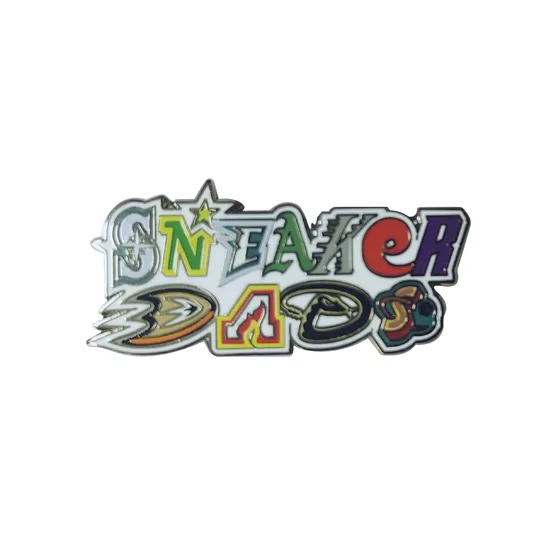
Hard Enamel Pins
Silkscreen Lapel Pin
Handles fine detail, small text and gradients that enamel cannot reproduce
View Product →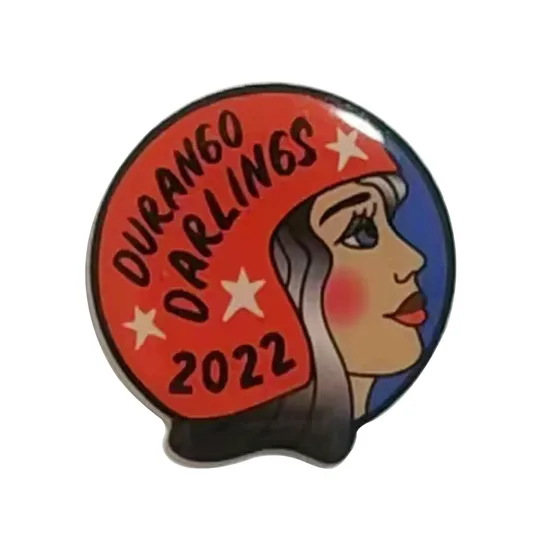
Offset Printed Pins
Offset Printing Pin
Reproduces full-colour gradients and photographic detail without needing separate metal lines for each colour
View Product →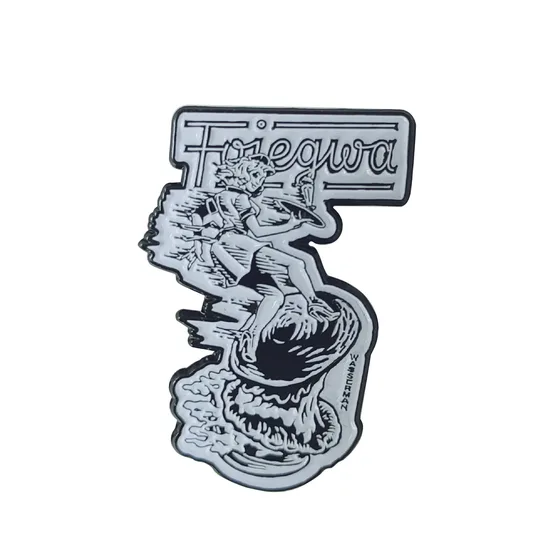
Soft Enamel Pins
Soft Enamel Lapel Pin
Costs less per piece than hard enamel at the same size and colour count
View Product →Related Applications
Frequently Asked Questions
What file format is best?
Adobe Illustrator vector files. JPG, PNG and PDF are accepted and redrawn where the detail requires it.
My logo has thin lines. Will they survive?
Not necessarily at small sizes. Send the file and the intended size and we will tell you what holds before anything is tooled.
How do I make sure the colour is right?
Supply a colour reference number with the artwork. It goes to the operator filling the enamel and stays on file with the die.
Can you reproduce a photograph on a pin?
Not in enamel. Offset printing with a clear epoxy coating is the process for photographic artwork.
Do I need to know the size before I ask for a price?
It helps a great deal, because pins are priced per piece at a specific dimension. If you are unsure, describe where the badge will be worn.
Still Not Sure Which Process You Need
Send the artwork and we will tell you which process holds your design best and what it costs.